Georges Braque Biography and Key Works: Illustrated Gallery and Legacy
Discover the life and art of Georges Braque, including his key works and legacy in the art world.
Article Index
Galeria - Arte Comentada
Galeria - Arte Comentada
"The painting is only finished when the idea is gone." - Georges Braque
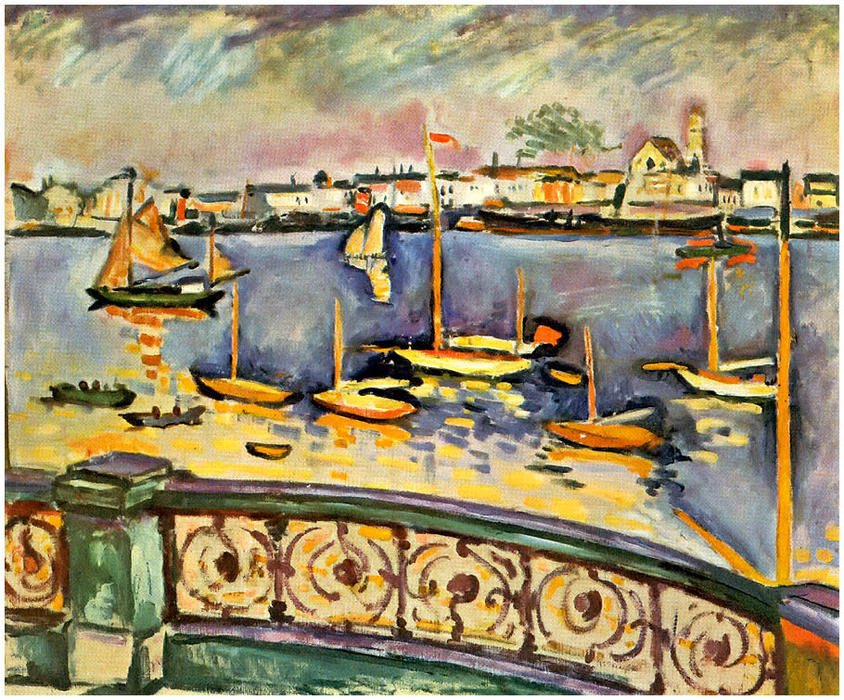
The Port of Antwerp - In the spring of 1906, Braque joined the fauvism movement and discovered, with the painters of this school, the intoxication of pure tone and violent orchestration. In Antwerp, his first creations were born. He obtained the luminous vibration through rapid, colorful brushstrokes.
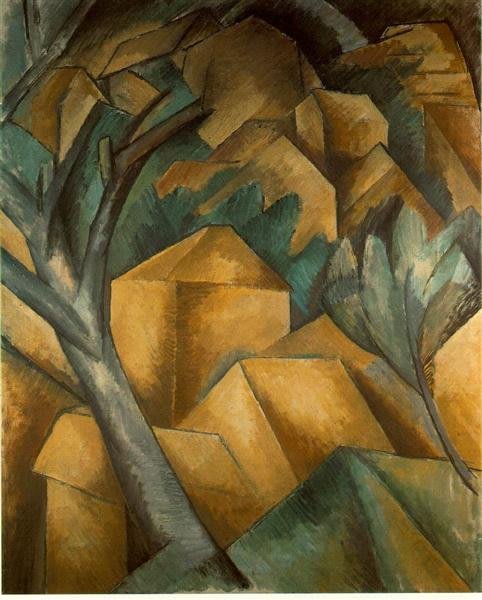
Houses in Estaque - Braque's paintings made in the summer of 1908 in L'Estaque are considered the first cubist paintings. These simple landscape paintings showed the artist's determination to break down images into dissected parts. The brown and green palette here also previews a palette that Braque used in many future paintings.
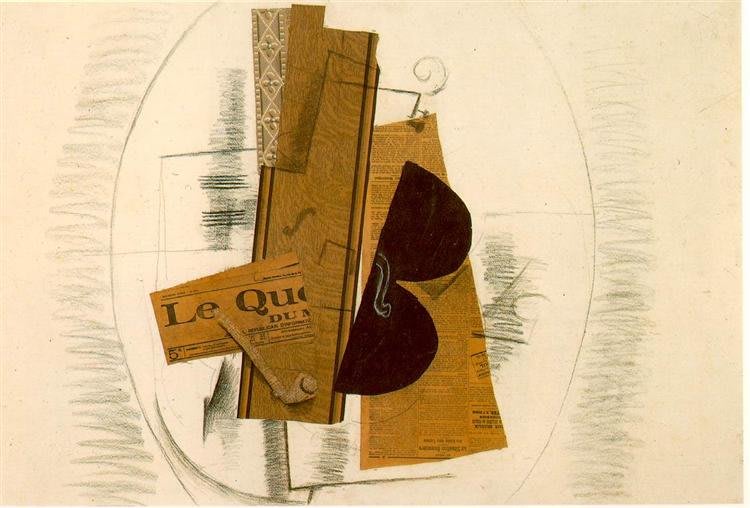
Violin and Pipe - Here, Braque and Picasso begin to enter the scene with another method: associating painting with the art of collage. For them, this resource became a pictorial means that led them to a rigor almost musical, whose climax would be the famous Aria of Bach.
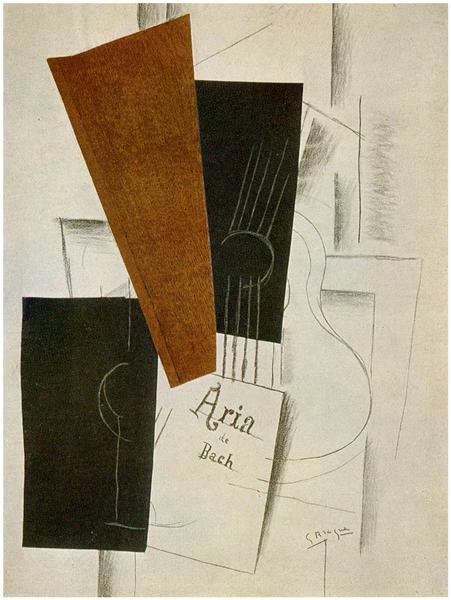
Aria of Bach - From this work, Braque leaves the hermetic phase of cubism. The paper imitating wood and the black rectangles, which create the space, give this collage a rare freedom of composition where we can observe the contours almost invisible of a violin.
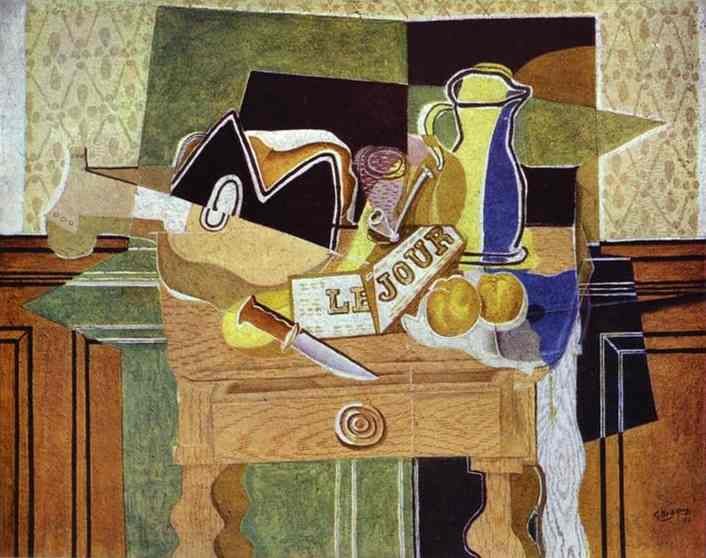
Still Life with 'Le Jour' - The set of still life placed on the table seems almost compressed. On the newspaper 'Le Jour', we have a knife that was taken out of the open drawer. We observe the wall with its wooden covering and the glued paper, highlighting the beautiful composition.
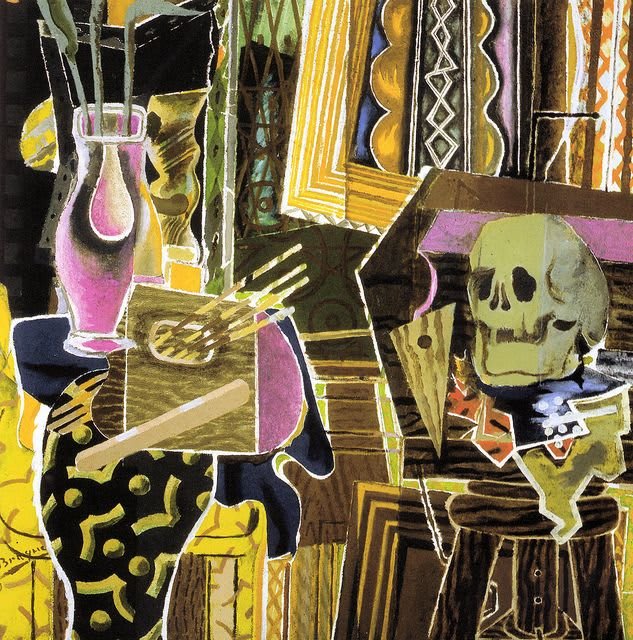
Parapet and Crane - This work previews a series of still lifes, in which objects symbolize mental agony or misery. He painted skulls repeatedly after his return from the war and during the beginning of World War II. Here, he used a variety of bright colors to represent emotional reactions to the political discomfort he felt with the war.