
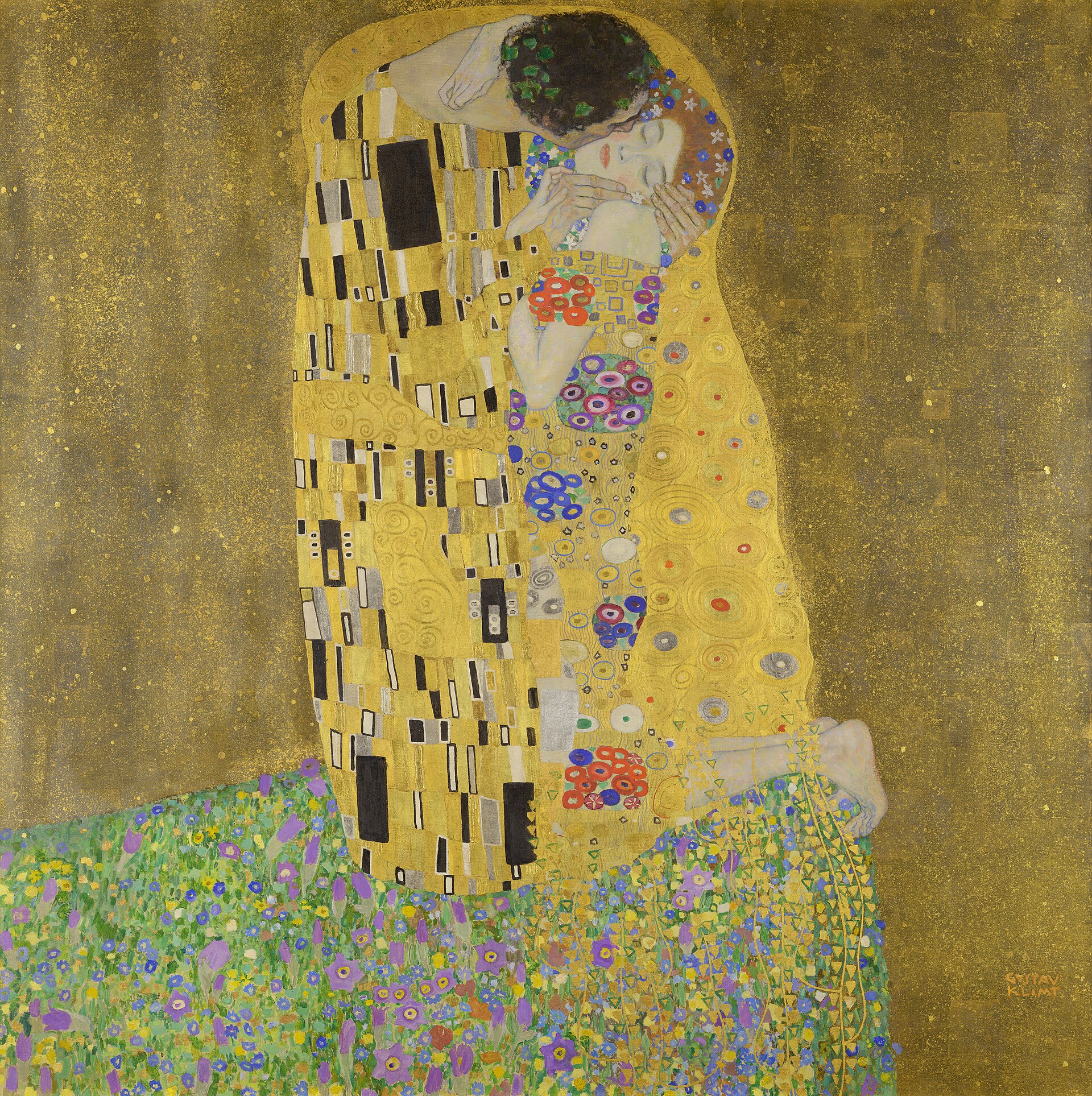
Gustav Klimt: Biography and Work: Birth, Formation, and the Vienna Secession
Discover the life and art of Gustav Klimt, a renowned Austrian painter known for his unique style, which blended elements of Symbolism and Art Nouveau.
Article Index
Gustav Klimt, a renowned Austrian painter, is celebrated for his distinctive style, which seamlessly blended elements of Symbolism and Art Nouveau.
He is famous for his decorative paintings, often featuring symbolic and erotic themes, which reflected the wealth and complexity of Viennese society during his time.
Klimt's work is characterized by the use of ornate patterns, vibrant colors, and meticulous details, creating a unique and unmistakable style.
BIOGRAPHY
Gustav Klimt was born on July 14, 1862, in Baumgarten, a suburb of Vienna, Austria.
He was the son of Ernest Klimt, a metal engraver, and Anna Finster, a Viennese singer from a modest background.
From the age of 14, Klimt attended the School of Applied Arts.
Upon leaving in 1883, Klimt opened a studio with his brother Ernest and friend Franz Matsch.
Together, they decorated two large public buildings, a Viennese avenue, the Burgtheater, and the Kunsthistorisches Museum.
Especially in the Burgtheater's hall, Klimt portrayed the Viennese elite in a massive painting.
The notoriety gained from this urban project's success granted Klimt entry into the cultural world of the bourgeoisie.
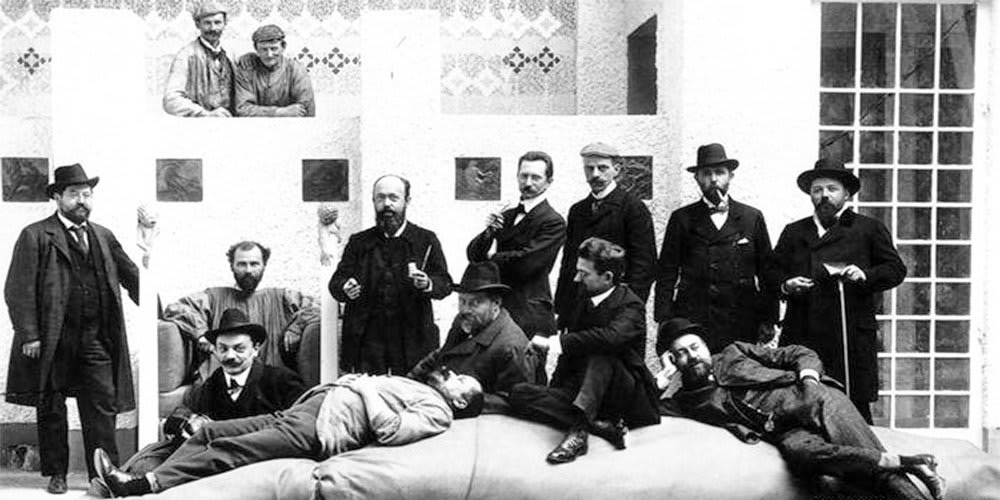
Following his brother's death, Klimt closed the studio and began decorating private homes and making portraits.
At the same time, he joined the Vienna Artists' Society, a group formed by conservatives.
He didn't stay there for long.
In 1894, invited by the University of Vienna to create three paintings for the auditorium, Klimt received harsh criticism for his work, deemed pessimistic and heavily symbolic with erotic undertones.
Three years later, the Secession movement emerged, resulting from the split of some members of the Vienna Artists' Society against the hostility of their leaders to the new artistic proposals emerging in Europe.
The movement was led by Klimt and shared by writers, artists, and politicians from the new left-wing currents.
The artists believed in a completely new art that could still stimulate souls, once again influenced by Symbolism.
This artistic movement was significant because it revealed the spirit of the time expressed through art, by its effervescence and transformation.
Gustav Klimt and his commitment to the Vienna Secession were crucial for revising the established aesthetic standards set by the academy in Austrian society and also influenced modernists who involved art, architecture, and visual arts, with the intention of integrating them.
With this phrase, Klimt proclaims the freedom of Art and the Artist; he displaces art to another dimension, which the conservative, reactionary, and sterile society of his time did not allow.
This allows the artist to have control over their own creative processes, not being conditioned by pleasing everyone.
If the artist pleases many, they can reflect the prejudices of those 'many', becoming 'old' and without consciousness of their own antiquity, therefore 'Pleasing many is bad'.
This phrase enables the artist to find expression possibilities that were not accepted because they depended on certain values of a dominant class, giving them autonomy to the role of art.
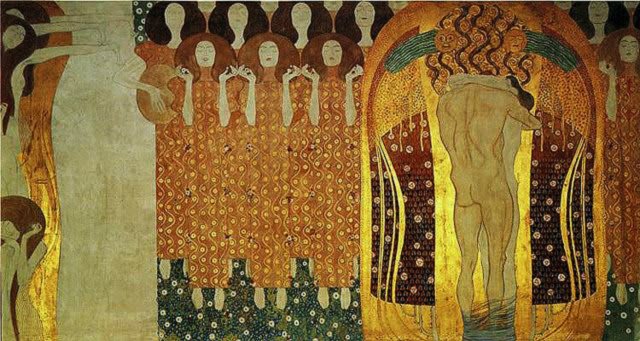
In 1902, Klimt created one of his most famous works, The Beethoven Frieze, for an exhibition of the Secession movement.
The entire show was a tribute to Ludwig van Beethoven.
Thirty-four meters wide and two meters high, this opulent, ornamental 'symphony' is where Klimt sought to immortalize Beethoven's 'Ninth' and its interpretation by Richard Wagner.
To understand the rest of this journey, continue reading our next article: Gustav Klimt: Biography and Work: Influences, Personal Life, and Artistic Style.


