
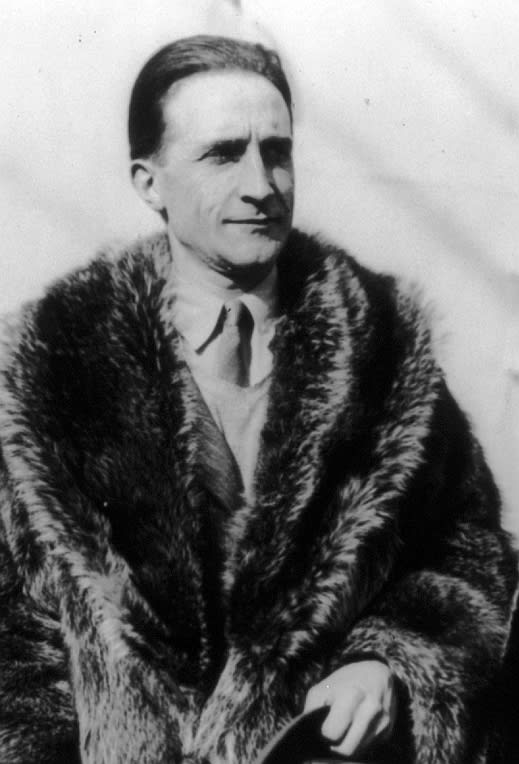
Marcel Duchamp Biography and Major Works: Legacy, Death, and the Essence of Art
Marcel Duchamp Biography and Major Works: Legacy, Death, and the Essence of Art
Between 1936 and 1941, Marcel Duchamp produced numerous boxes, called 'Boîte en valise,' where he gathered small reproductions of his major works, distributing them to his friends.
This practice was a way of sharing his ideas and inspirations with others without the need to publicly exhibit his works.
In 1942, Duchamp decided to settle permanently in New York with safety, thanks to his 'powerful friends.' In 1954, he married Alexina Sattler , who remained with him for the rest of his life.
For over twenty years, Duchamp worked in complete secrecy on his second masterpiece, Sên do (Etant donnés), a elaborate and sexualized diorama.
In his last years, he avoided the public eye, preferring to play chess with carefully selected guests until his death. Duchamp was an obsessive player: in many moments of reclusion, he played by correspondence with unknown people - 'Know that chess is my drug,' he once wrote in a letter sent from Buenos Aires to a friend in New York: 'I feel ready to transform myself into one of those maniacs who do nothing but play chess. Everything around me takes the form of a horse or a queen, and my exterior only interests me if its transformations lead to losing or gaining positions.'
Duchamp's work, reduced to a minimum, was a radical critical gesture, but in many statements, the artist refused to be seen as a destroyer. Duchamp's critical attitude still resonates, many years after his radical creations
Marcel Duchamp passed away on October 2, 1968, at 81 in Neuilly-sur-Seine, France
LEGACY
After retiring from the art world, Duchamp remained a passive, though influential, presence in the avant-garde circles of New York, until he was rediscovered in the 1950s by Robert Rauschenberg and Jasper Johns. Curiously, around that time, Duchamp welcomed an association with Dadaism - willing to join a group many years after its disappearance, without ever having to confirm the policies and questions that usually govern the group's dynamics. Duchamp practically enrolled in the movement and, therefore, in the history of art.
The insistence of Duchamp that art should be an expression of the mind, rather than the eyes or hands, spoke as much to minimalists as to conceptual artists. The seminal concept of the mass-produced readymade was eagerly grasped not only by Andy Warhol and other pop art artists, who saw Duchamp as their precursor, but also, due to its performative aspects.
Duchamp's radical criticism of art institutions made him a unique figure for generations of artists who, like him, refused to follow the conventional and commercial path of an artistic career. Although his work was admired for its extensive use of materials and artistic means, it is the theoretical impulse of Duchamp's eclectic, but relatively limited, production that explains his growing impact on successive waves of avant-garde movements in the 20th century and individual artists who openly acknowledged his influence.
GALLERY - COMMENTED ART
Few artists can boast of having changed the course of art history as Duchamp did. Having started his career as a painter, he created works with characteristics of impressionism, expressionism, and cubism; primarily situated between dadaism and surrealism.
What makes a work of art 'art'? Even before other artists were considering this question, Marcel Duchamp made it the basis of his practice.
To understand the rest of this journey, continue to our next article: Marcel Duchamp Biography and Major Works: The First Visual Provocations.


