
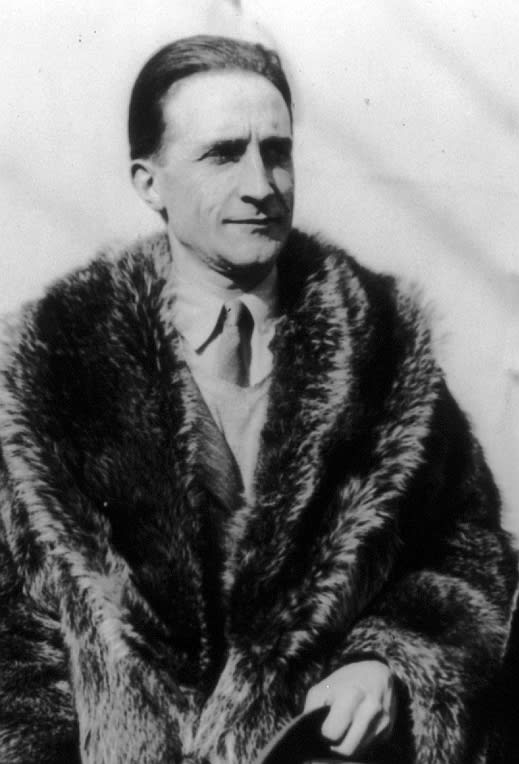
Marcel Duchamp Biography and Major Works: The Revolution of Readymades and Étant Donnés
Discover the radical works of Marcel Duchamp, from the 'Bicycle Wheel' and 'Fountain' to his enigmatic final installation 'Étant Donnés', which redefined art.
Article Index
- A Secret Noise - The readymade is a radical manifestation of Marcel Duchamp's intention to break with the craftsmanship of artistic operation
- Fountain - Duchamp's creations often tend to be controversial by their own nature
- Bottle Rack Series - It is an edition of eight signed metal racks
- The Bride Stripped Bare by Her Bachelors, Even - For seven years, from 1915 to 1923, he dedicated himself to planning and executing one of his two main works
- Mona Lisa. LHOOQ. - As a prophet of the avant-garde, Marcel Duchamp trusts more in substance than in form
- Étant Donnés - It is an installation developed between 1946 and 1966 in New York that was kept secret for years
Bicycle Wheel - The 'first readymade' - According to Duchamp, it was not art, but something to have in a room, very similar to a pencil pointer.
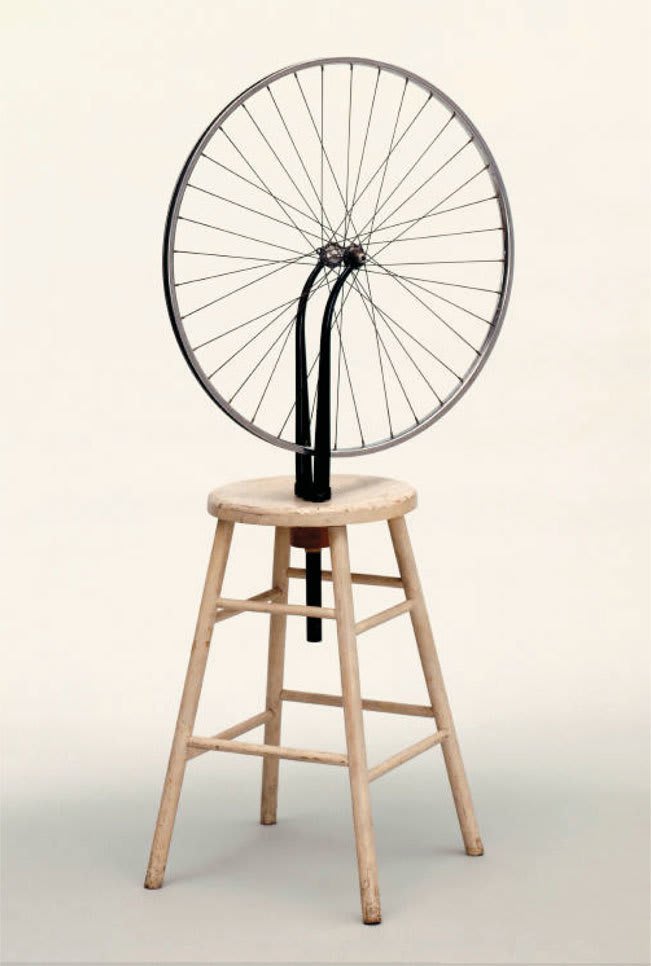
In retrospect, Duchamp also saw Bicycle Wheel as a transitional or experimental work that intervened between his more 'clearly established' readymades of later years and his earlier paintings.
Primarily because it was a work that could be interacted with, or rather, the wheel could be turned.
Duchamp explained: "Seeing that wheel spinning was very comforting, very comforting, a kind of opening up of avenues for other things beyond the material life of everyday .
I liked the idea of having a bicycle wheel in my studio.
I liked looking at it, just as I liked looking at the flames dancing in the fireplace."
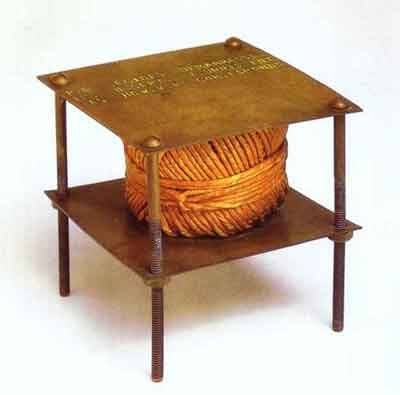
A Secret Noise - The readymade is a radical manifestation of Marcel Duchamp's intention to break with the craftsmanship of artistic operation
He appropriated something already made: he chose industrial products, made for practical purposes and not artistic.
This work in particular, was produced together with the Walter Arensberg, who was his friend and art collector.
They removed the screws and put an object inside the roll of twine between the two metal plates and did not reveal to anyone what this object was.
The secret remains to this day, the only thing we know is that when the work is balanced, it makes a noise, which can be a coin or a diamond.
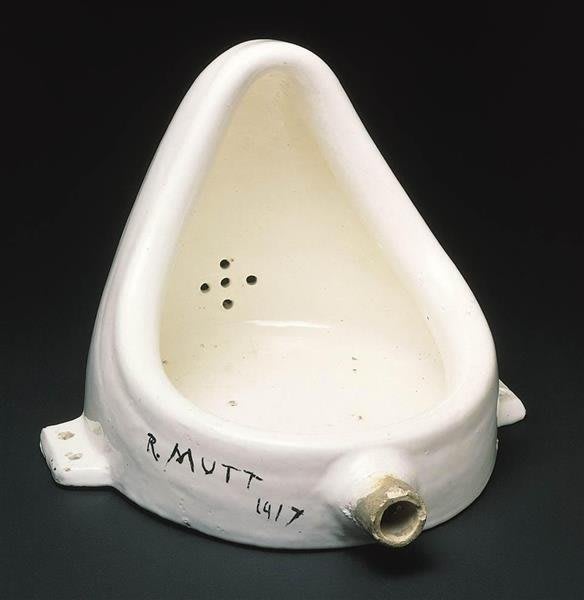
Fountain - Duchamp's creations often tend to be controversial by their own nature
The biggest explosion of his career is undoubtedly in this work, where he transformed a simple urinal into a work of art.
It is there that the readymade finds its essence and radically dominates 20th-century art.
These 'already made' pieces, are ready and are a gift from God to the artist who delivers a concept on his own, explained Duchamp.
The work was submitted to the Independent Artists Society of 1917 under the pseudonym of R. Mutt.
The R initial meant Richard, a French slang for 'sacks of money', while Mutt referred to the JL Mott Ironworks, the New York-based company that manufactured the porcelain urinal.
After the work was rejected by the Society on the grounds that it was immoral, the critics who defended it contested this argument, arguing that an object was invested with a new meaning when selected by an artist for display.
Testing the limits of what constitutes a work of art, Fountain established new fundamentals.
What began as a playful elaboration, became a project that proved to be one of the most influential works of the 20th century.
Click here to learn more
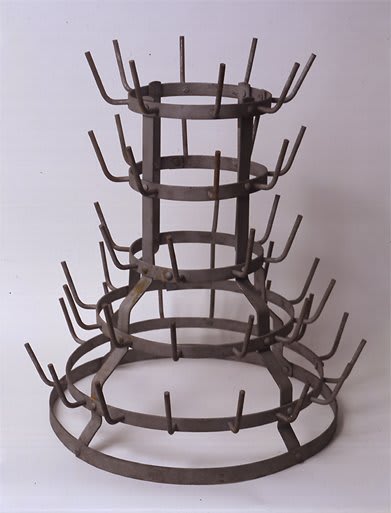
Bottle Rack Series - It is an edition of eight signed metal racks
In 1913, Duchamp asked himself: 'Can someone make a work of art that is not a work of art?'
In the case of this readymade, a metal rack for drying wine bottles, the answer is yes.
He stated that the act of choice by an artist is sufficient to transform any functional object into a sculpture without function - hence the term 'readymade', an object found or manufactured whose previous purpose is nullified, due to the new classification of the object by the artist.
It was altered conceptually.
For a world of art that valued the evidence of the artist's hand and work, the shock value of the readymade was high.
Additionally, the object accumulated additional associations, including a symbolic relationship with the Eiffel Tower and erotic connotations associated with the empty tips of the shelf.
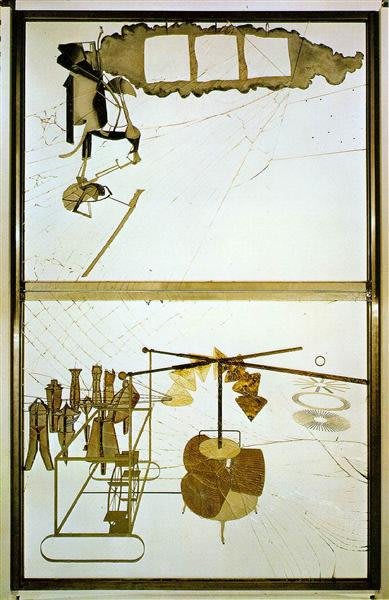
The Bride Stripped Bare by Her Bachelors, Even - For seven years, from 1915 to 1923, he dedicated himself to planning and executing one of his two main works
This machinery installation between glass panels was the first 'aesthetic manifesto' of Duchamp, marking his rejection of the outdated pictorial obsessions with pleasing the eye, in a theory he called "Retinal Shock".
The Bride Stripped Bare by Her Bachelors, Even, thematically investigated eroticism and desire, which was typical of his work.
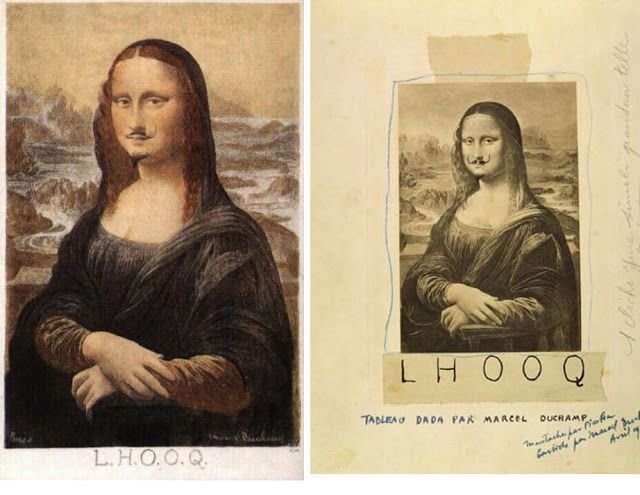
Mona Lisa. LHOOQ. - As a prophet of the avant-garde, Marcel Duchamp trusts more in substance than in form
However, he repeatedly reveals a good humor, tinged with irony and subversive humor .
By liking to play with words, he creates numerous sexual innuendos through visual means that also rely on a linguistic dimension .
We think particularly of the version of the Mona Lisa in LHOOQ (The title refers to the French pronunciation of the letters, 'Elle a chaud au cul', which translates approximately to 'She has a nice ass').
By giving the Mona Lisa masculine attributes, he alludes to Leonardo the supposed homosexuality and gestures about the androgynous nature of creativity.
Duchamp is clearly concerned here with the inversion of gender roles, which later comes to the fore in Man Ray's portraits of the artist dressed as his female alter ego, Rrose Selavy.
Étant Donnés - It is an installation developed between 1946 and 1966 in New York that was kept secret for years
Installed behind a heavy wooden door found in Spain and sent to New York, the piece consists of a diorama seen through two eye holes.
The scene depicts a naked woman, possibly dead, with her legs open, holding a lit gas lamp.
A mountainous landscape, based on a photo taken by Duchamp in Switzerland, creates the background scene.
Constructed in secret for over twenty years, Étant Donnés is considered Duchamp's second major work.
At first glance, the work is a direct reference to Gustave Courbet's Origin of the World, of 1866.
However, upon closer inspection, the piece can be seen as a reflection on the boundaries between artist and spectator, as a means of questioning self-awareness or as a meditation on the spiritual purpose through the symbolism of a lit lamp.
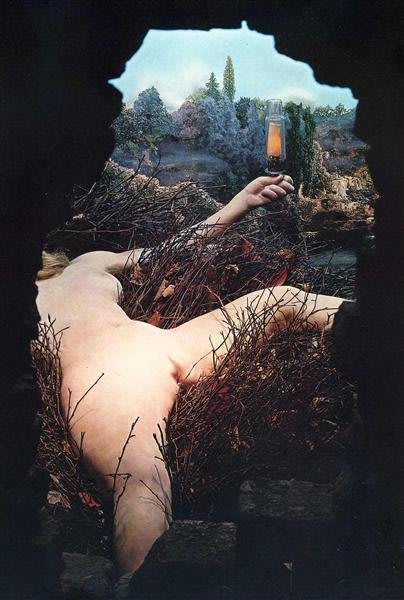
There is a curious speculation involving the Brazilian artist Maria Martins, who is said to have been the muse and model for the creation of this work.
The sculptor, who also acted as an ambassador, then married to the ambassador Carlos Martins Pereira e Souza, lived in the United States between 1939 and 1948, and associated with the surrealist movement through Duchamp, when they met and became lovers in the same period
This is the artist's last major work.
They were only revealed a year after his death.
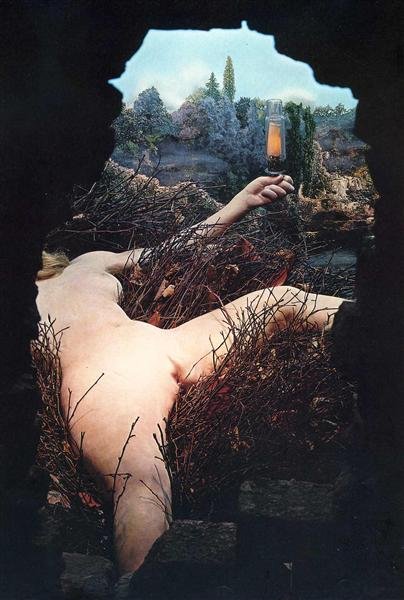
Étant Donnés - A visit to the installation at the Philadelphia Museum of Art...


