Number 1A 1948 - Jackson Pollock
Number 1A 1948 - Jackson Pollock
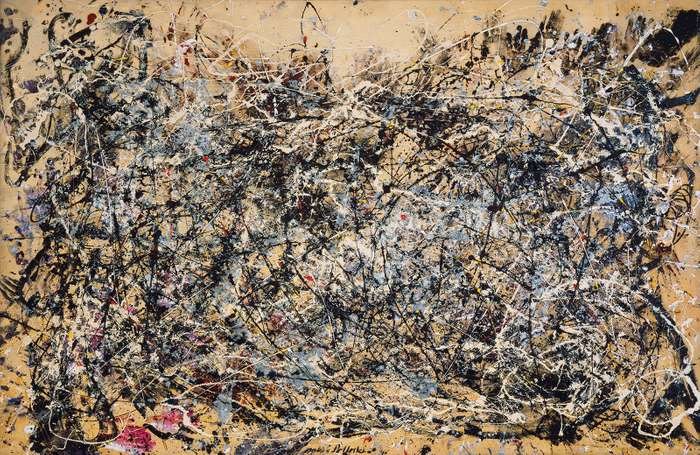
Number 1A 1948 by Jackson Pollock is one of the most iconic paintings of the abstract expressionist movement, a style that Pollock helped define.
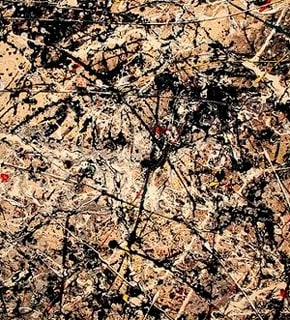
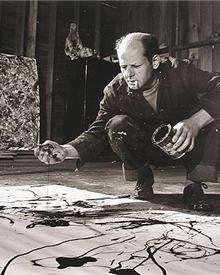
Created in 1948, the work is characterized by Pollock's distinctive style, which involved dripping and splashing paint directly onto the canvas instead of using brushes, creating a complex web of lines and abstract forms.
'Number 1A, 1948' is a striking example of Pollock's dripping technique, which aimed to express emotions and inner impulses in a non-figurative way.
The work is a testament to Pollock's innovative approach to painting and its lasting influence on modern art.
Number 1A 1948 is a masterpiece by American artist Jackson Pollock, where the artist applies his famous 'dripping' technique, the radical method that contributed to the expressionism abstrato, which gives rise to the painting called “action painting”.
Moving around an extension of canvas placed on the floor, Pollock threw and dripped paint onto the surface, with Number 1 being one of the largest of his works that showcase these dynamic gestures. In it, the canvas pulses with energy: strings and threads of enamel, some dark, others bright, weave and run, a intricate web of blue and gray tones intermingled with black and white. The way the paint meets the canvas can suggest speed and force, and the image as a whole is dense and exuberant.
Executed in 1948, the Number 1A is the first to showcase techniques that bridge the gap between his earlier easel paintings and the poured works for which he is most celebrated.
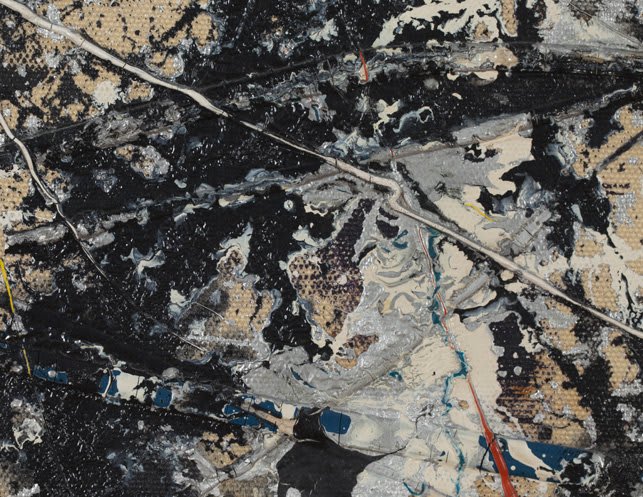
His strategy for establishing the composition involves various techniques of application, presenting a series of hand impressions that provide structure for other layers.
Although the style of this painting has become synonymous with the name Jackson Pollock, here the artist autographed the work even more directly, with several hand marks found in the upper right corner of the composition. At that time, Pollock stopped giving evocative titles to his paintings and began numbering them. His wife, the artist Lee Krasner, explained later: 'The numbers are neutral. They make people look at a painting for what it truly is, pure painting.'
The collectors did not appreciate the radical new style of Pollock immediately, and when first exhibited in 1949 (then titled Number 1, 1948), this painting remained unsold. Later that year, the work was shown again in Pollock's second solo exhibition, where he added the letter 'A'.
Number 1A 1948 - POSSIBLE MEANING
Jackson Pollock arrived in 1948 at a transformative moment in his career. He abandoned the easel, working directly on the floor. He began using enamel paints that he alternated with the common oils used by artists. He also used his hands to lightly stain the color of the canvas. He worked some areas with a brush, in others he dragged the pigment directly from a tube to create impasto threads. In the middle, he dripped and poured paint onto the canvas.
The massive canvas evokes the walls of a prehistoric cave, the oldest known mark of the primitive man. Pollock is declaring his identity free of language in the most elementary way. He was seeking pure painting, and from this work, he began marking his territory.