Abstract Art
Abstract Art: A Form of Expression
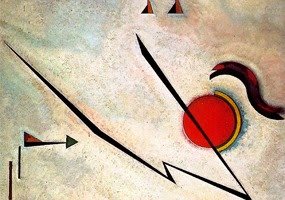
Abstract art is a form of artistic expression that does not attempt to represent reality in an objective manner.
Instead, it focuses on colors, forms, lines, and textures to achieve its visual and emotional effect.
Emerging in the early 20th century, abstract art broke with conventional artistic traditions, such as realism and impressionism, seeking a more free and subjective visual language.
Artists like Wassily Kandinsky, Piet Mondrian, and Kazimir Malevich were pioneers in this movement, exploring new ways of expressing themselves and challenging the traditional notion of art as mere representation of visible reality.
Abstract art continues to be an important form of artistic expression, allowing artists to explore the inner world and human emotion in deeply personal and innovative ways.
Abstract Art: An Overview
Abstract art is often seen as a bearer of moral dimension, in the sense that it can be viewed as virtues such as order, purity, simplicity, and spirituality.
Since the early 1900s, abstract art has formed a central stream of 'modern art' and has been evolving throughout the 20th century.
Abstraction can be attributed to impressionism, post-impressionism, and cubism. All three helped to perceive that art could be non-representational.
Pioneers of Abstract Art
1910, Wassily Kandinsky: His artwork expressionists involved colorful brushstrokes and non-naturalistic intense, often based on the artist's internal feelings.
1913.14 - Juan Gris: Cubist artworks always began with a subject from reality (often objects and figures), with their elements then divided into areas or distinct planes, showing different viewpoints at the same time.
1912. 1914 - Robert Delaunay: Orphism, coined by French poet and art critic Guillaume Apollinaire. The name comes from the ancient Greek musician Orpheus, as Apollinaire thought that painting should be like music.
1915 or 1916 - Kazimir Malevich, Suprematism: Malevich created a new form of abstraction to free art from the real world. Like the 'suprematist square', he developed a whole range of forms, often produced in intense colors, floating against a generally white background.
1917 - Naum Gabo: Constructivism developed by the Russian avant-garde. The constructivists were influenced by the three-dimensional still lifes made of scrap materials.
1920 - Joan Miró: Inspired by Freud's idea of free association (the desire to reveal the unconscious mind), artists like Joan Miró and Max Ernst created automatic paintings.
1920.1940 - Paul Klee: His highly individual style was influenced by the art movements that included expressionism, cubism, and surrealism.
1940.1950 - Jackson Pollock: The action painters were directly influenced by automatism.
1960s - Victor Vasarely: Op art is seen as a subdivision of post-painting abstraction, this rigid geometric abstraction reacted to the more gestural expressionism.
Abstract Art in the Present
Abstract art now lives in the art world in many forms. It is two-dimensional and three-dimensional. It can be large or small.
Abstract art can also be made with many materials and on many surfaces. It can be used with representational art or completely abstract.
The continued interest in abstract art lies in its ability to inspire our curiosity about the scope of our imagination and the potential to create something completely unique in the world.
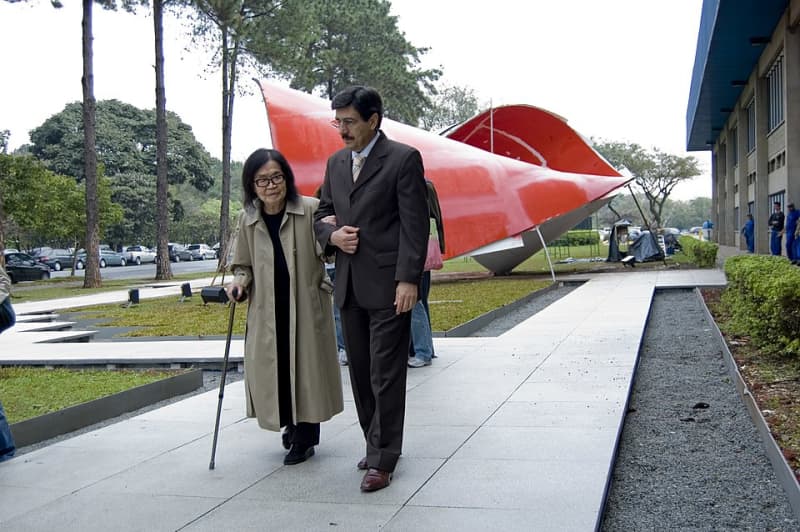
“I don't give titles to my works so that the person who sees them doesn't get only one meaning in their head. Not having a name makes the person use their own thinking” - Tomie Ohtake


