
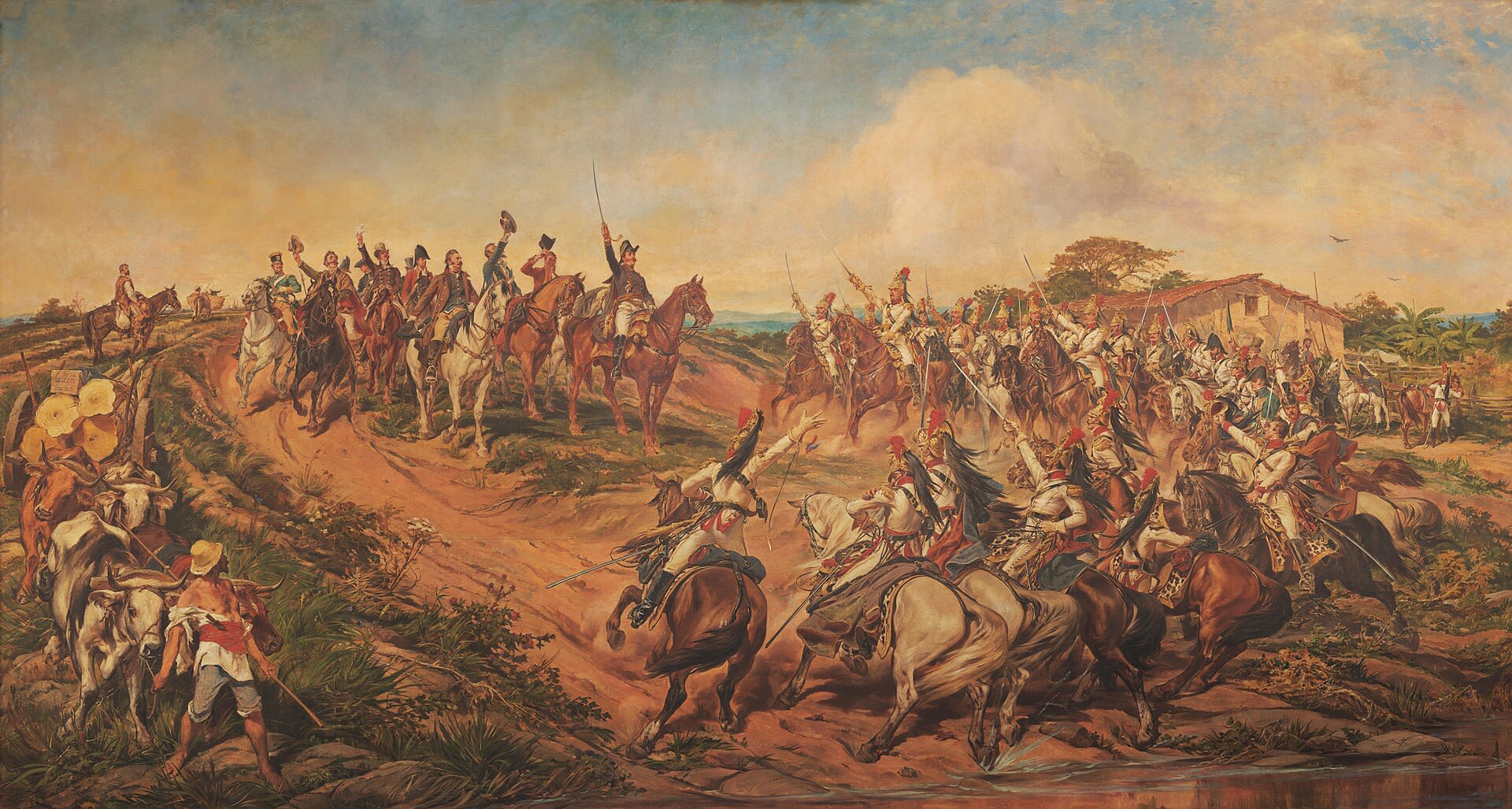
Pedro Américo: A Life of Artistic Excellence
Discover the fascinating life of Pedro Américo, a renowned Brazilian painter, writer, and scientist.
Pedro Américo was one of the most important painters representing the academic art movement in Brazil.
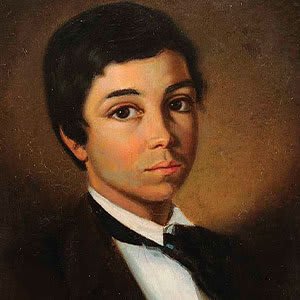
He was also a novelist, poet, scientist, art theorist, essayist, philosopher, politician, and professor, as written by his biographer and grandson, Cardoso de Oliveira, about his grandfather: genuinely Brazilian, of medium stature, slender, dark-skinned, and pale, with black eyes and hair, melancholic and serene expression, expressive face, and distinctive features, including thick eyebrows, a bushy mustache, and an inseparable telescope, such is, in broad strokes, the modest physical appearance of such a great figure.
Pedro Américo de Figueiredo e Melo was born in the city of Areia, in the state of Paraíba, on April 29, 1843.
He was raised in an artistic household, with his father being a dedicated violinist who taught him music and drawing through art books, thus sparking his interest in paintings and the lives of the Old Masters.
He soon developed a precocious talent for drawing, and he was very talented, with many people pointing him out as a child prodigy.
In 1852, a scientific expedition to northeastern Brazil, led by the French naturalist Louis Jacques Brunet, arrived in Rio and the leader visited Pedro Américo's home to see his work.
He also tested his drawing by having the boy copy some objects.
He was so impressed with the results that he hired him as a junior draftsman on his scientific expedition, during which he would document pictorially the flora, fauna, and landscapes encountered on the journey.
Pedro Américo was not yet ten years old, but with his father's blessing, he left for the expedition that would last twenty months.
His production of drawings from this expedition was so perfect that he was awarded a place at the Imperial Academy of Fine Arts, but since he was still too young to enter the academy, his admission was delayed for a year.
During the waiting period, he attended the Colégio Pedro II in Rio de Janeiro, where he studied Latin, French, Portuguese, arithmetic, drawing, and music.
In 1856, he enrolled in the three-year course in Industrial Design at the Imperial Academy of Fine Arts.
There, he refined his skills as a draftsman and painter, and his progress was rapid.
He was an excellent student and won many medals for his work.
Emperor Dom Pedro II heard about Pedro Américo's artistic talent, and being a great lover and patron of the arts in Brazil, he was enchanted by his abilities and, before the young artist finished his studies, the emperor arranged for a scholarship for him to study in Europe.
Pedro accepted the travel scholarship, which had terms that, in exchange for a three-year grant, he would attend the École des Beaux-Arts in Paris, follow the strict disciplines of the Academy, and regularly send works he had completed, such as studies of life and copies of paintings by the Old Masters, to follow his progress and development.
Going to Europe and attending this academy was the greatest prize an artist could receive.
In May 1859, Pedro Américo arrived in Paris at the age of sixteen.
He soon enrolled in the École des Beaux-Arts in Paris.
It was at this prestigious art school that he was taught by the great French painters of the time, including the neoclassical painter Jean-Auguste-Dominique Ingres, Hippolyte Flandrin, and Horace Vernet.
He took advantage of the opportunity to live in Paris to study physics at the Paris Institute of Physics and also attended the University of Sorbonne, where he studied architecture, theology, literature, and philosophy.
He graduated in natural sciences from the Sorbonne, with the thesis Philosophical Considerations on the Fine Arts among the Ancients.
By around 1863, he moved to Florence, where he lived for approximately a year.
After this stay in Italy, Pedro Américo returned to Rio and took up the chair of Drawing at the Imperial Academy of Fine Arts.
However, he would soon be leaving Brazil again, and in 1865, he returned to Europe, this time settling in Brussels and attending the university, where he obtained a doctorate in sciences in 1868.
In the same year, he traveled to Lisbon, where he stayed in the home of one of his former tutors, Manuel de Araujo Porto Alegre, and it was there that he met the daughter of his host, Carlota de Araújo Porto Alegre, and a year later, they married.
The couple had two children, a daughter named after her mother, Carlota, and a son named Eduardo.
In 1870, the couple traveled to Rio de Janeiro, where the artist gave lectures at the Imperial Academy of Fine Arts.
The theme of his lectures included aesthetics, archaeology, and the history of art.
As another way to earn a living, he also made caricatures for a magazine.
He completed a series of commissioned portraits, including one of Emperor Dom Pedro II, titled The Speech from the Throne.
To continue understanding the rest of this journey, please read our next article: Pedro Américo: Masterpieces and Eternal Legacy.


