Robert Delaunay and the Orphism
Robert Delaunay and the Orphism
Robert Delaunay was a French painter known for being one of the founders of the Orphism movement and for his innovative use of color and light.
Born in Paris on April 12, 1885, Delaunay studied art at the Academy La Palette and later at the Academy of the Grande Chaumière. During his early years as an artist, he was drawn to the Impressionism , following Georges Seurat . It was then that his love for chromaticism began to be perceived, and even more so with the arrival of the Fauvism movement, which he also adopted.
In 1910, Delaunay and his wife, the painter Sonia Delaunay, began to explore the use of color and light in their art, which led to the development of a new movement that focused on exploring the relationship between color and form and sought to create a sense of dynamism in painting. Thus, the Orphism or Cubist Orphism was born, named in 1913 by the poet Guillaume Apollinaire.
The Futurism and the Cubism were related and influenced each other, Delaunay had contact with both currents at the time, creating a simultaneous art: different actions in different moments with different elements fused at the same time.
The Cardiff Team
It was from the creation of The Cardiff Team that Delaunay initiated a process of change in his work. A newspaper photograph of a rugby match served as an excuse for the artist to paint a modernity-filled painting. Delaunay also included highly contemporary motifs, such as the Eiffel Tower, which appears in many of his paintings, the famous Paris Ferris wheel, and even advertising posters like the Astra poster, advertising an aircraft construction company.
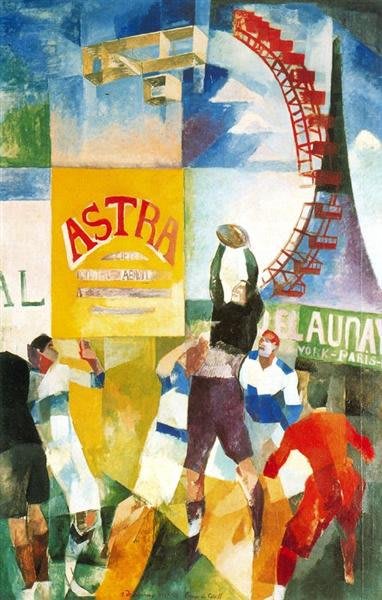
However, the work needs the fractured energy and extreme dynamism of Futurist works and is too colorful to fit into Cubism. This type of Cubo-Futurism needed a new name. Perceiving this, the poet Apollinaire, baptized it as Orphism, in honor of Orpheus, a mythological character who enchanted the gods with melodies that connected with the soul.
Through his works, Delaunay explored a wide range of themes, including urban landscapes, portraits, and abstract subjects. His masterpiece "Simultaneity of Colors" is a series of abstract paintings that use bright colors and shapes to create a sense of movement and energy. Despite everything, this movement is very imprecise when it comes to classifying it and is worth more for its poetic load than for its critical and historical value. Although it was one of the first manifestations of abstract art.
Aside from his work as a painter, Delaunay was also a prolific writer and art theorist. He wrote several essays on Orphism and the relationship between color and form in art.
Robert Delaunay died at 56 in Montpellier, France, on October 25, 1941. His work continues to be a great influence on modern painting, and his legacy continues to inspire artists around the world.
GALLERY
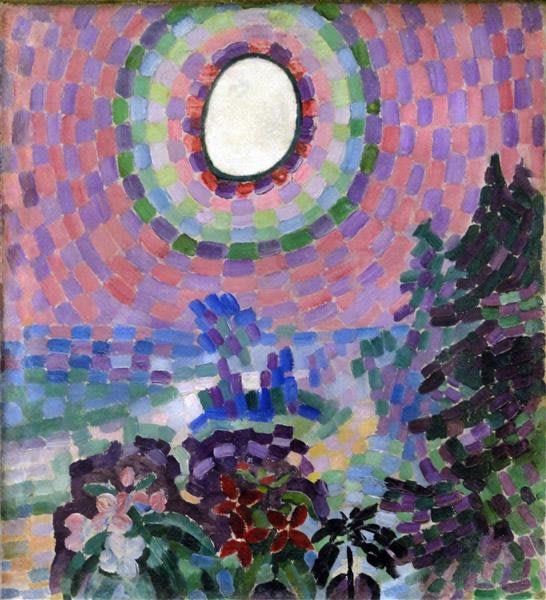
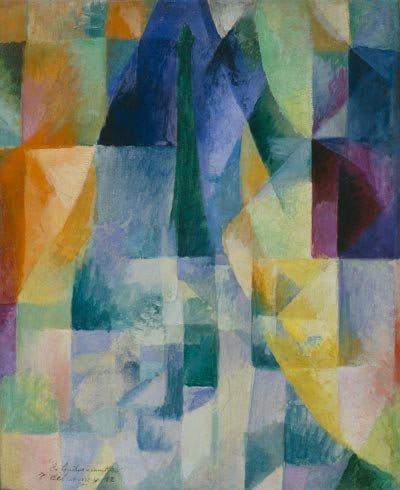
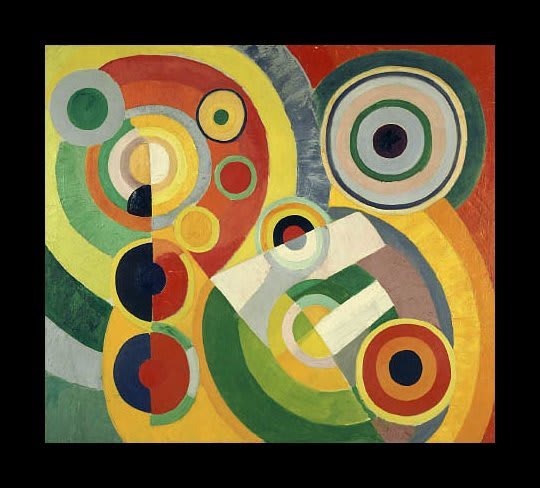
Artwork Reading: Portuguese Woman
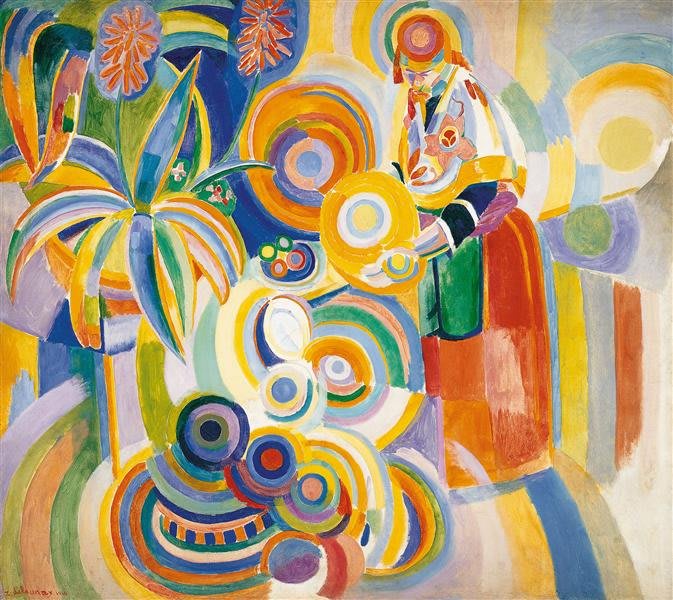
In 1916, the Delaunay couple settled in Vila do Conde, a locality near Porto, and their stay was one of the happiest and most fruitful periods. Both Robert and Sonia were fascinated by that Portuguese light and mixed abstraction, Cubism, and an excessive use of color to capture the rural markets of the place. This period also served as a way to distance themselves from the First World War and at the same time discover a very different light from the French one. The artist declared: "That country where, as soon as we arrived, we felt enveloped by an atmosphere of sleep, of slowness ... Forms, colors, women who disappear between mountains of pumpkins, legumes, in enchanted markets by the sun".