
Symbolism Beyond France
Explore the vast influence of Symbolism beyond France, meeting important artists from Belgium, the Netherlands, Germany, Austria, Scandinavia, and Eastern Europe.
Symbolism beyond France
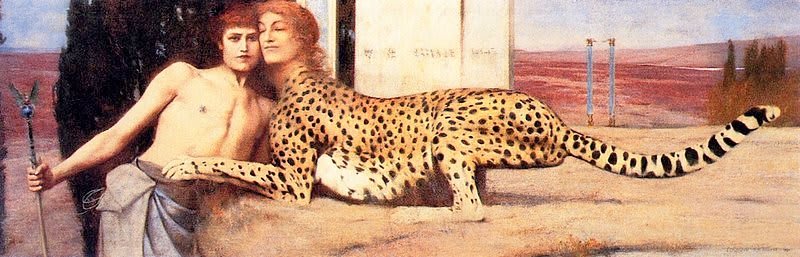
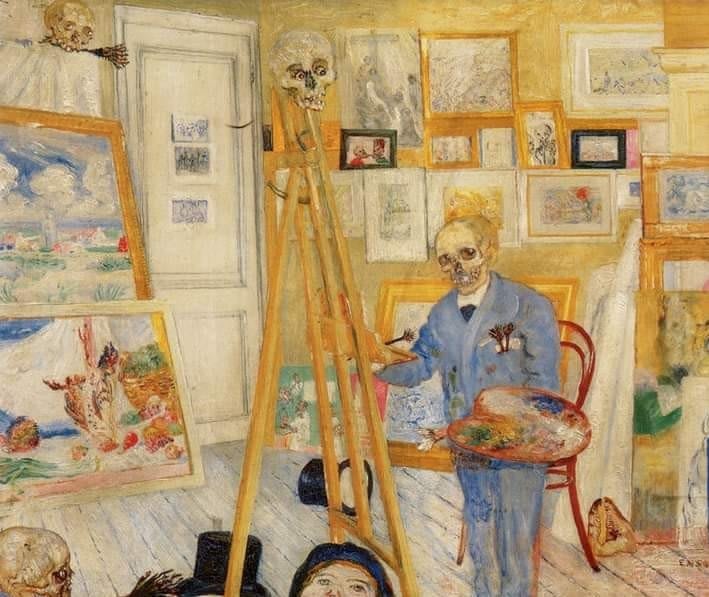
Fernand Khnopff was one of the most important Belgian artists. His work The Sphinx is one of the most iconic Symbolist paintings. Also active in Belgium was James Ensor, who developed his own unique vision of Symbolism based on carnival figures and William Degouve de Nuncques, whose intimate works delve into the secret world of dreams and imagination. His paintings are almost always set in dark night, illuminated by stars or lit windows, thus creating a profound meditation on our inner world.
Two of the most important Dutch Symbolists were Jan Toorop and Johan Thorn Prikker. Toorop came into contact with Symbolism in Belgium and, in turn, inspired Prikker to explore the movement. Toorop spent his childhood living in Java, Indonesia, which had a profound impact on his art and his exploration of the world of dreams, the subconscious, and the world of shadows. Forms inspired by Javanese shadow puppetry can often be found in his work.
In the German-speaking countries, Arnold Böcklin, was an important figure in Symbolism. His approach to Symbolism was less somber than that of many of his colleagues. He was inspired by the warm light of Italy and the antiquity of aura. His most famous work is The Isle of the Dead, of which he made five versions. He called the painting "a quiet place" and made it for a young widow, who asked him to make an "image to dream".
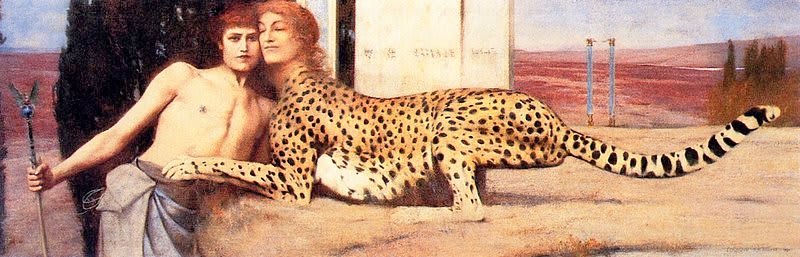
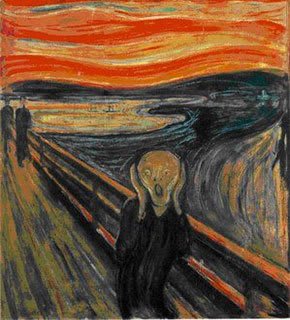
In Austria, the paintings of Gustav Klimt reveal the close connection between Symbolism and parallel movements like Art Nouveau. Klimt's lavish canvases explored the productive and destructive forces of feminine sexuality. Klimt's work, which was often strongly criticized and even hidden from the public's eyes at the time, is a testament to the desires and fears of that era.
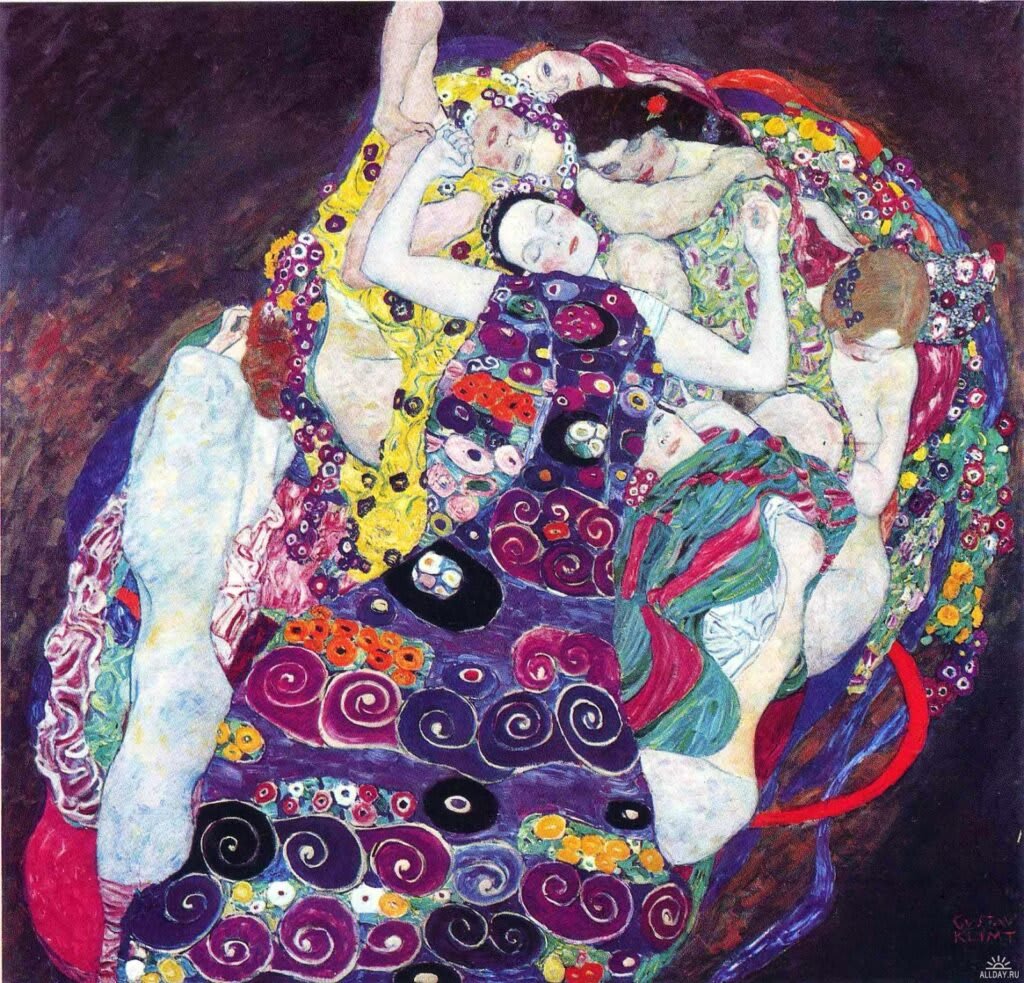
In Scandinavia, the Norwegian Edvard Munch was closely associated with the Symbolists. He spent time in Paris and then settled in Germany in the 1890s. His style is often referred to as Naturalistic Symbolism, a term that reflects the fact that his themes are based on the real anxieties of modernity rather than mythological or exotic representations. Exploring the deepest parts of the psyche and human suffering, the themes that Munch often covered in his paintings include illness, loneliness, despair, and mental suffering. He created his most famous painting, The Scream, after an intense experience he had while walking at sunset, when he was suddenly overwhelmed by the deepest sense of despair, feeling an infinite scream passing through nature.
Important Slavic Symbolists include František Kupka and the Czech Alphonse Mucha. Both artists spent time living and working in Paris, and worked in styles often related to Symbolism. Mucha became famous for his Art Nouveau posters, which he created from photographs of models. Where Kupka delved deeply into the realm of the subconscious, the supernatural, and the suffering of the time, Mucha's work was much lighter and lacked the intense anguish and suffering that was characteristic of most Symbolist works.
The Belgian artist James Ensor's vision is an example of the abyssal, the excessive, the voluptuous, and the absurd combining with decadence and the desire for death, the gaze of the soul fleeing the world with mysticism at the end of the 19th century, the Symbolism inspiring future Surrealism.
The Nabis
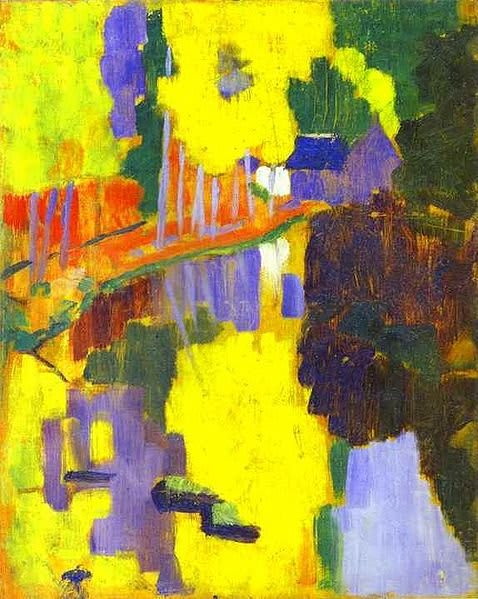
From the Hebrew and Arabic term for prophets and, by extension, the artist as the seer, The Nabis were a Symbolist group founded by Paul Sérusier in 1889 and based on his painting The Talisman . Although they did not share the same religious or political views as other Symbolists, the Nabis wanted to be in contact with a higher power, they believed that the artist had the role of a high priest who had the power to reveal the invisible. Their style grew more from the work of Paul Gauguin, manifesting itself in the flatness and stylization, although the theme is different, focusing on domestic interiors, as in the case of Édouard Vuillard and Pierre Bonnard. Many of the Nabis artists published in the Symbolist magazine La Revue Blanche alongside their literary counterparts.
The end of Symbolism
The idealism behind Symbolism is the reason why it was later renounced. The First World War caused terrible disillusionment, and the naive beauty of Symbolist art was rejected and criticized. The modernism took over while the artists followed entirely new directions to oppose the violence and destruction of the war and deal with their traumas. Movements like the Dadaism and the Surrealism emerged, each in their own way due to elements of Symbolism, while exploring new paths and seeking answers in irrational, brutal, and primitive art.
Reading of the highlighted work "Night" by Odilon Redon
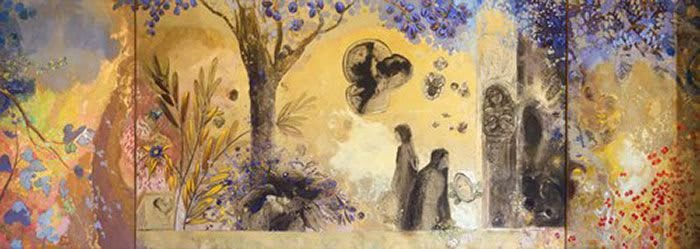
Night, by Odilon Redon - In 1910, Redon decorated the library of the property of Gustave Fayet, his friend and an artist who bought the medieval abbey in 1908 with the intention of restoring it. For this, he created two large panels, Day and Night , for the two walls, and a smaller panel over the door, representing four horses in homage to the ceiling decorations of Eugène Delacroix for the Museum of the Louvre in a golden-toned and flowered setting, expresses the joy that Redon employed in his paintings. In the panels, he retrospectively contemplates his own work. Night is itself similar to a dream. The representation of the figures in darker colors suggests that they inhabit the world of night, sleep, and reverie. The butterflies for Redon were creatures of light that emerged from the "chrysalis of darkness". While he recognizes his noirs in the dark figures, the surrounding golden light attenuates the darkness, so that the scene evokes a kind of peaceful and imaginary paradise.


