Tarsila do Amaral: Defining Works, Panels, and Modernism's Later Years
Tarsila do Amaral: Defining Works, Panels, and Modernism's Later Years
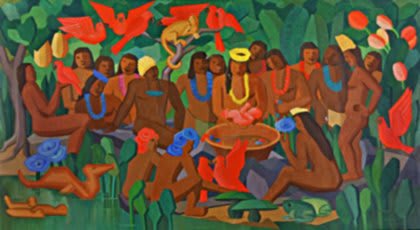
Tarsila created two large-scale panels during her career, both in the 1950s.
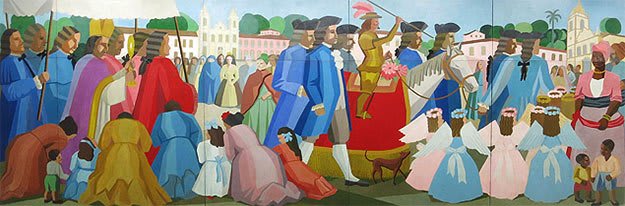
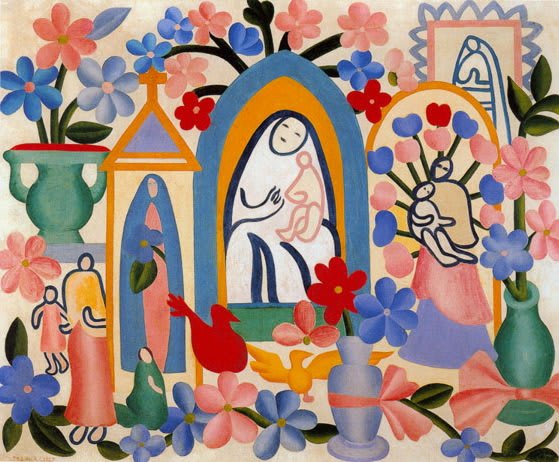
In 1954, she finished Procession of the Most Holy, commissioned for the celebrations of São Paulo City's 4th Centenary.
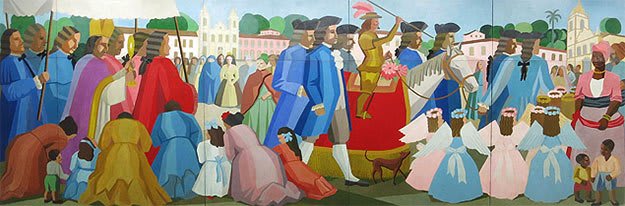
Two years later, in 1956, she completed another panel for Editora Martins, titled Macunaíma's Baptism.
While its theme touched on several subjects that interested the artist, this painting feels somewhat removed from the rest of her output. Its contrasting, somber tones, along with the stylized figures, details, and overall composition, set it apart.
HER FINAL YEARS...
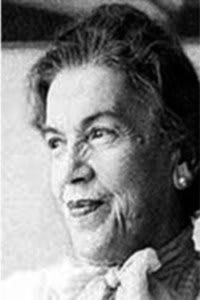
Towards the end of her life, Tarsila contended with severe back issues, eventually confining her to a wheelchair.
She passed away on January 17, 1976, at the age of 86, in São Paulo, and was laid to rest in Cemitério da Consolação.
Across her career as a visual artist, an impressive 2,132 works were cataloged.
Beyond her paintings, this tally included five sculptures, hundreds of drawings, illustrations, prints, and murals.
Most importantly, though, she propelled Brazilian art onto the global modernist stage, shaping a unique and truly Brazilian style.
To explore the journey of another iconic Brazilian painter, immerse yourself in the Biography of Candido Portinari: Childhood, Art, and the Roots of Brodowski
ART IN FOCUS
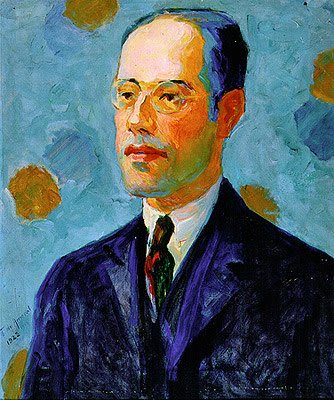
Letter from Mário de Andrade to Tarsila do Amaral:
Esteemed Ms. Tarsila do Amaral
Paris
São Paulo, 11-01-1923
"Dearest friend,
If it’s truly so that the Greeks and Romans treated their gods with friendly familiarity, then I believe it was Christianity that brought to Westerners their fear of divine entities.
I approach you with apprehension. I believe you are a goddess: NEMESIS, mistress of balance and measure, foe of excess.
When a man on Earth became too happy, seeing his lands and wealth swell, having arms, loving lips, crowns of glory, and joys only surrounding him, Nemesis would appear.
She came slowly, with her slow, soundless step.
But from the man of Earth, riches and joys would flee.
He lost love, glory, and laughter.
You are Nemesis, undoubtedly.
I was well.
Joyful, confident, courageous.
But Nemesis drew near me, with her slow step, very slowly.
Then she departed.
Illnesses.
Weariness.
Desolation.
Indeed, I was in bed for the entire end of December.
I've just returned from the farm where I rested for ten days.
But is it truly Nemesis?
That you are a goddess, I am certain: by your bearing, your intellect, your beauty.
But the goddess who curbs the excess of pleasures?
I don't believe it.
Your memory only floods me with joy and gentleness.
You are solace, rather than sorrow.
The true, eternal Nemesis consists of the relentless hours that pass day and night, day and night, sun and darkness.
I am in the months of darkness.
It was weakness that made me think you were Nemesis.
Forgive me.
I am at your feet, on my knees.
Once more: forgive me.
I await your long letter, telling brief things of Paris.
I am already imagining the splendor of my Picasso.
Thank you.
Tell me something of Art.
Are you working yet?
Are you painting a lot?
Did you receive Klaxon n° 7?
Farewell.
Mário de Andrade
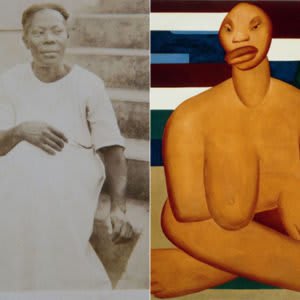
The Black Woman
In Paris, Tarsila studied under the renowned painter Fernand Léger.
When she finished this canvas, it impressed him so profoundly that he showed it to all his students, declaring it an exceptional piece.
Within this painting, cubist elements grace the background, and it's also recognized as a precursor to the artist's Anthropophagy movement.
The black woman with large breasts was a figure from Tarsila do Amaral's childhood. Her father was a prominent landowner, and black women, often daughters of slaves, served as "amas-secas"—wet nurses or nannies—who cared for the children.
Carnival in Madureira -
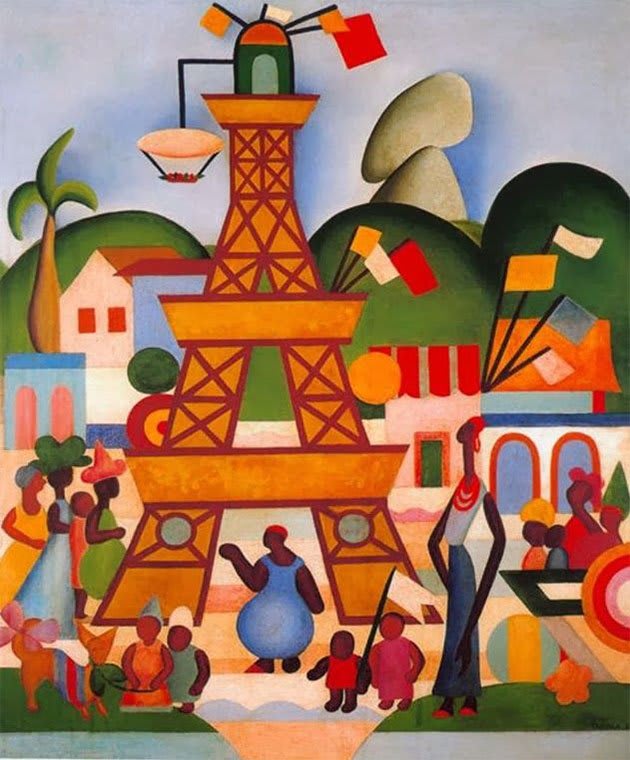
Tarsila transplants Paris's Eiffel Tower to Rio de Janeiro, aiming to capture her travel memories and the time she spent there. Within the same frame, we also encounter the famous airship and the stones from the farm where she was born—all elements conjuring her childhood and life experiences up to that point. This vibrant scene unfolds in Madureira, a bohemian district and a heartland of Rio's celebrated carnival.
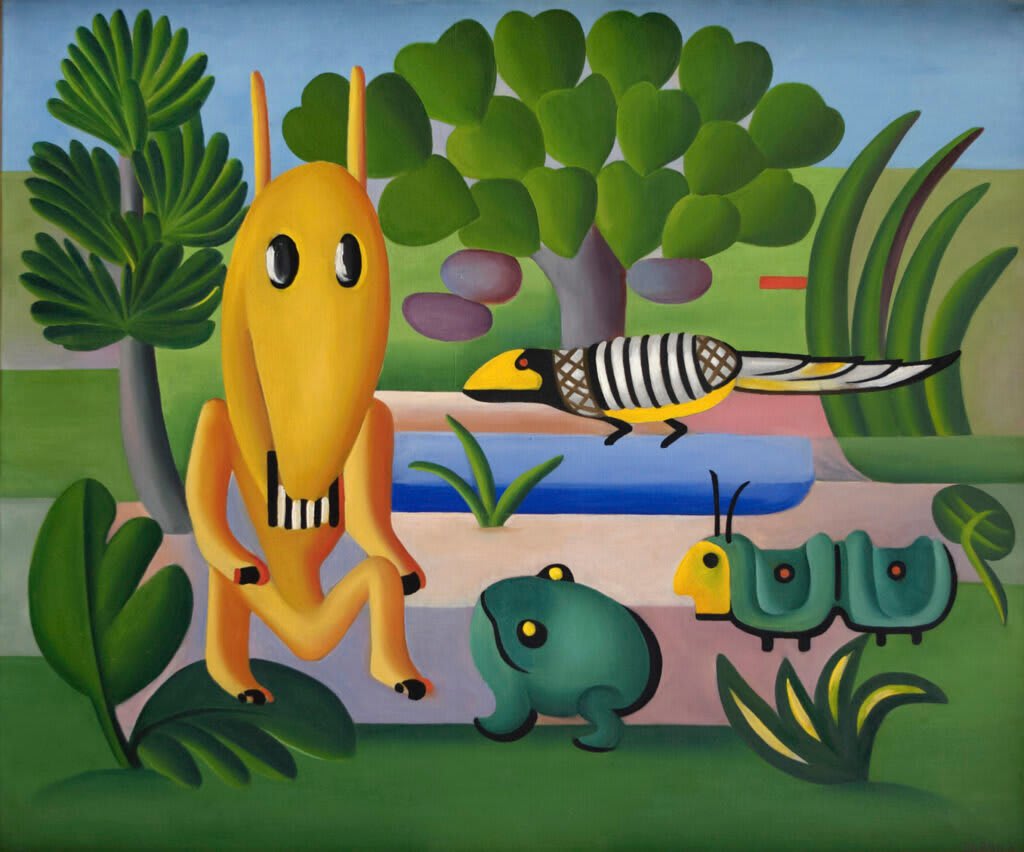
Tarsila once remarked about one of her most celebrated works: "A Cuca embodies Brazil, it’s in our culture. I invented the Cuca, just as I envisioned her. I blended various animals from our fauna and employed colors I hadn’t used before this painting phase. They advised against using these lovely, vivid colors: vibrant and bold." She continued… "I'm creating some very Brazilian creatures, and they've been much appreciated. Now I’ve made one titled A Cuca. It's a strange beast, in the wilderness with a frog, an armadillo, and another creature of my own making."
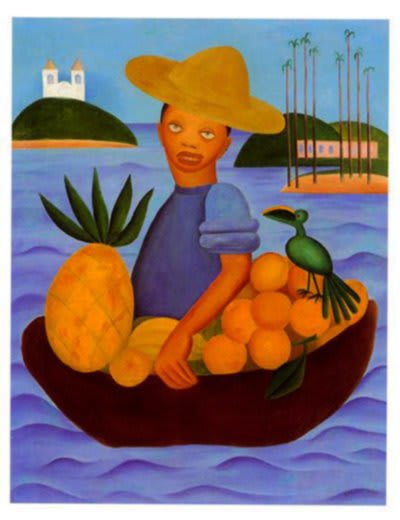
The Fruit Seller -
This painting transports us to a lyrical world: a tropical country teeming with fruit and gentle vistas.
The small boat crossing the ocean bears many symbols, including the earth's bounty, representing the vast abundance found across this enormous nation.
The character featured prominently in the foreground, wearing his large hat, symbolizes agricultural labor.
In both form and color, he rhymes visually with the pineapples and large oranges.
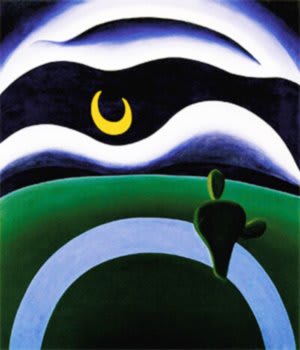
- The Moon -
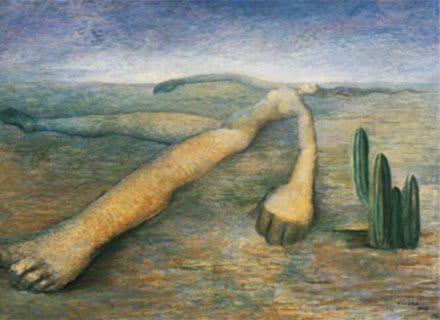
Observing this painting, one notes how natural elements like the moon and cactus are rendered in a stylized manner. Indeed, the entire composition echoes the painter's dreams and reveries.
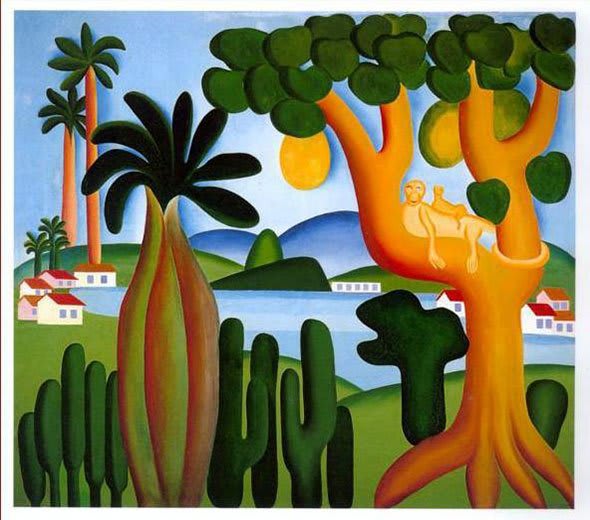
- POSTCARD - In this 1929 canvas, we witness the stunning city of Rio de Janeiro, Brazil's most iconic postcard scene. The monkey, a creature of Tarsila's Anthropophagic style, rounds out this beautiful piece.
For another artist who poured his soul into self-portraits, consider delving into Van Gogh's Self-Portraits
For more on groundbreaking figures in early 20th-century art movements, discover Max Ernst: Early Years and the Dadaist Revolution
NEO PAU BRASIL PHASE
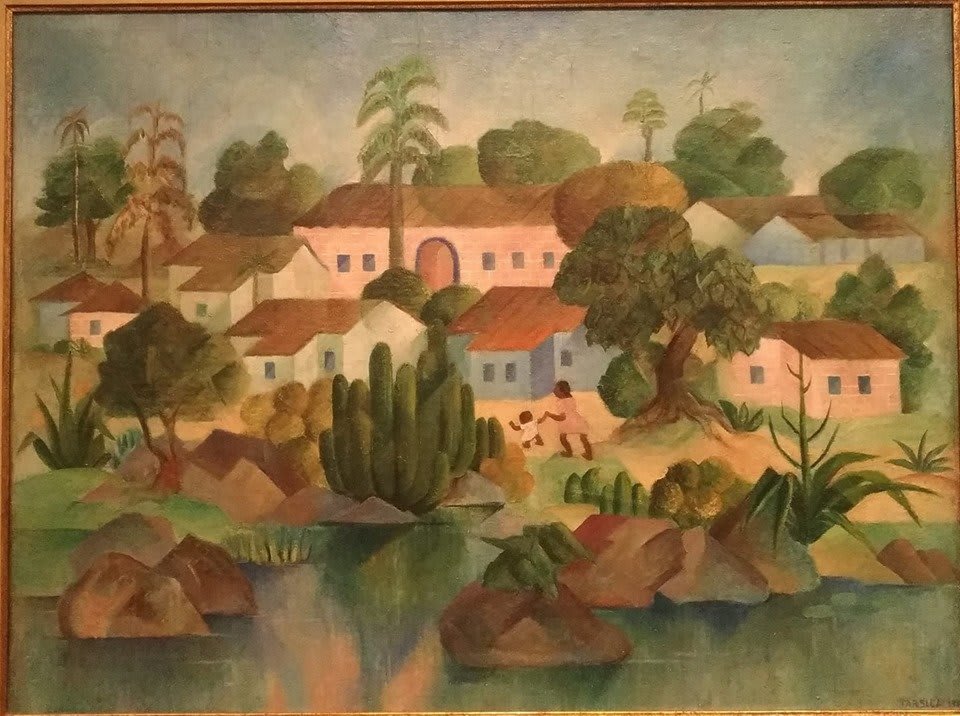
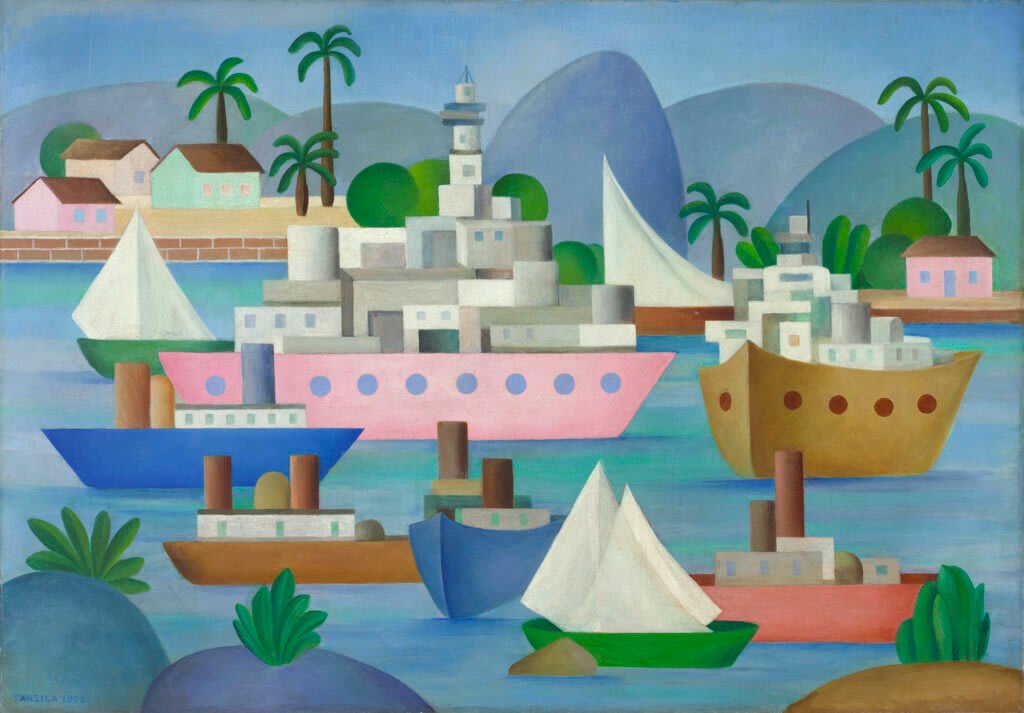
From the 1950s onward, Tarsila revisited themes from her earlier Pau Brasil phase, notably producing "The Farm," and continued creating beautiful paintings characteristic of this period.
"I am profoundly Brazilian, and I will study the tastes and art of our country folk. I hope, in the interior, to learn from those who have not yet been corrupted by academies." - Tarsila do Amaral