The Migrants, Candido Portinari
The Migrants, a series by Candido Portinari
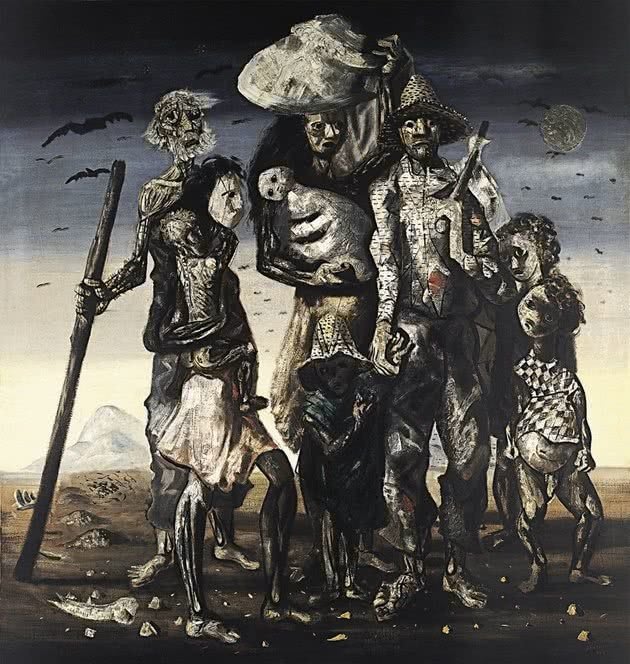
This painting is part of a series titled The Migrants, considered one of the main works of the Brazilian artist, Candido Portinari, born in the city of Brodowski, interior of São Paulo.
As a child, the artist was very curious, he was impressed by the migrants from the Northeast who arrived in his city looking for a job. They were hungry and suffering people. Since he was little, he used to observe them for a long time. These memories were stored in his memory, which originated the series of paintings “The Migrants”, where the artist expressed the pain and suffering. Being an expressionist painting, he exaggerated in portraying the suffering and sadness of these migrants.
The artist always showed great sensitivity to social injustices. He denounced through many of his works, the suffering of a large part of the population, including Brazilians in a state of degradation.
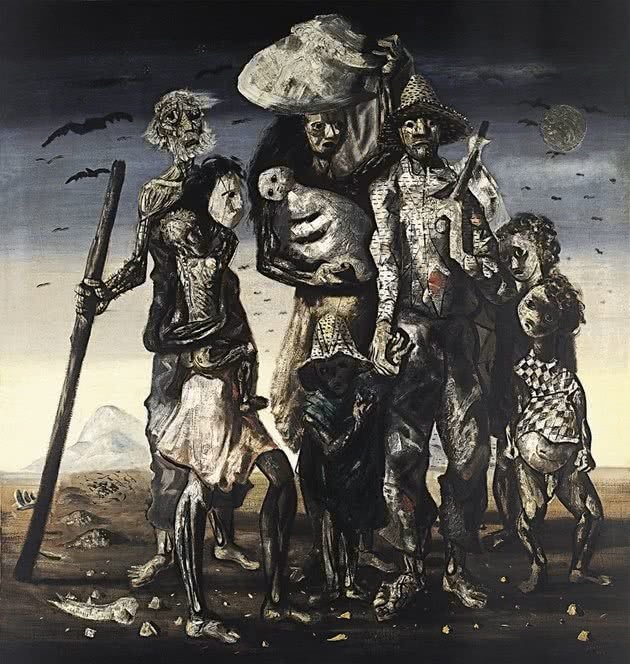
Portinari created a sad and somber composition, presenting a family of migrants with people who moved mainly from the Northeast to other places in the hope of escaping the drought, poverty and infant mortality. The atmosphere is dramatic, expressing all the feelings, by the figurative distortion of the people who approach more like skeletons, exposing a mask of suffering. The faces of all the figures are disfigured and exhausted, expressing fear of the uncertain future that awaits them.
The scene is striking by the way the artist represents the malnourished people, children surrounded by vultures flying overhead, announcing certain death. One of the children presents a very disproportionate belly to the size of his body due to malnutrition.
The dark colors used in the painting emphasize the feeling of apathy and compassion for life and the destiny of this family.
The series presents a strong influence from the Italian metaphysical artist De Chirico, The Migrants, Dead Child and Burial in the Net that express the pain of a suffering and marginalized people
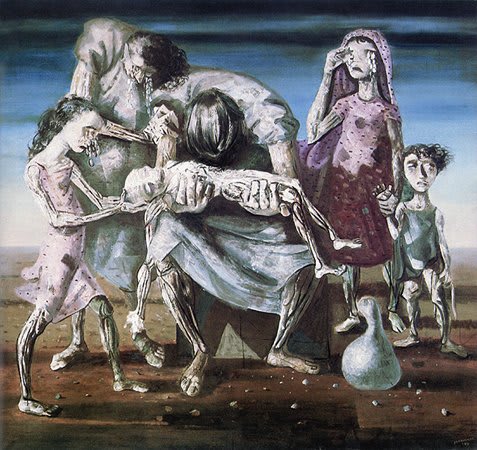
Following the same characteristics of The Migrants, Dead Child presents a composition in monochromatic tones prevailing cold colors with deformed figures. The scene is sad, because it represents a group of people crying for a dead child carried by a woman who suggests being the mother who is sitting on a crate; the landscape is of the sertão. The faces of the people are almost invisible, but draw attention by the stone tears that fall from their eyes.
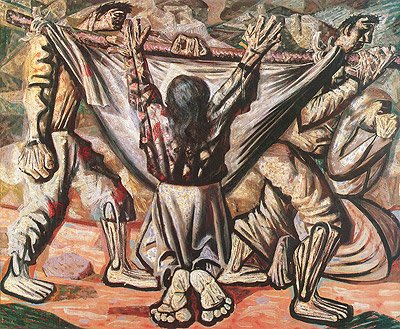
Burial in the Net also presents death as a theme, as well as Dead Child, but we do not know who it is about, as it is hidden by the net, but like all the other paintings in this series, it also portrays the human misery lived by desperation and poverty in a deeply dramatic way.