Biography of Enrico Bianco
Discover the life and artistic journey of Enrico Bianco, a talented contemporary artist.
I invite you to explore the life and artistic journey of Enrico Bianco, a talented contemporary artist.
Enrico Bianco's biography reveals not only his exceptional technical skill, but also his deep connection with nature and spirituality, which are reflected in his works.
As you learn more about Enrico Bianco, you will discover a universe of colors, forms, and emotions that captivate and inspire.
A painter, engraver, draftsman, and illustrator, the Italian Enrico Bianco was born in Rome on July 18, 1918.
He came to Brazil in his adolescence, developing his art amidst the effervescence of Brazilian modernism, activated by the Modernist Movement of 1921 in Rio de Janeiro and gaining consistency from the Semana da Arte Moderna de 1922 in São Paulo.
He befriended great Brazilian masters of painting, such as Candido Portinari, from whom he was a disciple, befriended the friendship of Burle Max, and received lavish praise from prominent figures in the art world, such as Antonio Bento and Pietro Maria Bardi.
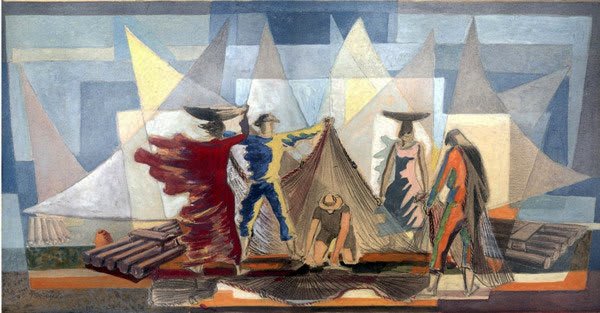
Since he chose Brazil as his second homeland, having settled here forever, and having developed most of his work here, with undeniable influence from Brazilian artists, and having, as his theme of work, the life, customs, and society of Brazil, Bianco can be included, with great propriety, among the painters of Brazil.
His father, Francesco Bianco, was a deputy for the Christian Democrats. He was an international correspondent and writer for the Jornal do Brasil in Italy.
Thus, Brazil has always been present in his life.
His mother, Maria Bianco-Lanzi, was a pianist with an intense cultural life, it was she who motivated him for a career as an artist.
With the rise of fascism in Italy, the Jornal do Brasil, living the crisis of the 30s, dismissed Francesco from his position as correspondent in Italy.
His mother had a sudden death, with all this, the family emigrated to Brazil, which Francesco had already known in 1920.
It was in 1937 when Enrico Bianco and his family arrived in Brazil, settling in Rio de Janeiro, and thus the artist stayed in Brazil forever.
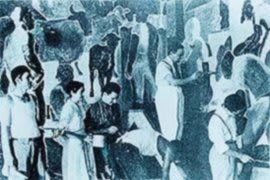
Six months after Bianco's arrival in Brazil, the painter Paulo Rossi suggested he visit a work that Portinari was preparing at the headquarters of the Ministry of Education.
He went, but only found three assistants: Burle Marx, Inês, and Ruben Cassa.
Noticing the difficulties the three were having with the expansion, in fresco, of a garimpeiro's hand, he asked to be left alone and, with the consent of the others, painted that detail alone.
Shortly after, Portinari arrived and, with the intuition of a master, noticed the interference, asking with irritation: "Who painted that hand there?"
The disciples pointed to Bianco, who was hiding in a corner, and the master, apparently, paid little or no attention to him.
Bianco, if he had known, wouldn't have gone there, but since he was, he stayed, appreciating the development of the work.
At lunchtime, he decided to go back home, saying goodbye to Portinari, who asked him with energy: "But where are you going?"
Bianco replied: "I'm going home."
The master extended his hand, with the same angry face, and asked him: "But tomorrow you'll come back, won't you?"
It was like this that, gradually, the young painter began to integrate into Portinari's team, becoming, for many years, a valuable collaborator.
The "garimpeiro's hand", Bianco's first intervention in the master's painting, remains there, where it was painted.
Portinari's influence on Bianco is visible in many of his paintings.
The painter grew, gained his own life, but never distanced himself from the style he learned and respected.
The approach between Bianco and Portinari, while bringing him pride and admiration, also caused him problems, notably due to the aversion of some Brazilian politicians to Portinari, mainly due to his ideology and political positions.
Although the master was not an activist, the simple fact of showing sympathy for communism put him under the macartista's gaze, and with him, all those who followed him.
In 1960, Mexico was organizing its 2nd Biennial and, wanting to include some Brazilian artists, sent a representative, who, among others, invited Enrico Bianco, responsible for preparing three paintings especially for the event.
Since the Itamarati agreed to pay for the travel expenses, he felt entitled to review the list of invitees, crossing out Bianco, under the pretext that he was born in Italy, and therefore did not represent Brazilian art.
It was clear that there was a strong aversion to the painter.
Bianco was born in Italy, but made himself in Brazil under the shadow of one of the greatest Brazilian masters.
His theme was entirely focused on our land, our people, our customs.
Rubem Braga came to his defense in an article published in the magazine Manchete:
"I saw the paintings. They are better than I expected, they are good paintings of modern painting anywhere in the country and in the world, and they are the paintings of a painter formed in Brazil and sensitive to the suggestions and the feeling of Brazilian life, they are, therefore, paintings excellently representative of Brazilian painting in any international exhibition. I saw and the critics cannot discuss with me, because the critics did not see."
Enrico Bianco is considered by some critics a more talented disciple than the master himself, which earned him a place among the top collectors in the market as one of the most expensive artists.
However, Bianco never called Portinari "you": only "master".
A typical case of an Italian who is respectful of those who opened the doors of the world for him.
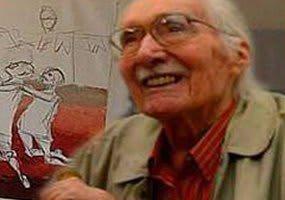
This dear Italian, a citizen of Ipanema, has passed ninety. He died in Rio de Janeiro on March 8, 2013. A lesson in life, art, and vision of the world.
Perhaps the most Brazilian of Italians, or the most Italian of Brazilians.
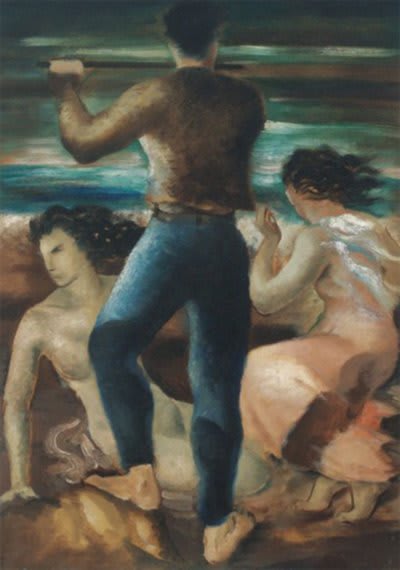
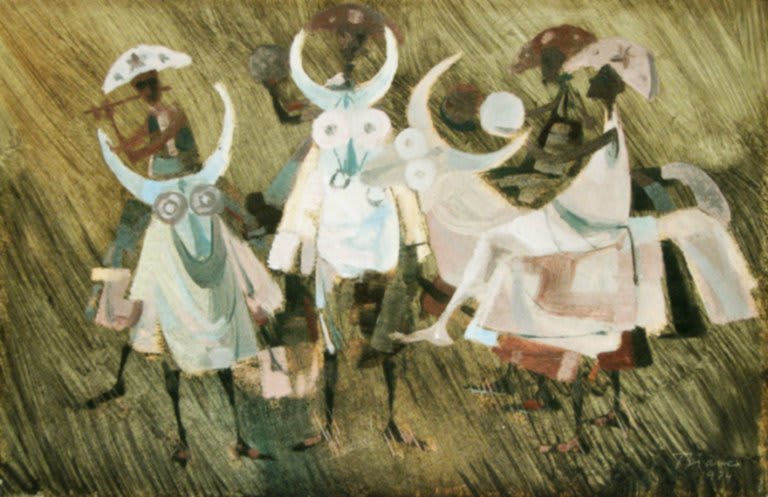
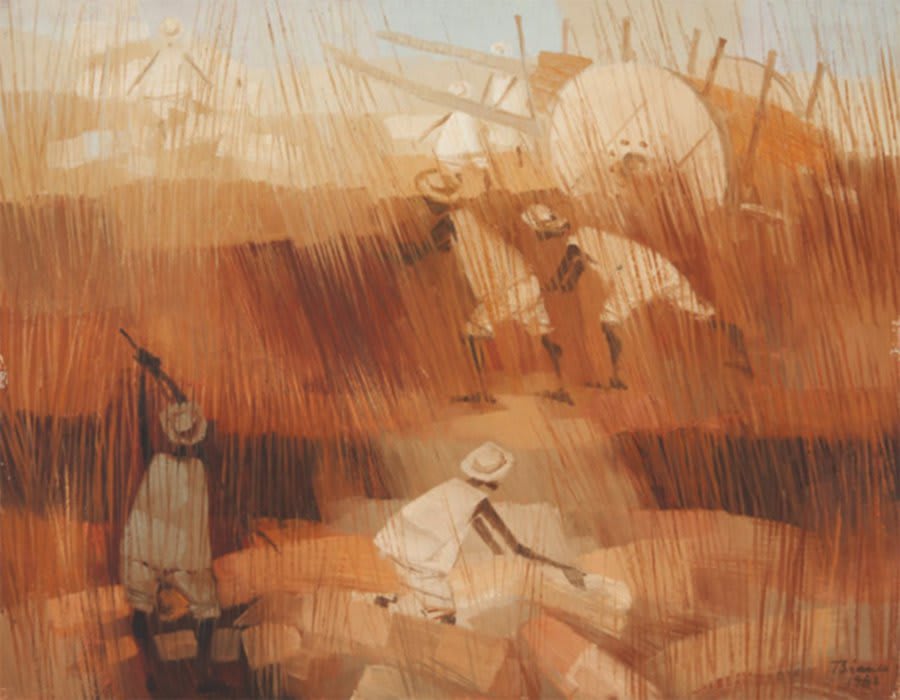
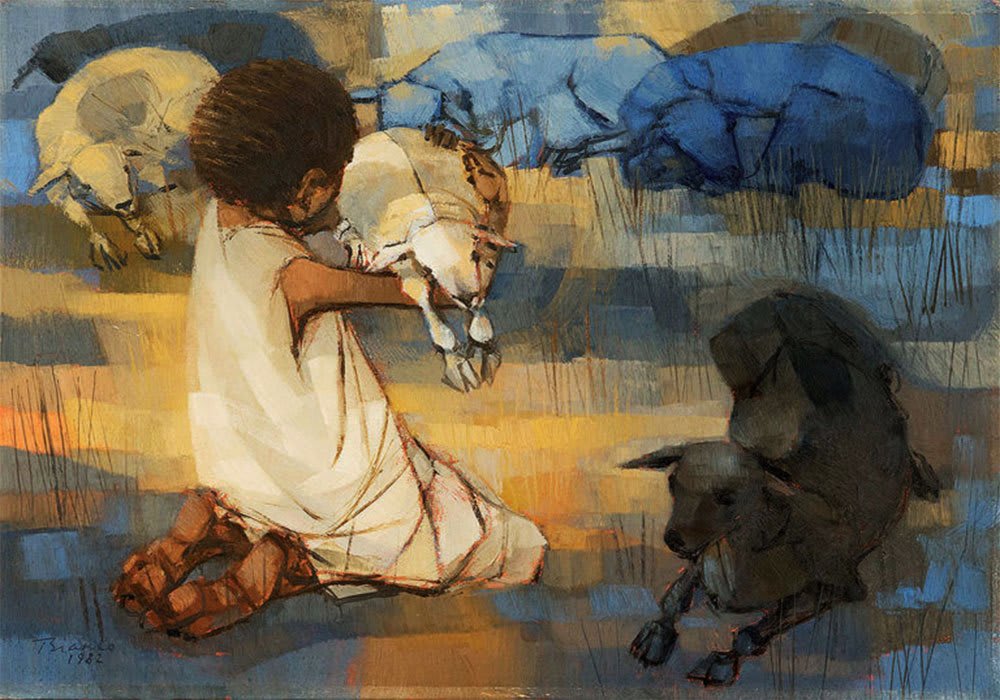
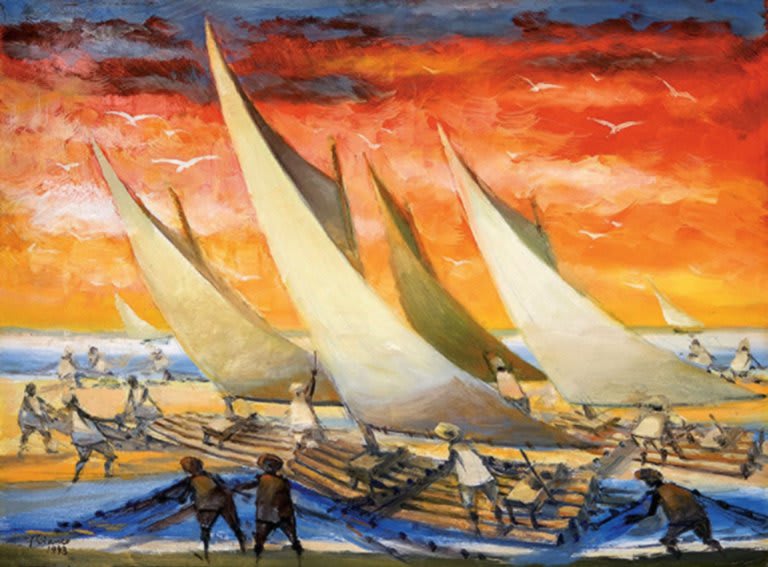
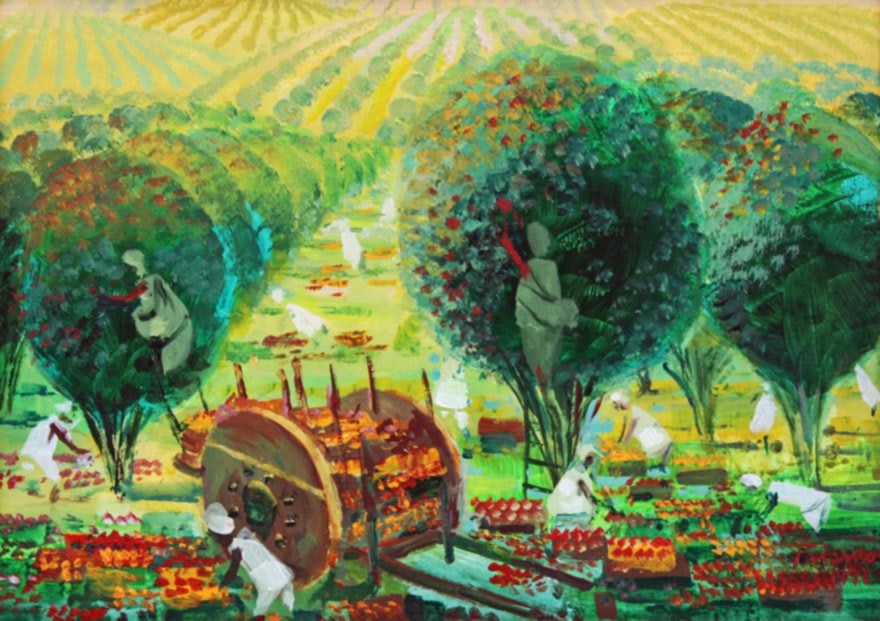
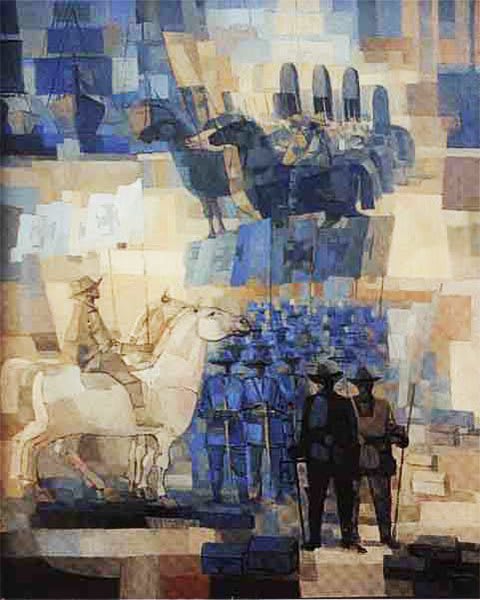
BIOGRAPHY OF ENRICO BIANCO: GALLERY OF SOME OF HIS WORKS