
Biography of Jackson Pollock: From Childhood to Artistic Legacy
Biography of Jackson Pollock: From Childhood to Artistic Legacy
Jackson Pollock, an American painter, is widely regarded as one of the greatest artists of the 20th century. Pollock developed his signature style of dripping paint, becoming one of the most renowned artists in the United States.
He said: "It doesn't make much difference how the paint is put on as long as something has been said. Technique is just a means of saying something." (Jackson Pollock)
Jackson Pollock Biography
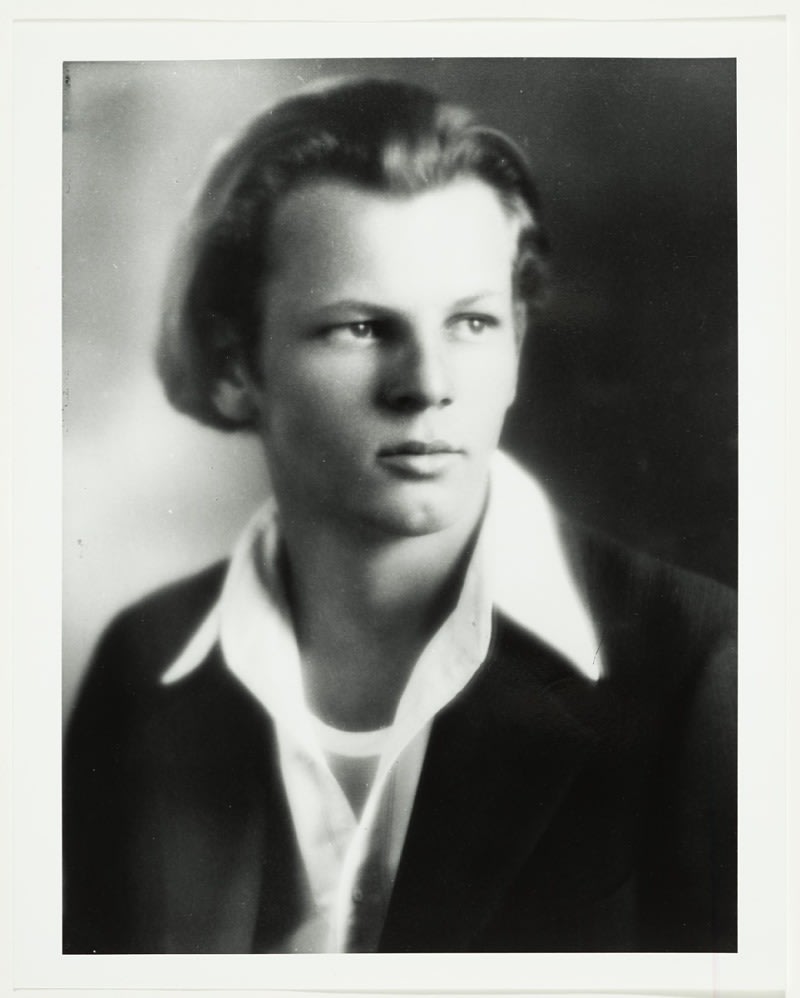
Paul Jackson Pollock was born on January 28, 1912, in Cody, Wyoming, United States. He was the youngest of five children to LeRoy Pollock and his wife Stella May. His parents were of Scottish and Irish descent. His father was born with the surname McCoy, but later adopted the surname Pollock from his neighbors, who had taken him in after the death of his parents. LeRoy Pollock was initially a farmer and later became a government surveyor, while Stella May helped the family financially by working as a seamstress.
When Jackson was 10 months old, his family left Cody and moved between Arizona and California. Over a period of 16 years, his family moved a total of nine times. In 1920, when Jackson was 9 years old, his father separated from the family. However, he maintained contact through letters and visits on holidays.
In 1923, Jackson enrolled in the sixth grade at Monroe Elementary School in Phoenix, Arizona. The following year, the family moved to Riverside, California.
In September 1928, Jackson enrolled in Manual Arts High School in Los Angeles, where he was influenced by Frederick John de St. Vrain Schwankovsky. Through him, Pollock received some basic training in drawing and painting and learned the nuances of modern European art. However, in March 1929, Jackson was expelled from Manual Arts High School for disciplinary reasons.
Two of Pollock's older brothers, Charles and Sanford, also pursued careers as artists. In fact, his older brother, Charles Pollock, became a renowned abstract painter. In September 1930, Jackson traveled with Charles to New York, where they enrolled in the Art Students League. The brothers studied with Thomas Hart Benton. Over the next two and a half years, Jackson actively studied everything about drawing, painting, and sculpture. He also learned the concepts of rhythmic use of paint.
In 1933, Pollock left the Art Students League. For most of the 1930s and early 1940s, he lived with his brothers Charles and Sanford, when he had to face many economic difficulties and sometimes had to work as a janitor to survive.
In 1936, he participated in an experimental workshop in New York with the famous Mexican muralist David Alfaro Siqueiros, where he was introduced to the use of liquid paints. This had a significant impact on the development of his style of dripping paint, a pioneering technique that became a hallmark of his work in the early 1940s.
Between 1938 and 1942, he worked on the Federal Art Project of the Works Progress Administration, a government program to finance visual arts in the United States. It was also during this time that Pollock began to struggle with alcoholism. As a result, he underwent Jungian psychotherapy with Dr. Joseph Anderson from 1938 to 1941 and with Dr. Violet Staub de Laszlo from 1941 to 1942. During therapy, he was encouraged to express the concept and archetypes of the method through his paintings.
In 1942, Jackson Pollock met Lee Krasner, an American painter. This meeting marked a turning point in his career, as Krasner began to support and promote his art. She also had a significant influence on his work, as her extensive knowledge and training in art and modern techniques exposed Pollock to the nuances of contemporary art, helping him to refine his style.
In July 1943, Pollock signed a gallery contract with the wealthy American art collector Peggy Guggenheim. According to the contract, he would receive a commission to create a mural for the entrance of her new home. After a long period of creation, the artist completed the painting at the end of the same year, which is his largest work (242.9 x 603.9 cm).
Pollock and Krasner became a couple shortly after their meeting in 1942. In 1945, they purchased an old farmhouse in The Springs, Long Island, where they lived from then on. This gave the couple the opportunity to focus on their art in isolation and peace, away from the city.
On October 25, 1945, Jackson Pollock and Lee Krasner married in the Marble Collegiate Church in New York, in the presence of two witnesses.
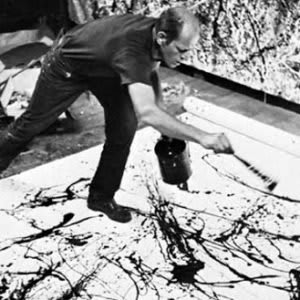
In the mid-1940s, Pollock began to get rid of symbolic images in his paintings and sought more abstract means of expression. He then developed the method for which he became best known, Dripping Technique. This painting is a form of abstract art in which paint is dripped or poured onto the canvas, rather than being applied carefully. Pollock was the pioneer of this technique, which earned him the nickname "Jack, the Dripper" from Time Magazine.
The period of Pollock's career between 1947 and 1950 is popularly known as the Dripping Period, when he painted his most famous works that brought him fame. His subsequent works feature a darker color palette and are called "black drippings." These were Pollock's attempts to find a balance between abstraction and figurative representations. Later, he returned to using colors along with figurative elements.
DEATH AND LEGACY
In 1953, Pollock stated that he had nothing more to say through his art and, consequently, painted little. He also began to struggle with alcoholism again.
In the summer of 1956, Lee Krasner made a trip to Europe to distance herself from Pollock, as they were experiencing conflict in their relationship. Pollock then began an affair with Ruth Kligman, a 25-year-old artist.
On August 11, 1956, at 10:15 PM, Jackson Pollock died in a car accident while driving under the influence of alcohol. He was 44 years old. His passengers were Kligman and her friend Edith Metzger, who also died in the accident, and Kligman suffered severe injuries.
After Pollock's death, his widow Lee Krasner took on the task of managing his entire estate. She also made every effort to ensure that the artist's reputation remained intact in the midst of the constantly changing art world.
Since Pollock's death, several exhibitions have been organized to showcase his work. His reputation has grown over time. Today, he is considered an iconic master of the 20th century and one of the greatest and most influential artists of his time.
To continue understanding the rest of this journey, please read our next article: Biography of Jackson Pollock: A Gallery of His Most Famous Works.


