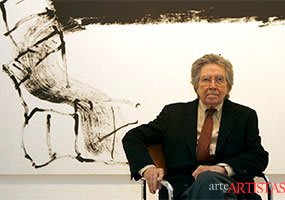
Complete Biography of Antoni Tàpies
The complete biography of Antoni Tàpies.
Antoni Tàpies was a prominent Spanish artist born in Catalonia.
He is one of Europe's renowned abstract expressionist artists, arguably the best-known Catalan artist to emerge in the period since World War II.
His ideas held global influence in art, particularly in the fields of painting, sculpture, printmaking, and lithography.
Biography
Antoni Tàpies i Puig was born on December 13, 1923, in the city of Barcelona, Spain.
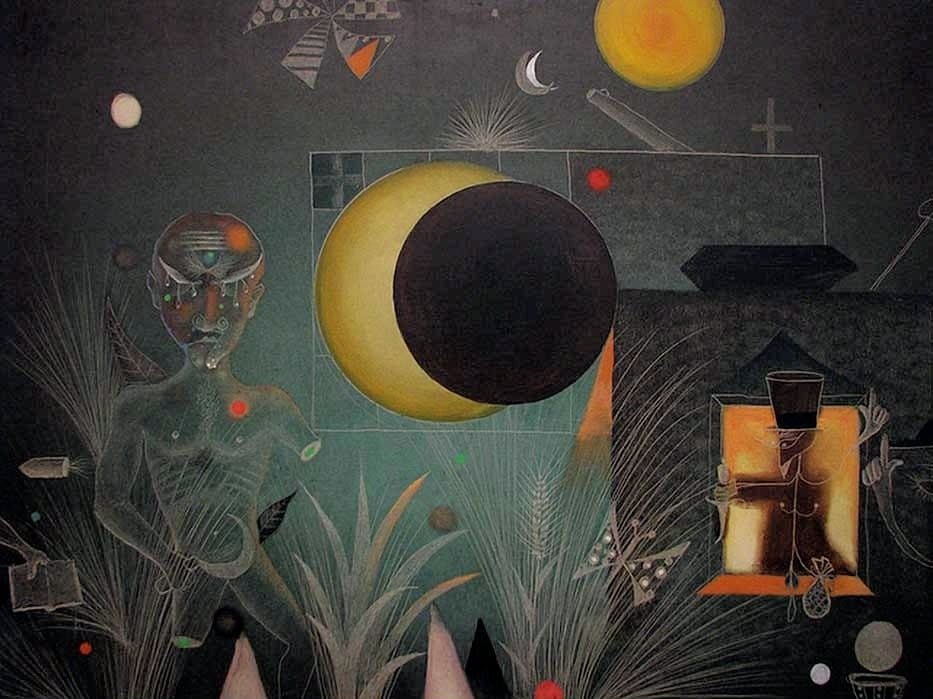
In 1948, Tàpies helped found Spain's first Post-War Movement, known as Dau Al Set, a movement connected to Surrealism and Dadaism.
Tàpies began as a Surrealist painter, his early works influenced by Paul Klee and fellow Catalan Joan Miró; but he soon evolved into an abstract expressionist, working in a style known as "Arte Povera", which incorporates non-artistic materials into paintings.
In 1950, Tàpies moved to Paris. For him, according to his personal memoirs, these were moments of "a new victory for democracies over the specter of dictatorships in Western Europe." The Parisian experience brought light and hope to the artist's life and work, filling him with optimistic strength and new inspiration. In Paris, Tàpies decided to renew his work by uniting the spirit of the avant-garde with social and political critique.
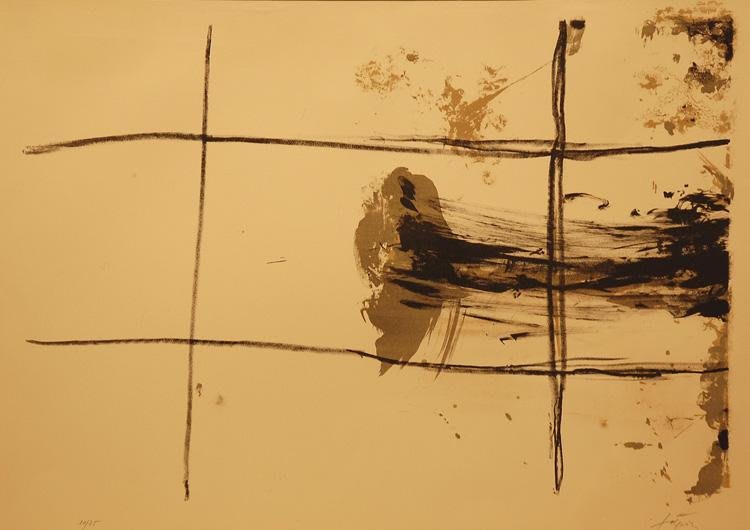
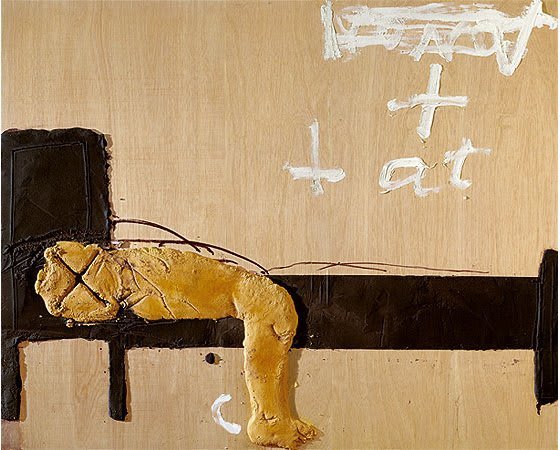
In 1953, he began working with mixed media, a period when his work was considered more original. One of the first to create serious art in this manner, he added clay and marble dust to his paint and used paper scraps, string, and rags.
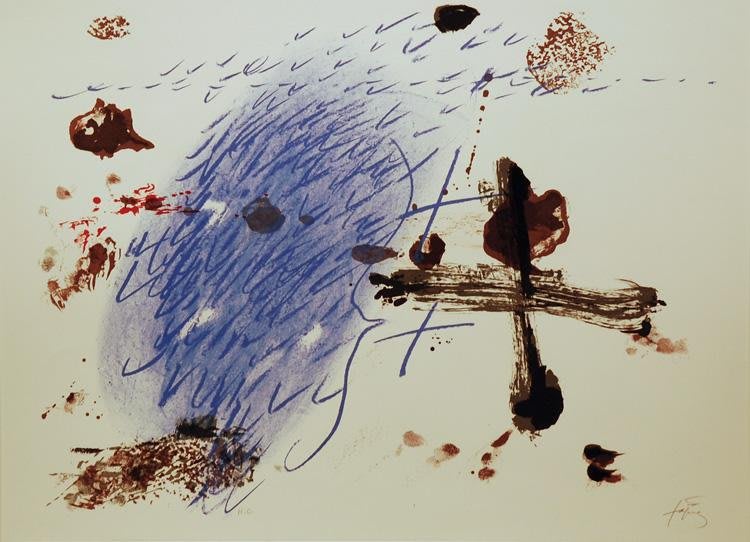
Tàpies, one of the masters of abstract art, believed that painting itself was an abstraction and that reality lies not in the painting, but in the mind of the observer. Thus, at this stage, Tàpies began his experimentation with the most diverse materials. He created his own language, abandoning figuration and seeking to capture the plastic effects of matter. This transformation began with collages, enriched with scratches on the canvas, footprints, ropes, sand, and marble dust, among other materials.
Active in anti-Franco resistance circles since the early 1960s, his political participation evolved by the end of that decade, giving rise to significant works.
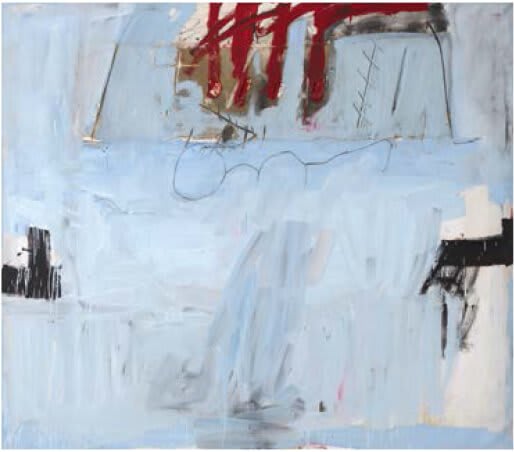
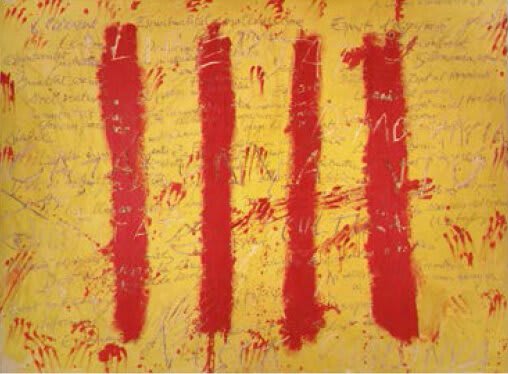
In 1966, he painted Blau amb quatre barres roges (Blue with four red bars), a work that served as a reclamation of forbidden memory. During this period, displaying the Catalan flag was a jailable offense.
In 1970, the artist signed a manifesto, along with hundreds of artists and intellectuals, demanding amnesty, the abolition of the death penalty, the recognition of liberties, and the right to self-determination. For Tàpies, the struggle for freedom and democracy was linked to the defense of Catalonia's national rights, and at this time, his creations reflected this desire.
Tàpies believed that the fight for human rights should be one of the purposes of all cultures. Therefore, once democracy was established, he expanded his “battlefield” and engaged in political and anti-repressive causes worldwide. There were few conflicts to which Tàpies did not dedicate his attention. Vietnam, the dictatorships of Chile and Uruguay, apartheid in South Africa, Palestine, among others, received the solidarity of his artistic gesture.
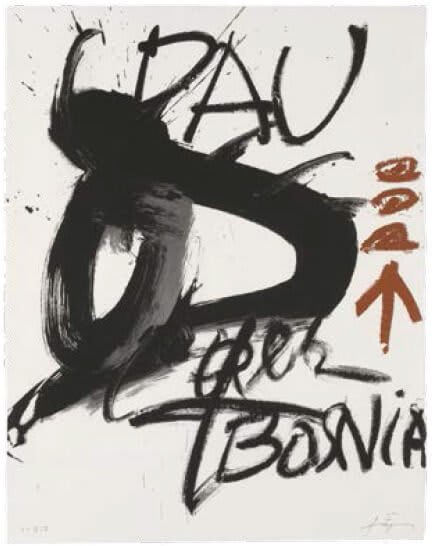
In the early 1990s, new conflicts shook the world: the wars in the Gulf and the Balkans, the invasion of Afghanistan, among others, were followed by him with great concern. His works during this period attempted to shape the violent and savage atmosphere.
In the final years of his life, Tàpies revisited some of his major themes: the body, death, and desire. Growing up amidst civil war in his adolescence made him deeply aware of death. His work is rooted in this fact.
He passed away in Barcelona on February 6, 2012.
Gallery
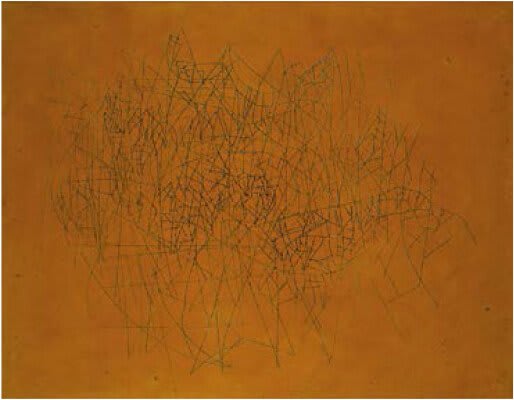
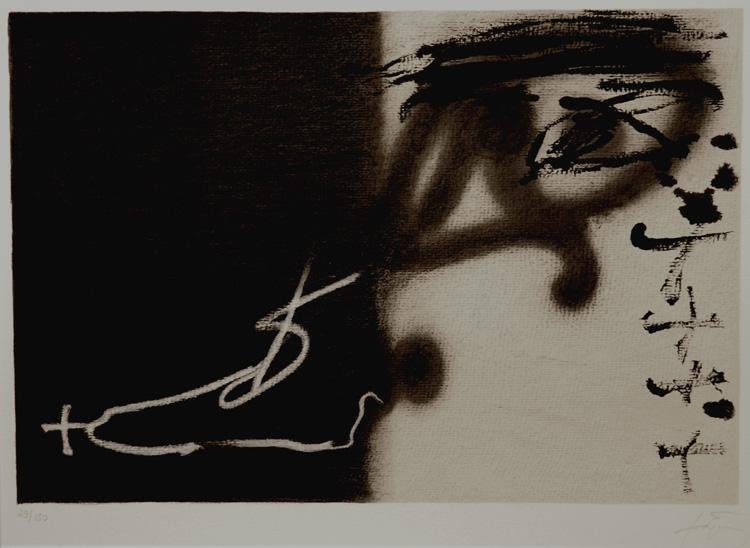
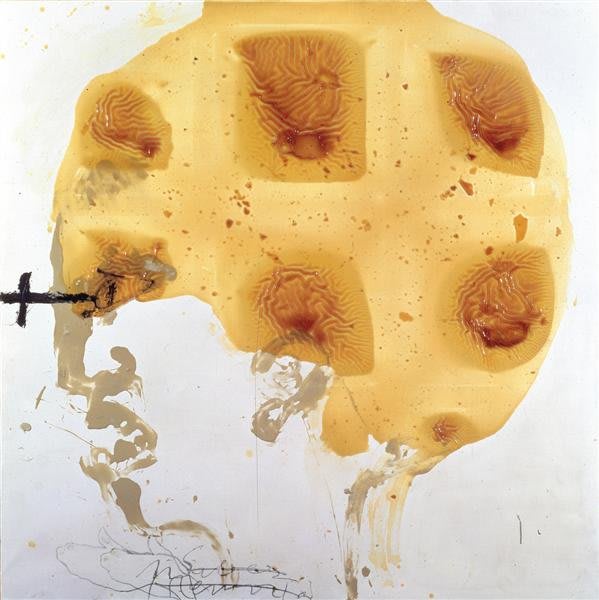
Tàpies' work is marked by the traumatic experience of living through war and the immediate post-war period during his adolescence and youth. Even without a specific political agenda, his spontaneity and rebellion signaled opposition to the established order. The uncertainty of the era permeates his work with brutal imagery.