Edgar Degas: Biography and Works: Style, Themes, and Essential Art
Edgar Degas: Biography and Works: Style, Themes, and Essential Art
While Degas' paintings weren't overtly political, they accurately mirrored the social and economic landscape of France in his era.
His works depict the rise of the bourgeoisie, the emergence of a service economy, and the increasing entry of women into the workforce.
The human figure was Degas' primary subject, with a particular focus on the female form.
He explored this theme in works ranging from the somber portraits of his early years to studies of laundresses and prostitutes from his Impressionist period.
Ballet dancers and female nudes were constant motifs throughout his entire career.
Regarding ballerinas, he painted nearly a thousand canvases using the same theme.
Degas declared: "They call me the painter of dancers. People don't understand that for me, they have been a pretext to paint the fabrics of their costumes and the depiction of the movement they perform, and that is beautiful!"
Edgar Degas was the only Impressionist to bridge a fundamental gap between traditional academic art and the radical movements of the early 20th century.
For this reason, he was considered one of the finest draftsmen of his time.
Among the various visual art forms, Degas incorporated pastels, gouache, engraving, lithography, sculpture, and photography into his work.
The technical precision required for these various mediums reflects a mastery of draftsmanship similar to that of the great Renaissance printmakers. Albrecht Dürer: Biography and Major Works
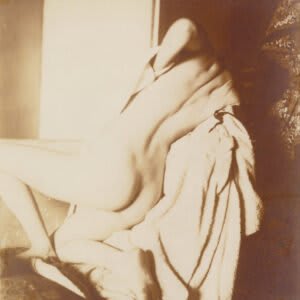
He frequently used photography as a resource for his painting projects.
Like Rodin, Degas subjected his models to quite uncomfortable poses, as can be seen in the photo of the Study for a Painting from 1896.
With the same objective as his Impressionist peers, Degas highly valued the use of light and movement.
While Degas focused on the rhythm of the stage, other leaders of the movement were redefining how we perceive sunlight and color in open-air settings. Woman with Parasol (The Passeio) – Claude Monet
Sometimes, his compositions were intentionally cropped, with some figures depicted at the edge of the canvas.
This technique aimed to compare his work with photography, capturing mundane movements, such as scratching one's back, for example.
He differed from other Impressionists: his paintings were not created outdoors to study the effects of light on landscapes.
At 36 years old, Degas began to experience vision problems.
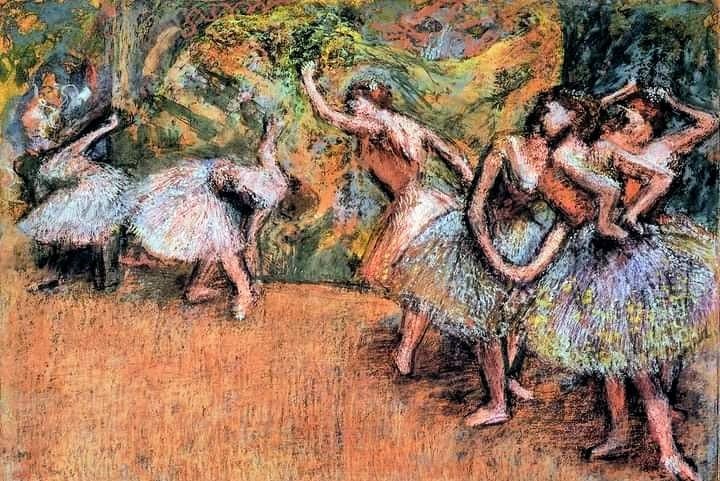
Consequently, he increasingly used pastels in his compositions.
Even with his deteriorating eyesight, he found a wide variety of color and texture effects using this technique.
His pastel output became as recognized as his oil works.
Degas meticulously depicted dozens of ballerinas, and his fondness for classical dance led him to present them with light-filled settings.
Known as an "atelier Impressionist," the artist, contrary to popular belief, did not create his works spontaneously.
His productions were always meticulously planned.
He studied the theater's atmosphere, observed the stage composition, and took photographs.
He made notes and sketches, and only then did the painting production occur in his studio.
Even so, it's hard to believe that such vibrant scenes are products of studio work.
Edgar Degas: GALLERY
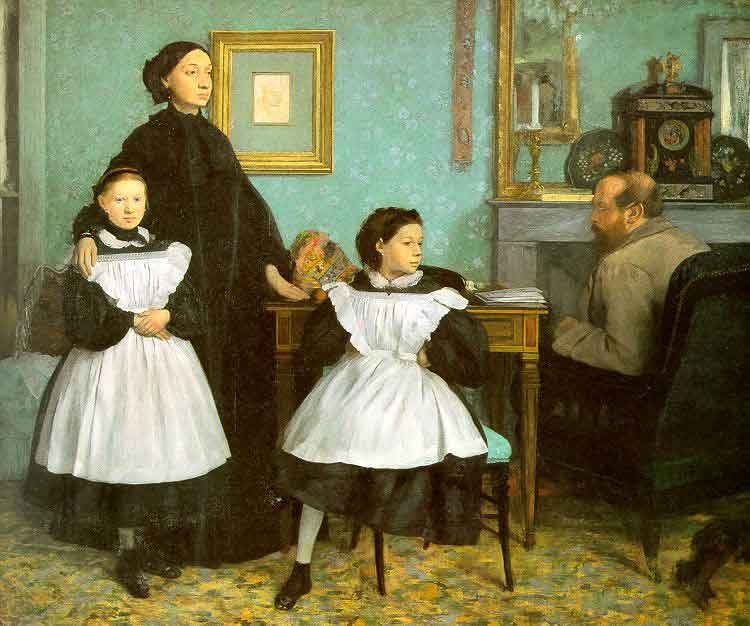
The Bellelli Family: In this work, Degas portrays his aunt, her husband, and their daughters.
The painting was exhibited at the Paris Salon of 1867 but was largely ignored by critics at the time.
Disappointed, Degas kept it in his personal collection, only making it available for sale again in 1913.
Today, it is recognized as one of his masterpieces.
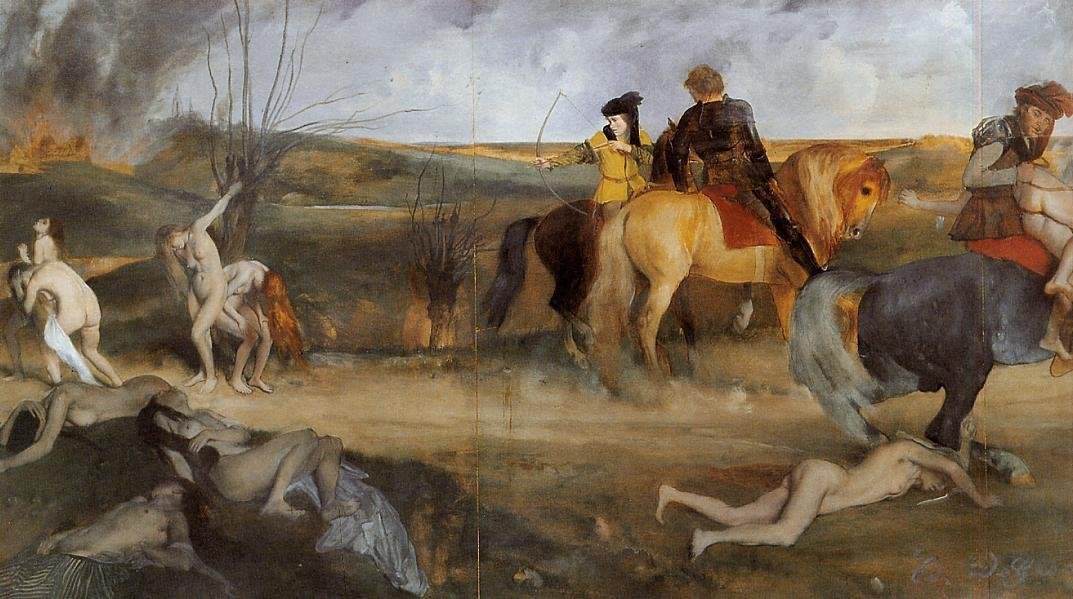
In the Midst of the War: This is one of Degas' first historical paintings.
In it, the artist pays clear homage to classical painters, demonstrating the influence of Ingres, for whom he held great admiration.
One can observe the well-executed foundational drawing, a striking characteristic of neoclassical paintings.
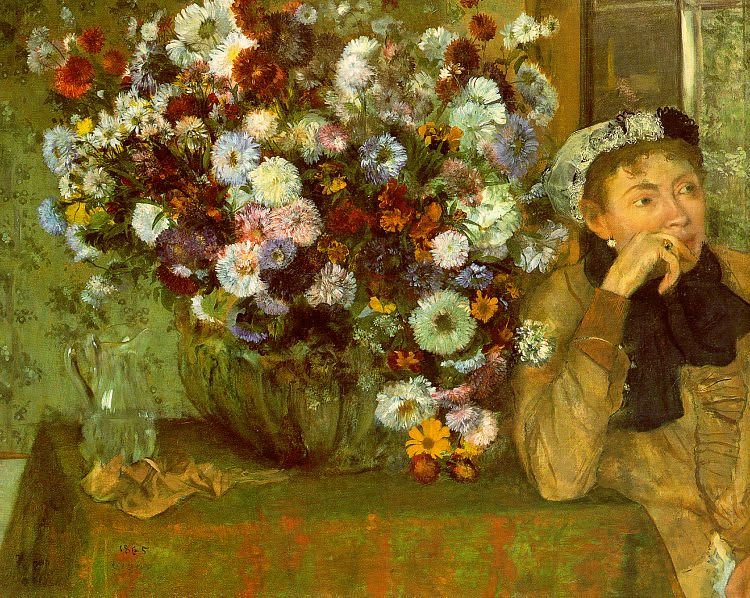
Woman with Chrysanthemums: In this portrait, Degas innovates by positioning the main subject at the lateral edge of the canvas.
This is a striking feature of his unique style.
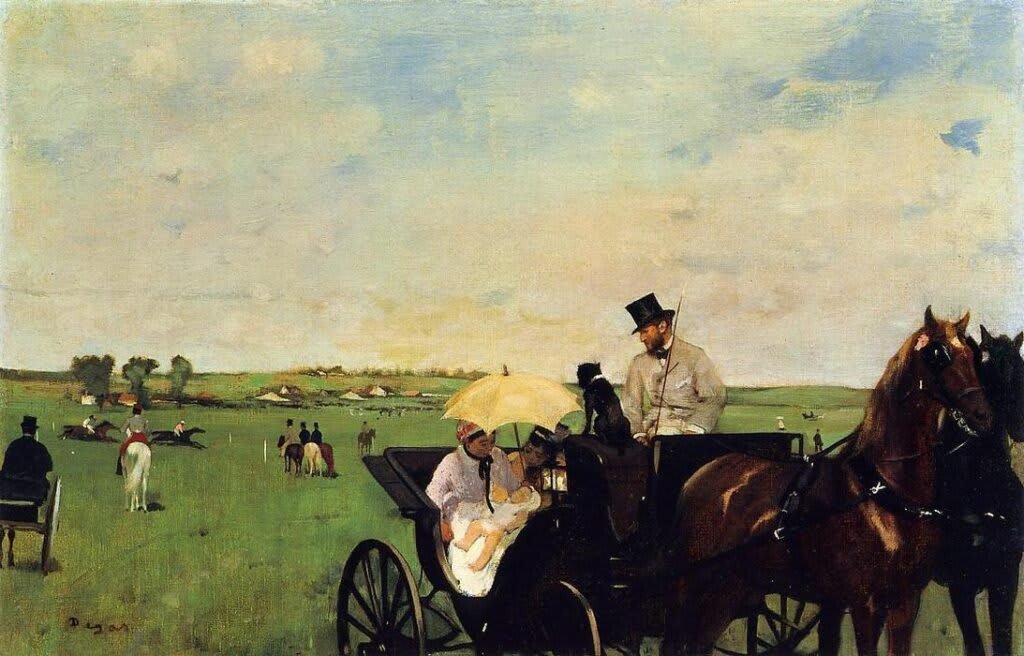
Carriage at the Races: The vibrant color and movement of horse races inspired Degas almost as much as the world of dance.
In this painting, we have a masterful representation of elegant horses.
It is widely considered one of the artist's best works on this theme.
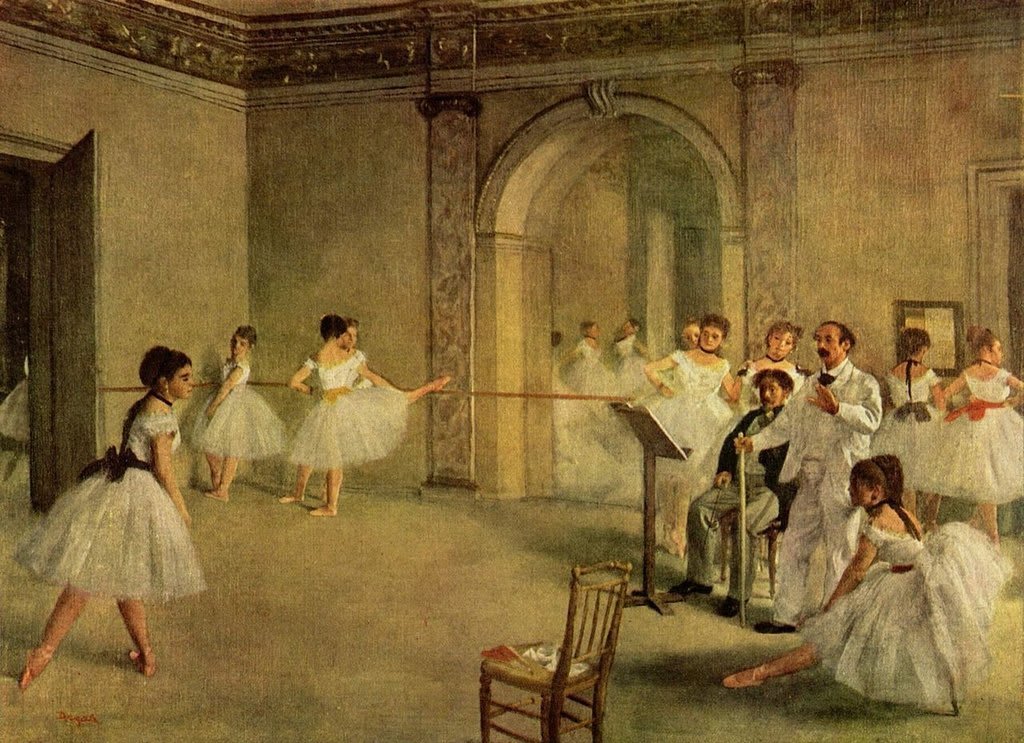
The Ballet Rehearsal Room at the Opera House: This painting marks Degas' first work on the theme that would become the most explored in his career.
In it, he discovered an endless source of inspiration in the captivating world of dance.
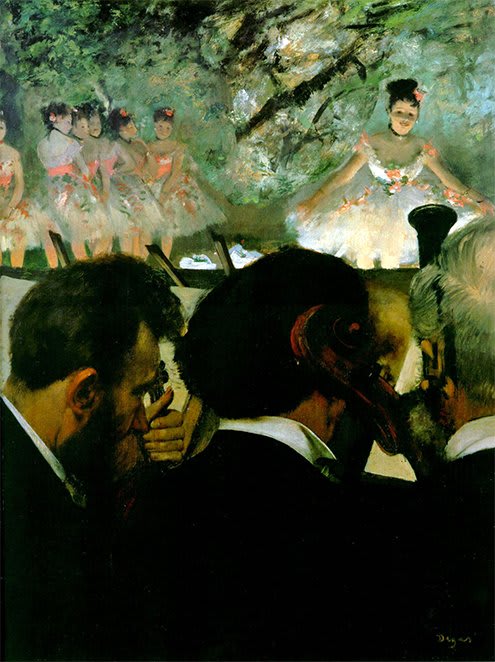
Orchestra Musicians: Degas revised this painting years later.
He expanded the work, changing its format from horizontal to vertical, and repainted parts of the original composition.
This working method is frequently seen in the artist's oeuvre.
In the revised version, the focus expanded from the musicians to include the stage and the dancers.
This work inaugurated the long series of ballet depictions for which Degas is so acclaimed today.
It also exemplifies his unusual ways of framing scenes.
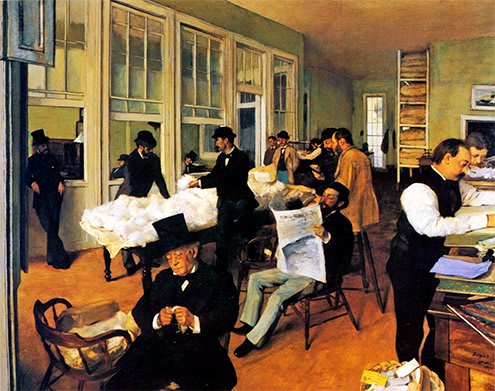
A Cotton Office in New Orleans: Degas depicts a bustling atmosphere in this cotton market.
This location belonged to his mother's family, and the scene was captured during his stay in New Orleans.
In the work, his uncle Musson examines samples, while his brother reads the newspaper, involving relatives and friends in a lively composition.
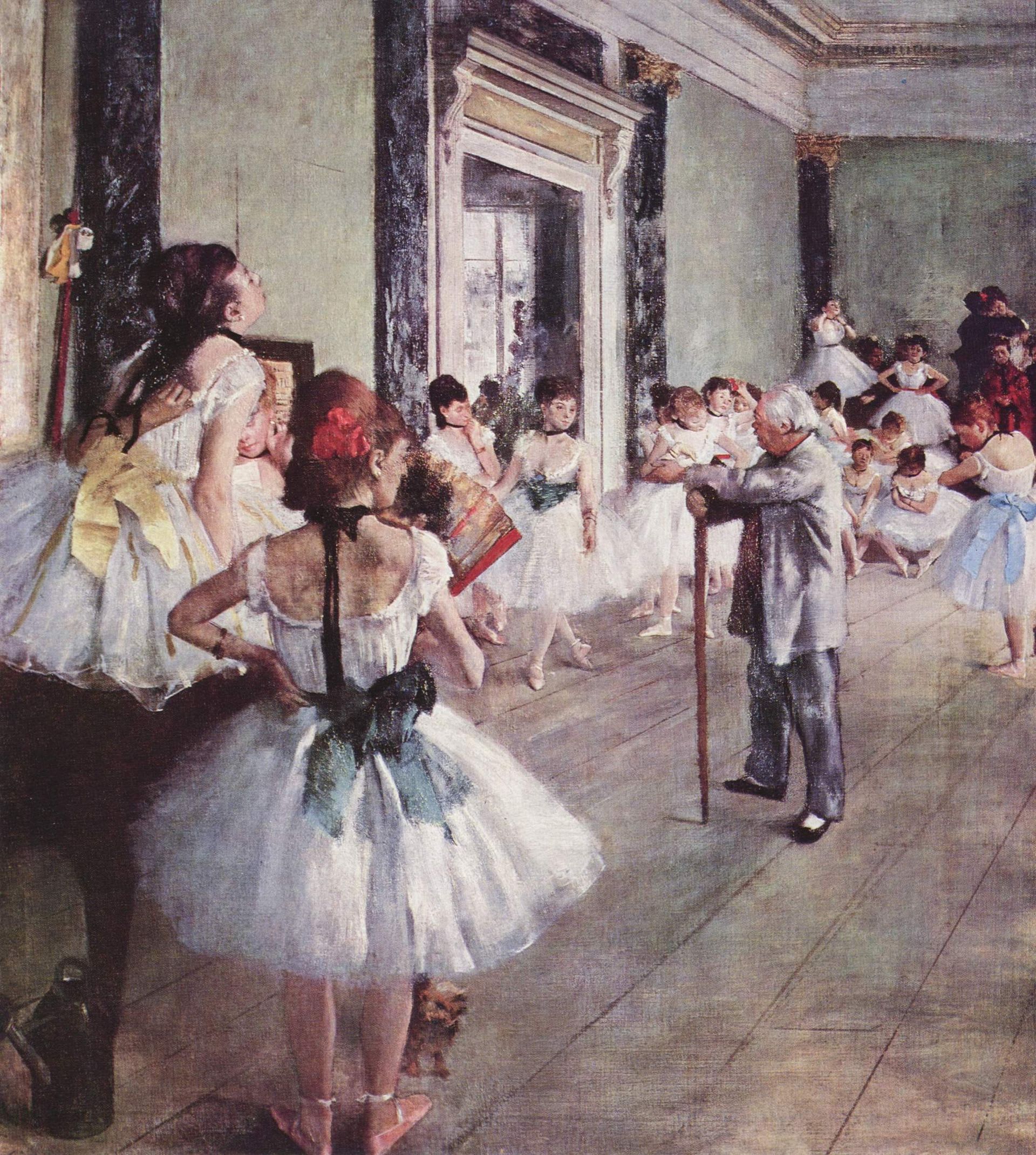
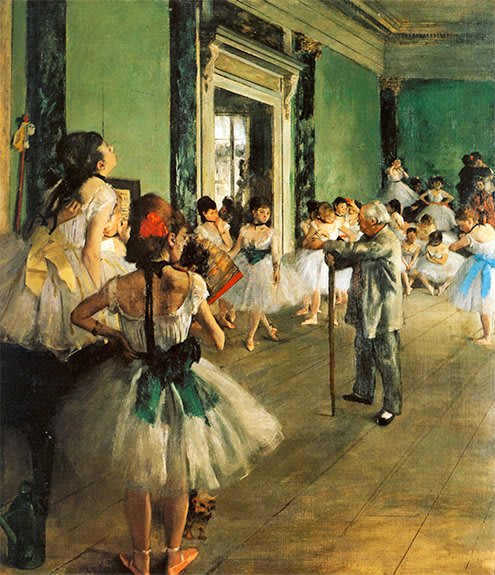
The Dance Class: Degas assiduously attended dance classes and ballet performances at the Opera House starting in 1873.
He spent hours observing and sketching the ballerinas.
Later, what he saw was painted in his studio.
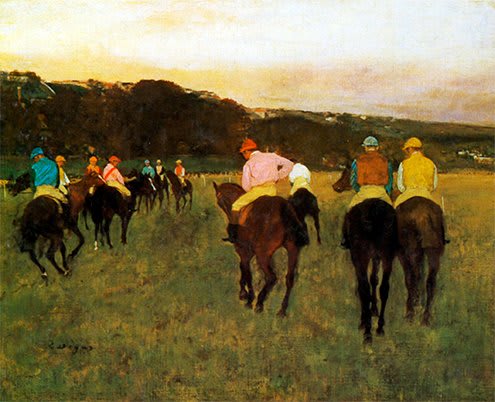
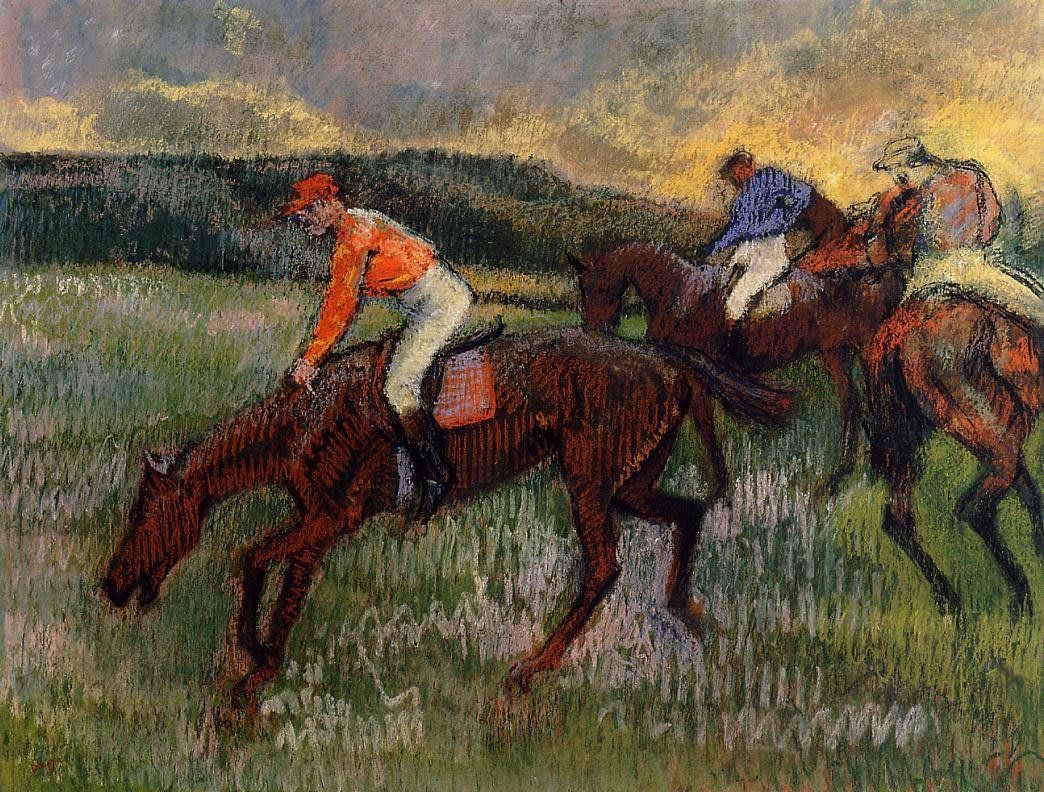
Racehorses: In this composition, Degas employs perspective and asymmetry.
This choice accentuates his subtle approach to capturing the movement of horses.
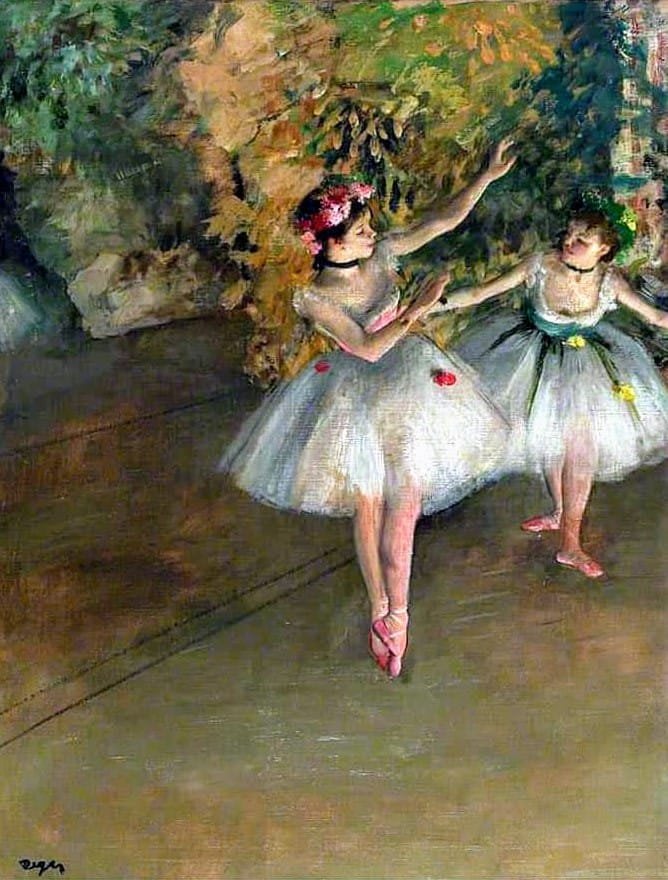
Melancholy: Degas left no information about the model's origin in this portrait.
However, the woman's emotional weight is palpable and intense.
This work is an excellent example of how the master used color, line, composition, and form.
He created a piece that conveys, simply and powerfully, a profound sense of sadness.
Translating intense psychological weight into visual art was a pursuit shared by other iconic painters known for their emotional vulnerability. Van Gogh's Self-Portraits
The young woman, in reddish tones of red and orange, leans into the curve of the armchair.
She seems unable to bear the weight or burden she carries.
A light source on the left emits a distressing yellow aura, adding dramatic flair.
This same color reappears on the woman's hand and in the abstract shadows on the wall, unifying the composition.
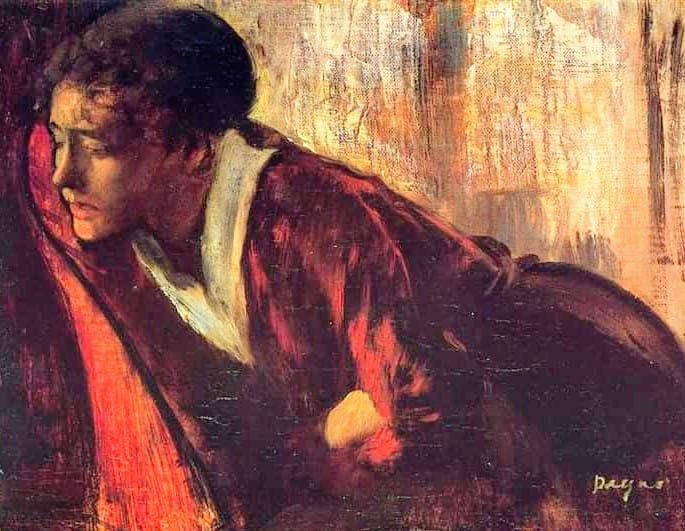
L'Absinthe: This is one of Degas' most famous paintings.
It is admired not only for its value as a profound psychological study.
But also for the technique employed, which demonstrates the use of multiple perspectives in the composition.
This reveals a clear influence of Japanese painting in his work.
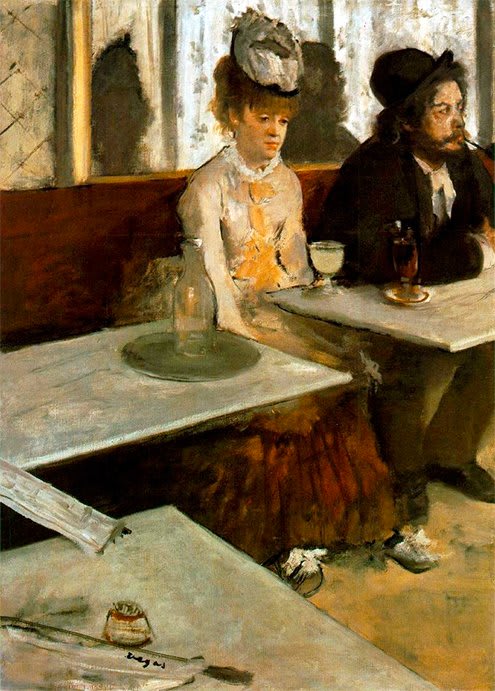
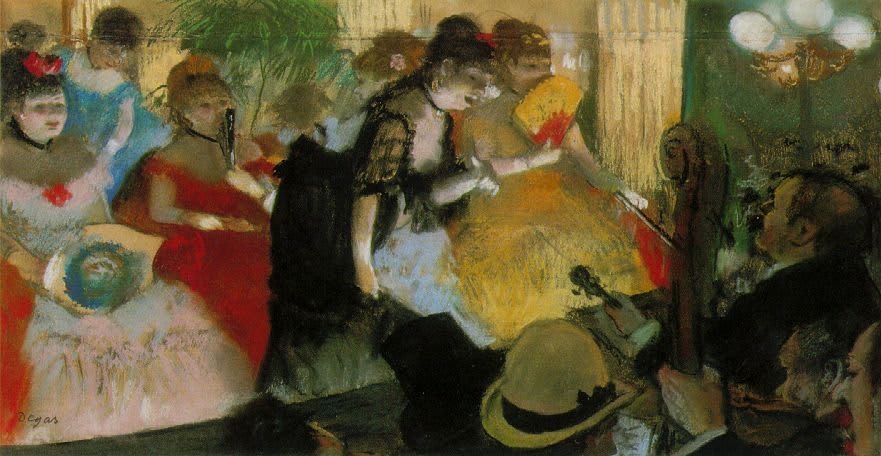
Café-Concert: This is one of Degas' most lively compositions, portraying Parisian nightlife.
The luminosity of the pastels culminates in the figure of the singer, who becomes the focal point of this vibrant scene.
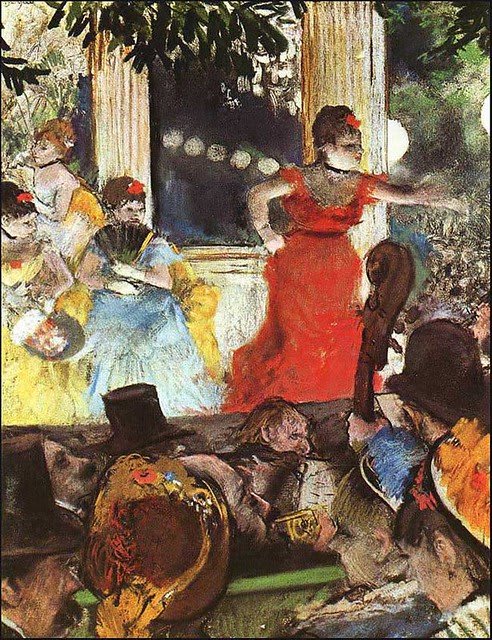
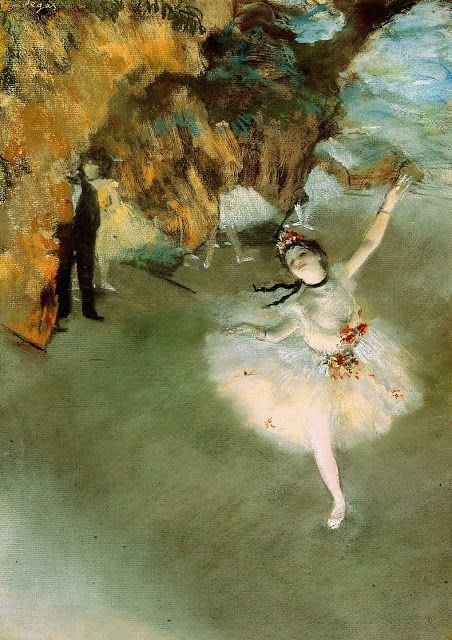
The Star: Degas preferred to paint ballerinas during rehearsals.
He depicted them exercising or at the entrance of a performance, capturing backstage moments.
This work was, undoubtedly, a pleasant exception, as it captures the splendor of this graceful ballerina's solo.
Cabaret: The clear contrasts and diagonal lines of the scene are striking.
The movements, captured by surprise as in a photograph, are astonishing.
Everything combines to give this pastel a vitality that establishes it as a masterpiece of the genre.
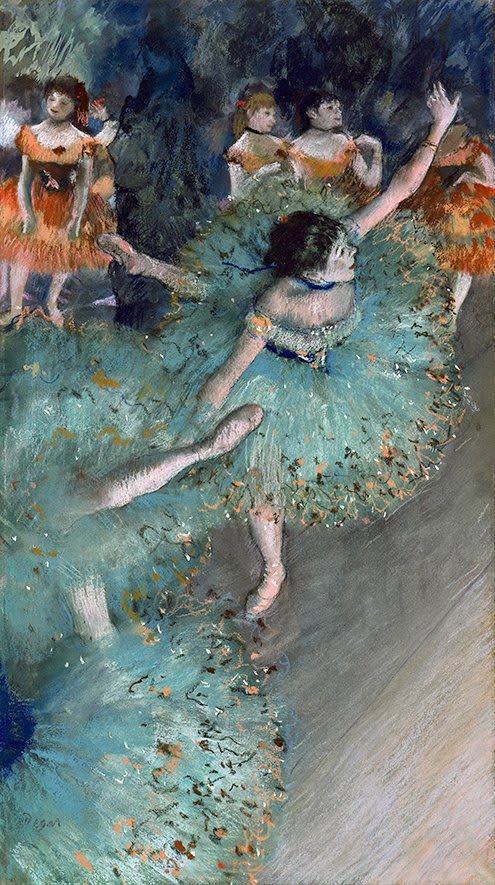
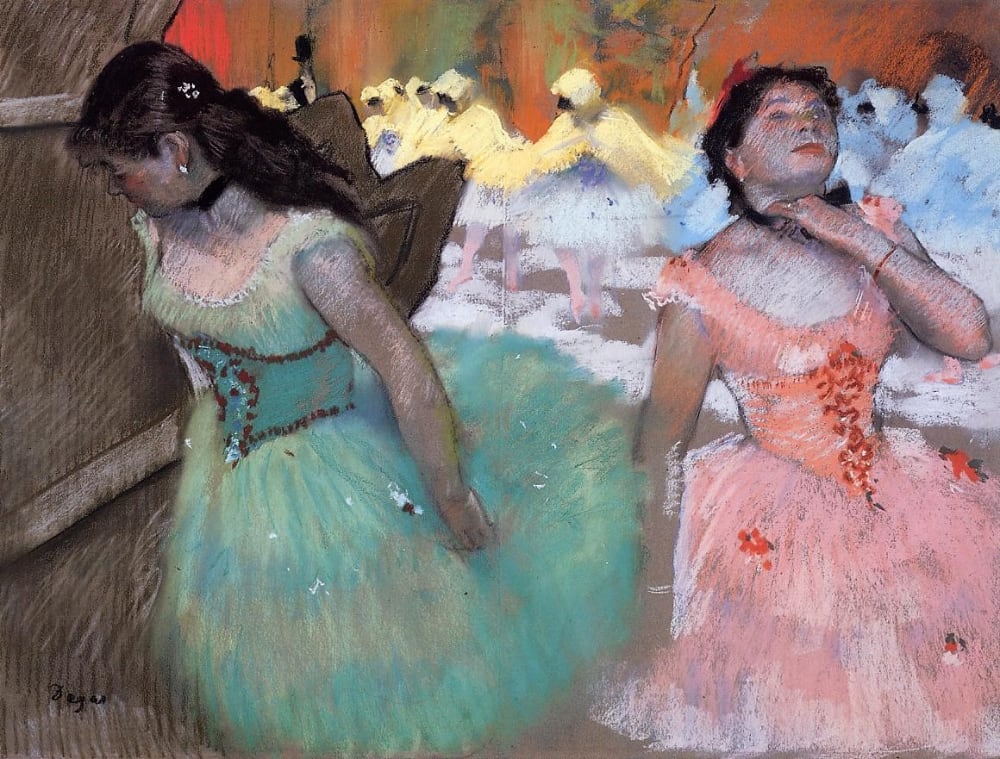
The Entry of the Masked Dancers: The entire richness of ballet, especially the fantasy of the ballerinas, fascinated Degas.
The artist was captivated by this wonderful world of costumes, light, and magic.
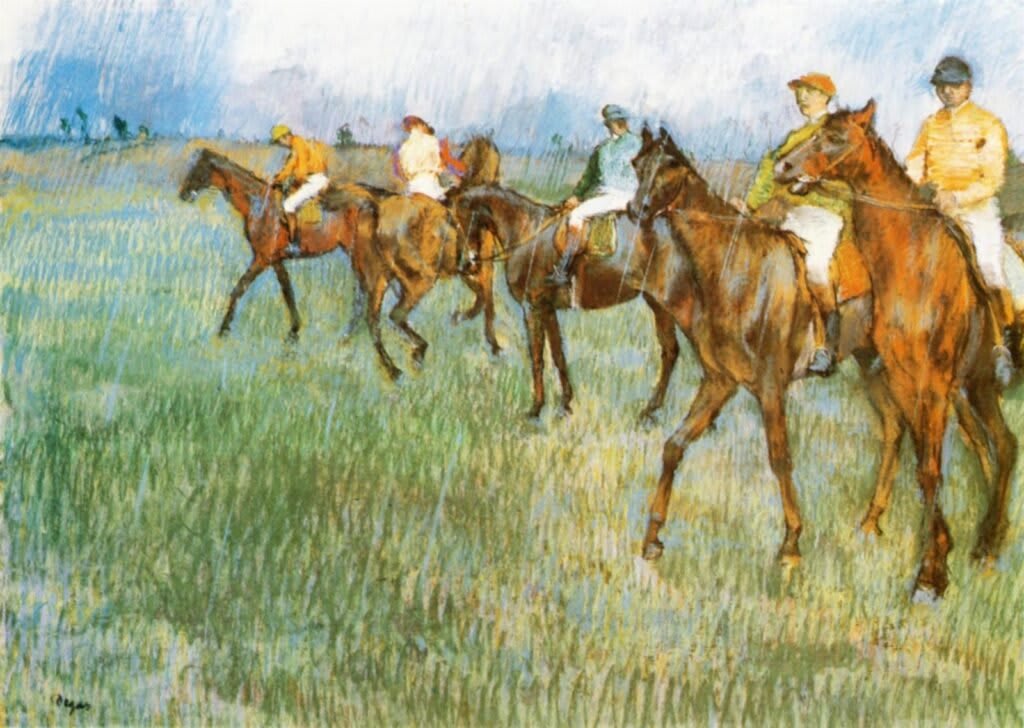
Jockeys in the Rain: This pastel reveals Degas' originality.
He achieves a harmonious balance by individually highlighting different planes and perspectives within the composition.
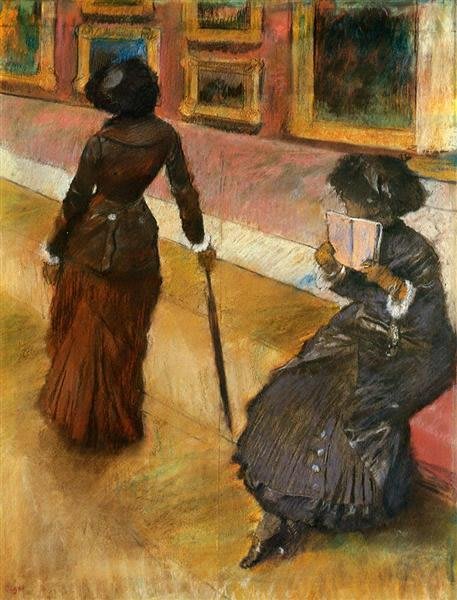
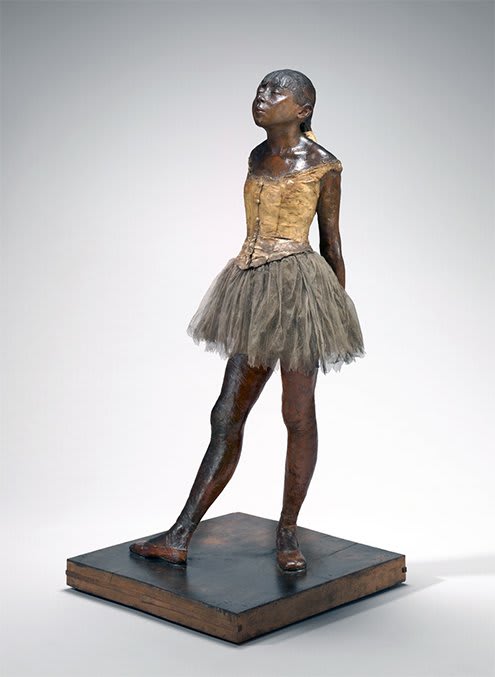
Little Dancer of Fourteen Years: To learn more details about this iconic sculpture, click here.
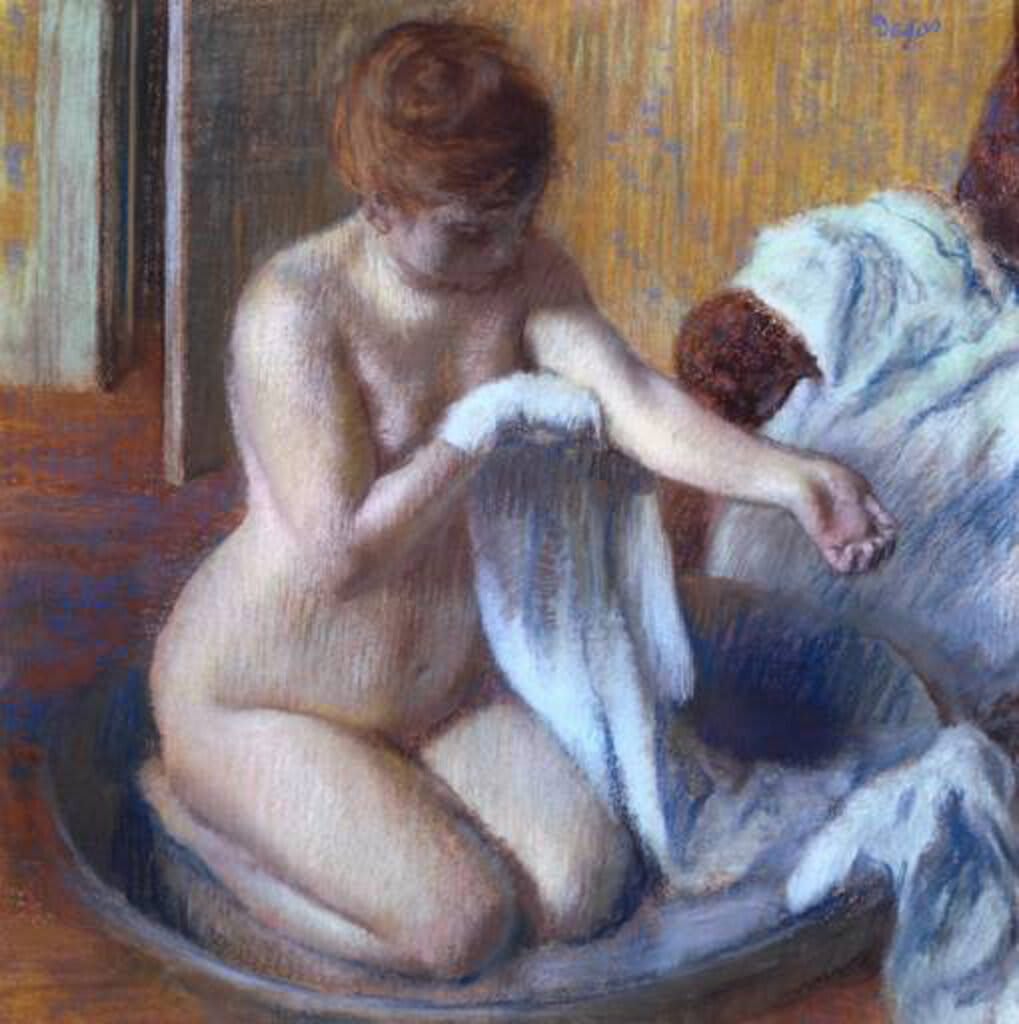
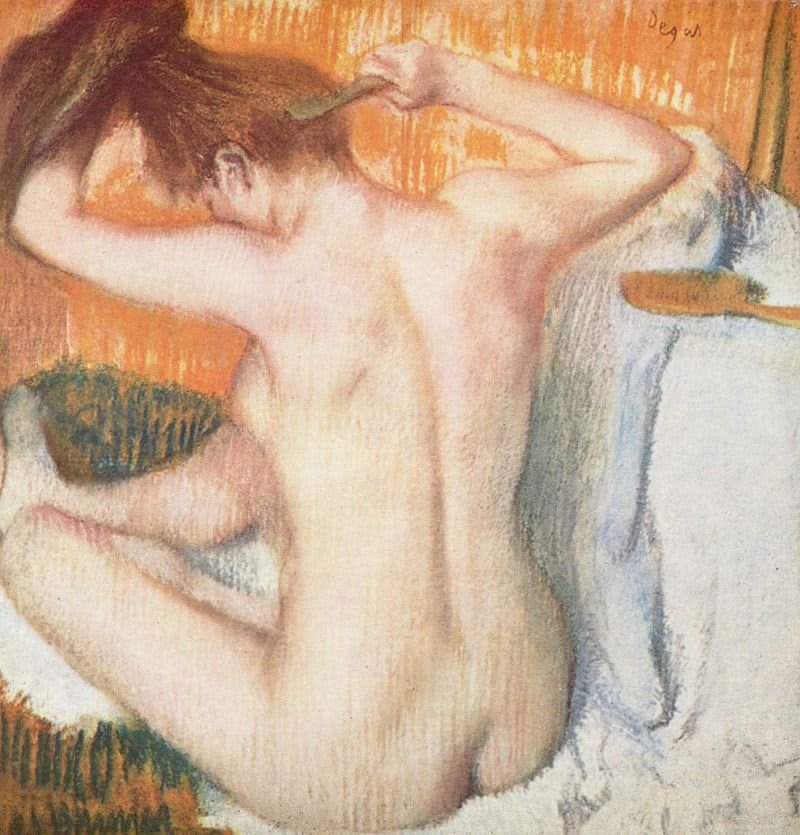
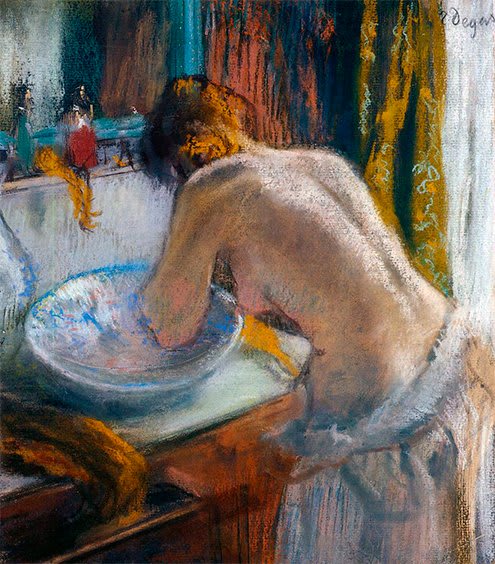
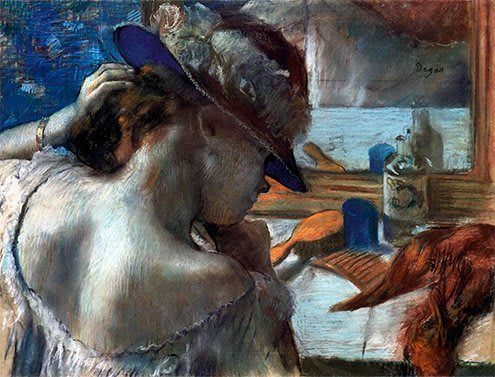
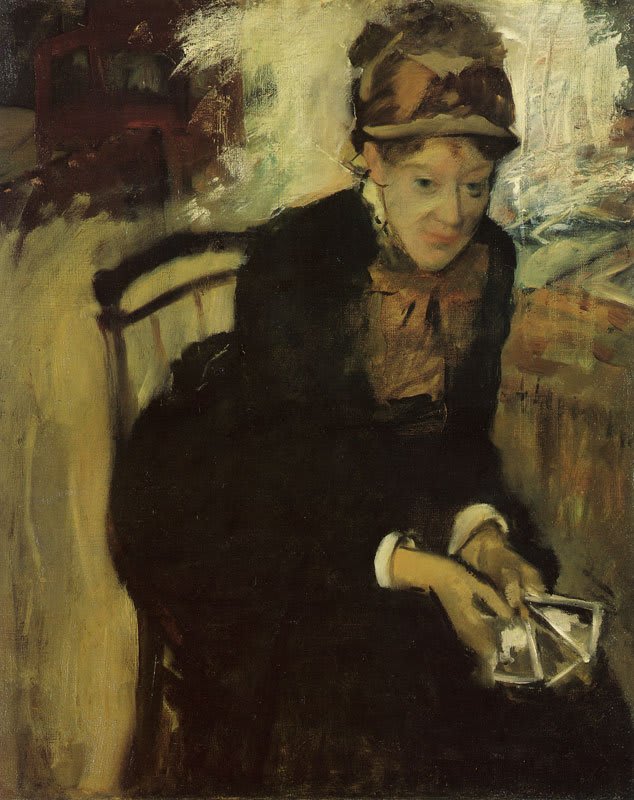
Woman in the Tub: This pastel painting is one of Degas' most delicate works in his studies of the nude.
It is part of a celebrated series of pastels depicting women at their toilette.
Some of them were exhibited at an exhibition of Impressionist painters in Paris in 1886.
The reception was mixed: some critics praised Degas' depiction.
Others, however, complained about the "ugliness" of the models, criticizing his choice and even alleging they were prostitutes.
But what truly bothered the critics?
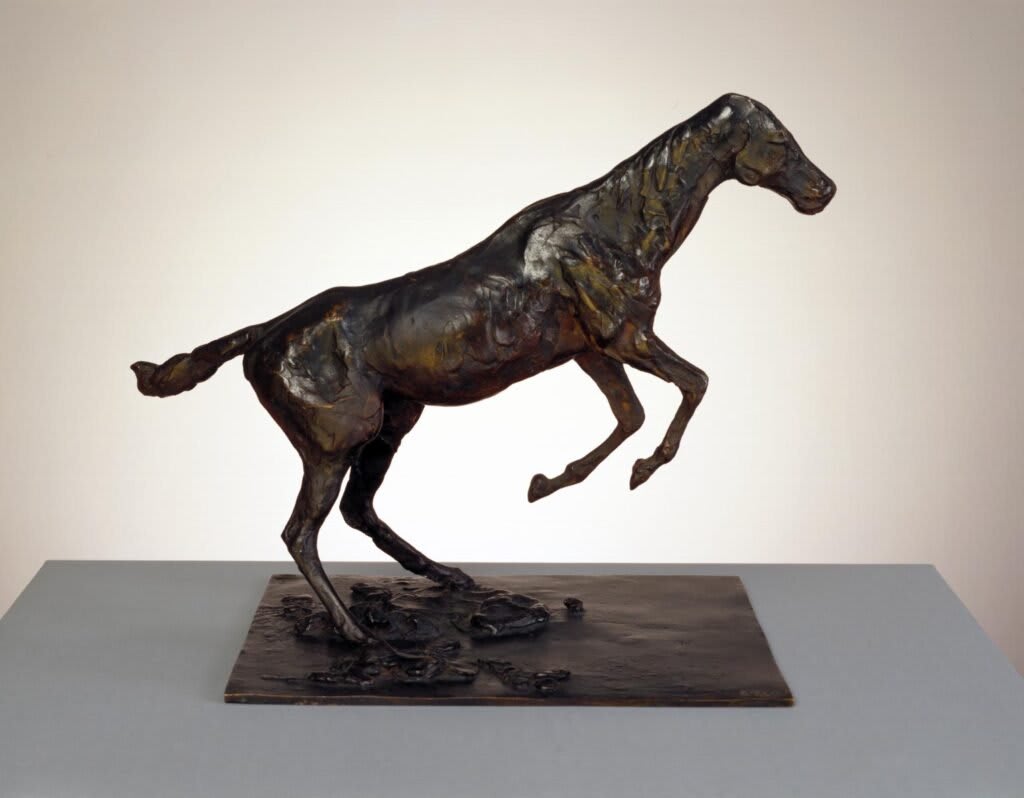
Horse Clearing an Obstacle: Degas created a series of works featuring horses as the central theme.
Around 1880, with his eyesight already failing, he began to create small-scale sculptures.
It is believed that this particular work, like other bronzes, was inspired by the photographs of Eadweard Muybridge, which captured horses in motion.
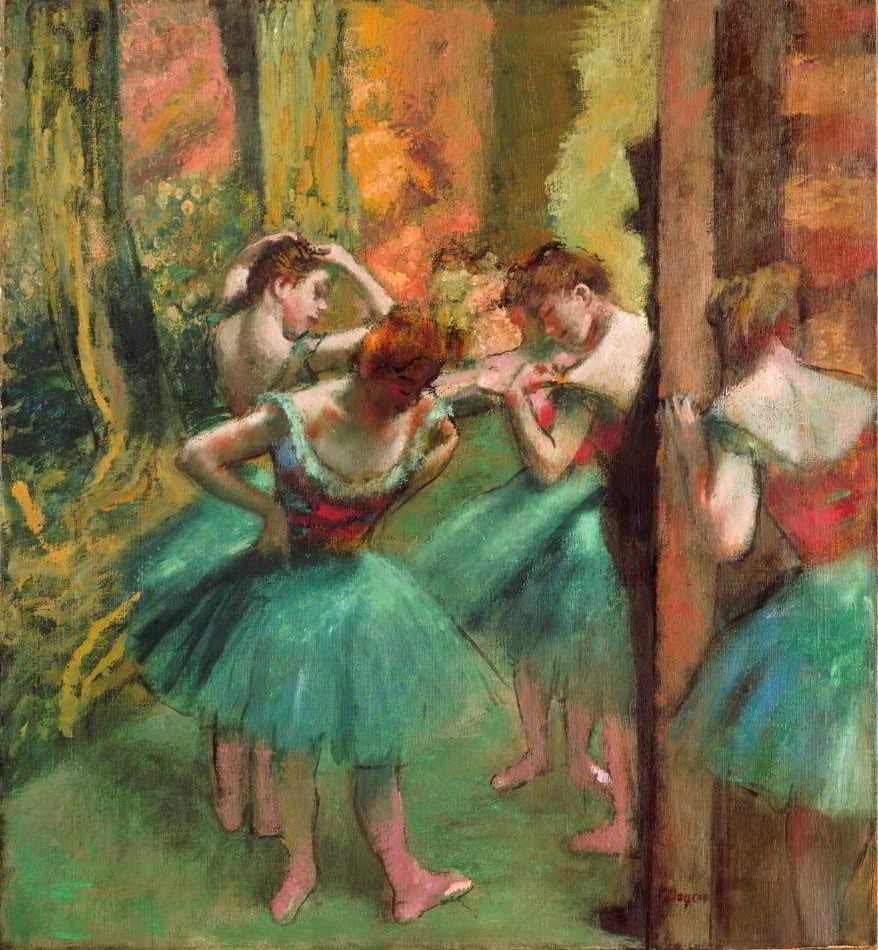
Ballet Scene: This canvas is an example of the artist's late period.
During this period, Degas' eyesight was already significantly compromised.