
Edgar Degas: Biography and Works: The Life of the Impressionist Master
Discover the fascinating biography of Edgar Degas, one of the founders of Impressionism. Learn about his childhood, artistic education, and the early steps of his brilliant career until his later years.
Edgar Degas was a renowned French artist, highly celebrated, and one of the founders of the Impressionist movement. His work influenced many modern artists, such as Pablo Picasso and Henri Matisse, revolutionizing 20th-century art. He is considered one of the most innovative figures of his generation, with his paintings being regarded by many critics as some of the most refined in the history of art.
He was one of the greatest artists in the history of art.
Edgar Hilaire Germain Degas was born on July 19, 1834, in the city of Paris, France. He was the son of a middle-class family, who for many years signed and spelled out the name "de Gas", giving emphasis to the preposition "de" suggesting an aristocratic background. His father, Auguste, was a banker with a prosperous future, and his mother, Celestine, was an amateur opera singer. To encourage her, his father occasionally hosted meetings with musicians to give recitals at his home.
As a child, Degas attended the prestigious Escola Louis-le-Grand, as it was very rigorous in the education of boys, where he received a classical education. From an early age, he demonstrated a notable talent for drawing and painting, a talent encouraged by his father, who was an art lover. At 13, a great loss caused much sadness for the whole family, when Degas' mother died, leaving three sons and two daughters; Degas being the eldest son, he shared the responsibilities with his father, the education of his siblings.
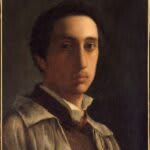
In 1853, at the age of 18, he was allowed to make observation drawings at the Museu do Louvre. The great collection of this renowned museum allowed him to copy works by great masters such as Raphael, Ingres, and Delacroix, painters he had great admiration for.
In 1855, he was admitted to the Escola de Belas Artes in Paris. However, after only one year of study, Degas left the school to spend three years traveling, painting, and studying in Italy. He painted meticulous copies of works by great Renaissance painters such as Michelangelo and Leonardo da Vinci, developing a reverence for perspective, proportion, and other values related to the Renaissance.
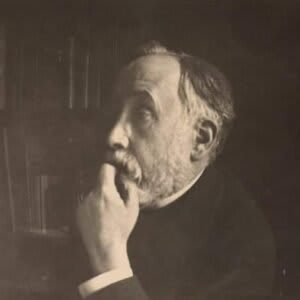
Upon returning to Paris in 1859, Degas began to stand out as a painter, adopting a traditional approach. During this period, he painted important family portraits, such as A Família Bellelli, and some historical scenes. Degas submitted these works to the all-powerful Salon de Paris, a group of French artists and professors who presided over public exhibitions, who received his paintings with great indifference.
In 1862, he had a significant moment in his life when he met the painter Édouard Manet at the Louvre, the two quickly developed a friendly rivalry. Degas grew to share Manet's disdain for the art establishment that dominated, as well as his belief that artists needed to resort to more modern techniques and subjects.
But history holds a strange detail:
In 1868, Degas became a prominent member of a group of avant-garde artists, including Manet, Auguste Renoir, Claude Monet, Camille Pissaro, and Alfred Sisley, who frequently met at the Café Guerbois to discuss ways for artists to engage with the modern world. This group of artists had Paris as their great muse, inspiring themselves in its avenues, cafes, shops, dance studios, salons, theaters, and opera houses. Their meetings coincided with tumultuous times in French history.
In July 1870, the Guerra Franco-Prussiana broke out, and Edgar Degas, an extremely nationalist, presented himself to the Guarda Nacional Francesa. When the war ended in 1871, the infamous Comuna de Paris took control of the capital for two terrifying months, until the Third Republic was restored in a bloody civil war. To avoid participating in this turmoil, Degas decided to travel to Nova Orleans, in the Estados Unidos, and stay with relatives of his mother who lived there.
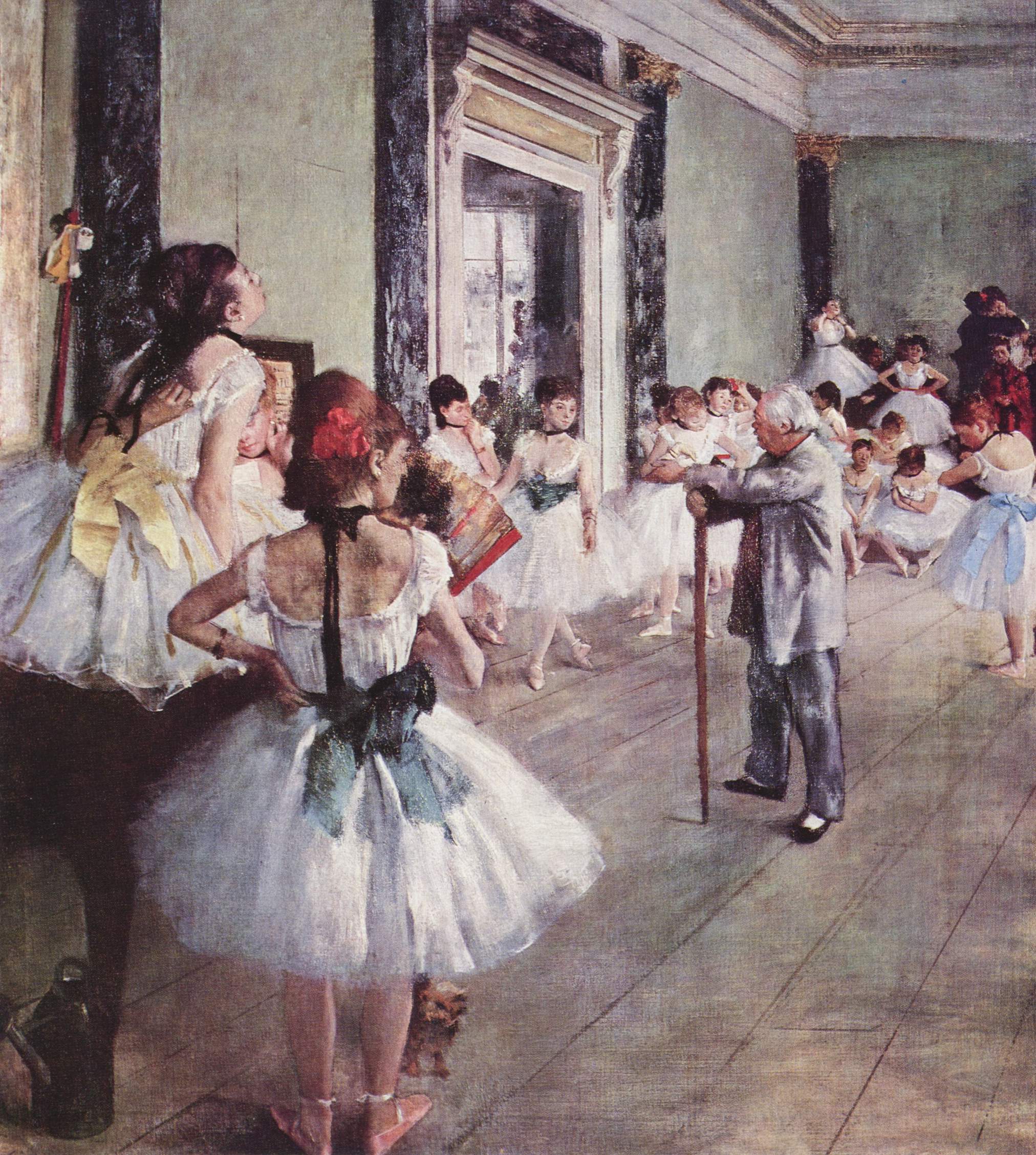
Upon returning to Paris in 1873, along with Monet, Renoir, Sisley, and other painters, they formed the Sociedade dos Artistas Independentes, a group committed to holding free exhibitions from the control of the Salon de Paris. This group of painters became known as impressionistas. On April 15, 1874, they held the first Impressionist exhibition, where Degas exhibited portraits of women using radical perspectives, and presented his first paintings of dancers, a theme he would explore from then on. Over the next 12 years, the group held eight exhibitions, and Degas participated in all of them. His most famous works during this period were A Aula de Dança and Dançarinas Praticando em uma Barra.
He never married, although he had relationships with several women, including the American painter Mary Cassatt, but there are reports that they were only close friends.
Degas and Mary Cassat, a chapter apart...
"The affinity between the two artists is undeniable. Both were realists who drew inspiration from the human figure and the description of modern life, while avoiding landscape almost entirely. Both were highly educated, known for their intelligence and sagacity, and came from wealthy banking families. They were peers, moving in the same social and intellectual circles. Cassatt, who had settled in Paris in 1874, met Degas in 1877, when he invited her to participate with the Impressionists in their next exhibition. Over the next decade, the two artists engaged in intense dialogue, exchanging advice and challenging each other to experiment with materials and techniques. Both made painting a key aspect of their careers and, for a time, collaborated on their projects. The admiration and mutual support endured long after their art took different directions: Degas continued to acquire Cassatt's work, while she promoted him to collectors in the United States. They remained devoted friends for forty years, until Degas' death."
In 1886, the eighth and final Impressionist exhibition took place in Paris. In it, Degas participated, exhibiting ten works with female nude themes, making this subject the main focus of this exhibition with controversial criticisms. Some praised his paintings, while others ridiculed them grotesquely. Unbothered by the criticism, he went on to create hundreds of studies of nude women and continued to paint the dancers in action.
In the final years of his life, Degas suffered from blindness, which led him to engage in sculpture. Throughout his life, the artist had only one sculpture exhibited, known as A Pequena Dançarina de Quatorze Anos.
As the 20th century approached, Degas was approaching 70 years old, and the pace of his work slowed down. The artist went on to promote his works and became a great art collector; he acquired works by artists he admired, some of his contemporaries, such as Cézanne, Van Gogh, Manet, Gauguin, and Pissarro, as well as older artists like Delacroix and Ingres, whom he considered masters and a source of inspiration.
Edgar Degas passed away in his beloved Paris on September 27, 1917, at the age of 83. The artist suffered greatly in his final moments, due to his visual impairment that had been tormenting him since his 30s.
The ARTIST AND HIS WORK
To understand the rest of this journey, continue to our next article: Edgar Degas: Biografia e obras: Estilo, Temas e Obras Essenciais.


