
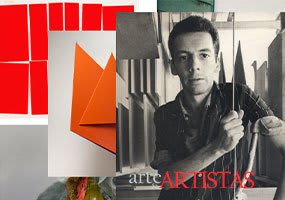
Hélio Oiticica and His Main Works
Discover the life and art of Hélio Oiticica, a Brazilian artist who made a significant contribution to the development of contemporary art.
The genius dedicated his soul to painting the ceiling of the most famous chapel in the world.
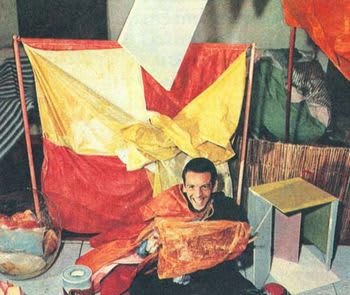
Hélio Oiticica was a highly influential artist and one of the main exponents of Contemporary Art in Brazil. Born on July 26, 1937, in the city of Rio de Janeiro, in a middle-class family with a strong interest in art and culture.
Since a very young age, Oiticica showed a inclination for art and began to paint and draw. In the 1950s, he studied at the National School of Fine Arts of Rio de Janeiro, where he came into contact with the work of abstract artists and concretism that influenced his artistic development, such as Ivan Serpa, Lygia Clark, and Lygia Pape, integrating with them the Front Group.
In the 1960s, he joined the neoconcrete movement, a group of Brazilian artists who rejected the limitations of concrete art and sought new forms of expression. At that time, he created a series of works that combined abstract art with elements of Brazilian popular culture, such as sambódromos and favelas.
In the 1960s, the artist created the Parangolé, considered a mobile sculpture that, like the Dadaism, he called "anti-art," as a living and ambulatory painting. The work is a kind of cloak that only presents its tones, colors, forms, textures, graphics, and texts when fully displayed. The materials used for its realization must be suitable for performing the performance, allowing and facilitating the movements of those who wear it on their body.
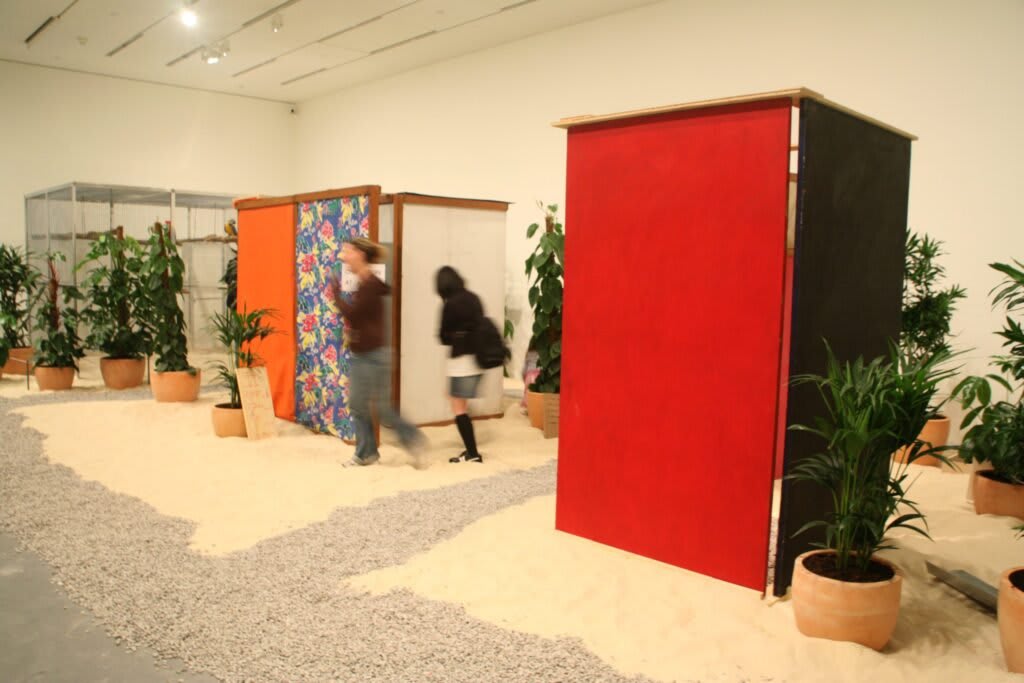
In the mid-1960s, he began a series of interactive installations that he called "Penetrables." These works allowed spectators to enter them and experience a new way of relating to art. One of the most famous works is Tropicália, created in 1967, which invited visitors to walk barefoot on the sand and among tropical plants, creating an immersive experience. The artist explained: The environment created was obviously tropical, like a background of a farm, and the most important thing was the feeling of being back on the ground. This feeling I had previously experienced while walking through the hills, the favela, and even the path of entering, exiting, and bending through the 'quebradas' of Tropicália, reminds me a lot of the walks through the hill.
At the end of the 1960s, the artist became involved in political and social movements in Brazil, such as the fight against the military dictatorship and the defense of indigenous rights. His art became more political and experimental, using different materials and forms of expression. During this period, he created one of his most famous works, the Bandeira-poema Seja Marginal, Seja Herói, in honor of Manoel Moreira, a black man who lived in the Favela do Esqueleto, in Rio de Janeiro.
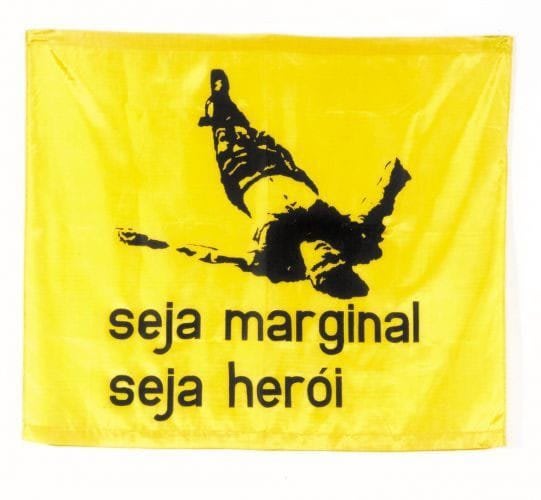
Manoel Moreira, who became friends with Oiticica, was known as Cara de Cavalo. Manoel was persecuted and executed in 1964 with over 50 shots by criminal organizations formed by police. He was one of the main suspects of having assassinated a police officer who was part of that organization. The flag created by the artist presents the image of Cara de Cavalo dead and the phrase Be Marginal, Be a Hero, as a form of protest.
In the 1970s, he lived in the United States, settling in the city of New York, where he continued to develop his work. There, he also explored other forms of art, such as giant installations, like the famous "Penetrável Magic Square nº 5, De Luxe". It was created in 1977 from his maquettes developed in the 60s, whose projects could only be executed in public places. The artist's goal was to offer the public an interactive location, where people who entered the space would create their own environment.
Tragically, Hélio Oiticica died at the age of 42, on March 22, 1980, due to a stroke. He left a legacy as one of the most important artists in Brazil. His works are exhibited in the main museums and galleries of the world, and his focus on active participation by the spectator continues to be a significant influence on contemporary art.
GALLERY
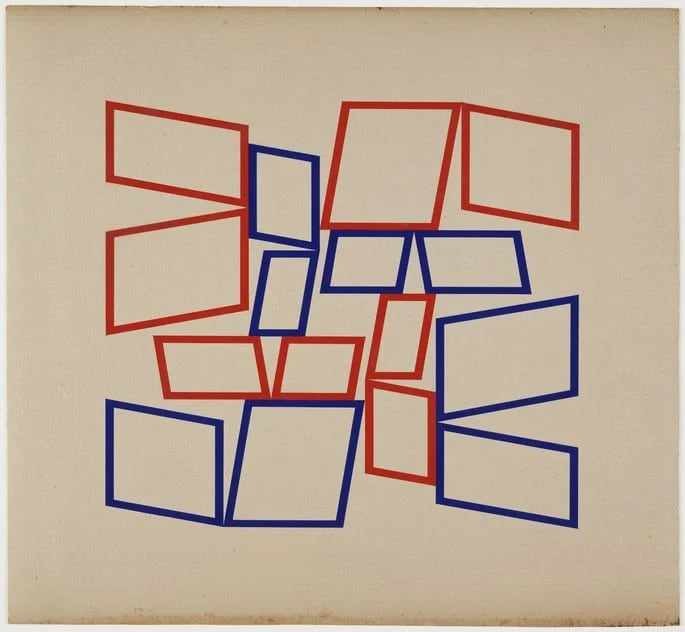
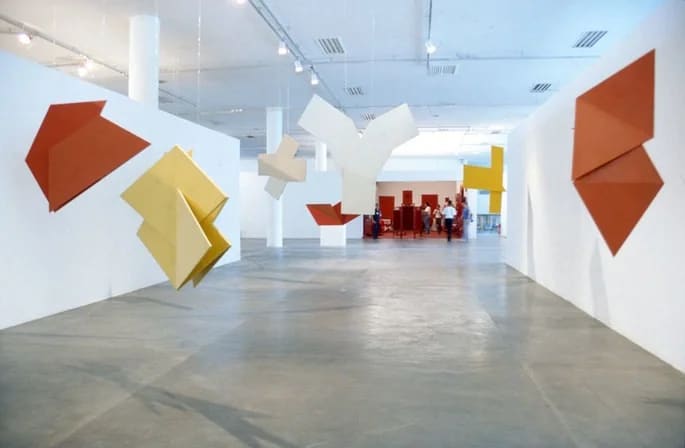
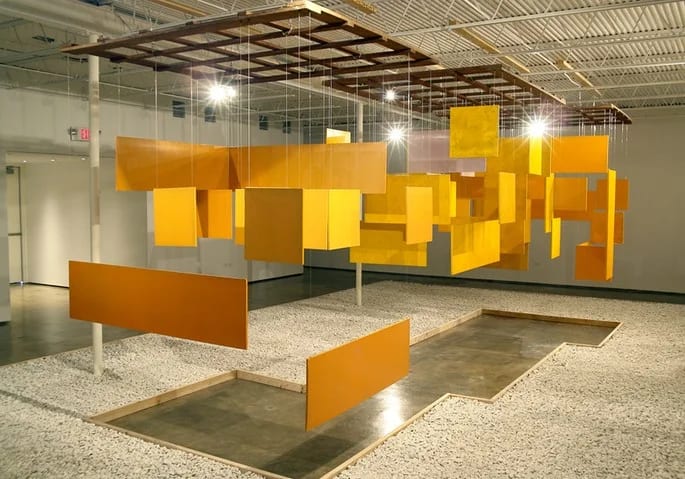

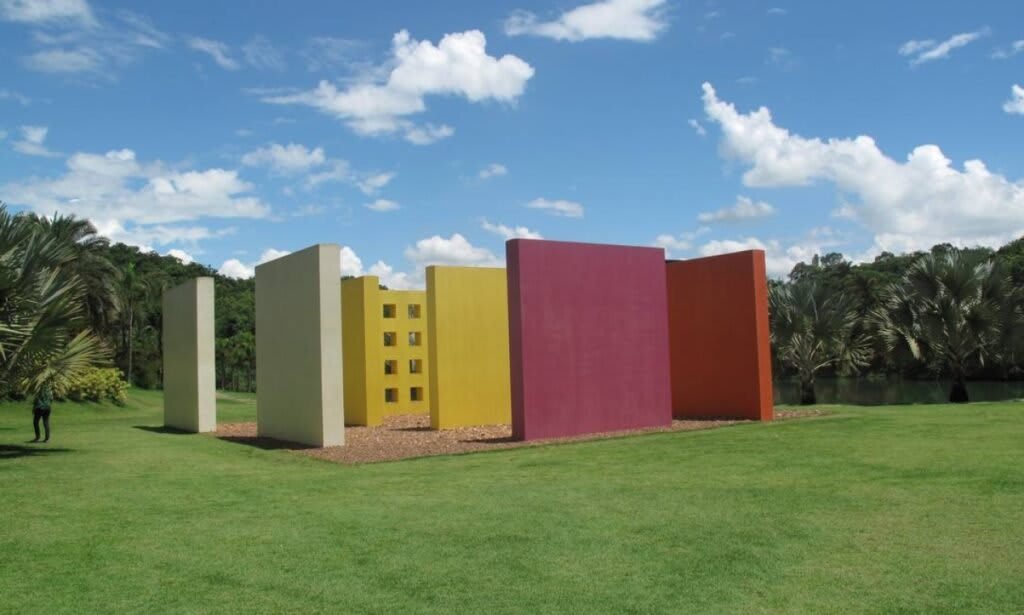
Penetrável Magic Square nº 5 De Luxe. Built posthumously, Penetrável Magic Square are installations whose works are a coherent means of continuing the artist's legacy, giving new vitality to his ambitious proposal on the conception of the relationship between art and life.


