
Paul Gauguin: Biography and Artistic Development (Part 1)
Paul Gauguin: Biography and Artistic Development (Part 1)
Article Index
- Immersion in the Art World and the End of an Era
- The Discovery of Exoticism and the Birth of Synthetism
- The Explosive Encounter with Vincent van Gogh
- Symbolism and the Search for New Horizons
- Paradise Lost: The First Stay in Tahiti
- The Brief Return to France and the Final Decision
- The Masterpiece and the Last Refuges
- The End of a Legend and an Eternal Legacy
Paul Gauguin was a French artist of immense importance.
His artistic experiences influenced many avant-garde developments in the early 20th century.
A painter, printmaker, and sculptor, his work is categorized as Post-Impressionist and Symbolist.
He is particularly known for his tempestuous relationship with Vincent van Gogh.
Furthermore, his exile in Tahiti, in French Polynesia, profoundly marked his life and work.
BIOGRAPHY: THE FIRST STEPS OF A REBEL
Eugène-Henri-Paul Gauguin was born on June 7, 1848, in the vibrant city of Paris, France.
His father, Clovis Gauguin, was an acclaimed journalist, while his mother, Alina Maria Chazal, had Peruvian ancestry through her mother.
She was the daughter of the influential socialist leader Flora Tristan, a feminist pioneer whose father belonged to a prominent Peruvian family.
In 1850, Napoleon III's coup d'état forced his family to move to Peru.
There, his father planned to establish a new newspaper, but tragically, he died during the journey.
Gauguin's mother remained with her two children, and they went to live with an uncle in the capital.
Four years later, the family returned to Paris with his mother and children Marie and Paul.
At 17, Gauguin made a bold decision: he enlisted in the Merchant Navy.
For six years, he sailed the oceans, exploring the world.
In 1867, his mother passed away, and the legal guardianship of the children was entrusted to the businessman Gustave Arosa.
It was Arosa who, after Gauguin left the navy, secured him a position as a stockbroker.
He also introduced him to the Danish woman Mette Sophie Gad, whom Gauguin married in 1873.
During this period, while residing in Paris and maintaining his job as a stockbroker, Gauguin provided a comfortable middle-class lifestyle for his family.
The family grew, including four sons and one daughter.
Gauguin's exposure to Gustave Arosa's vast art collection — which included works by Eugène Delacroix, artists of the French Salon, and ceramics from various cultures — was crucial.
This immersion decisively contributed to the awakening and development of his passion for art.
Immersion in the Art World and the End of an Era
In 1876, Gauguin's painting, Landscape in Viroflay, was accepted for exhibition at the Official Annual Paris Salon.
During this period, until 1881, he deepened his contact with works by the Impressionists.
He even acquired important paintings by artists such as Paul Cézanne, Édouard Manet, Camille Pissarro, and Claude Monet.
Around 1874, Gauguin met Pissarro and began taking lessons with the more experienced artist.
Initially, he struggled to master complex painting and drawing techniques.
In 1880, he was included in the fifth Impressionist exhibition, a milestone in his rising career.
He spent holidays painting with Pissarro and Cézanne, and his progress became visible.
He then successively participated in the exhibitions of 1881 and 1882.
During this time, Gauguin also integrated himself into a social circle of avant-garde artists.
This group included prominent figures such as Manet, Edgar Degas, and Auguste Renoir.
But an unexpected event would change everything:
In 1882, the French stock market collapsed, and Gauguin lost his job at the stock exchange.
Despite the financial setback, he viewed this as a positive development, as it would finally allow him to dedicate himself to painting more frequently.
However, in an attempt to support his family, he tried to market his works to art dealers, but without immediate success.
In 1884, Gauguin and his family moved to Rouen, a city in Normandy, France.
There, he found a job that lasted until the end of that year.
Soon after, they traveled to Denmark, seeking support from his wife Mette's family.
Even without a job, the artist felt free to produce his art, but faced disapproval from Mette's family.
In mid-1885, he returned to Paris with his eldest son.
In 1886, Gauguin participated in the eighth and last Impressionist exhibition.
He presented nineteen paintings and a carved wooden relief.
However, his works received little attention, overshadowed by the gigantic painting by Georges Seurat: A Sunday Afternoon on the Island of La Grande Jatte.
Frustrated, Gauguin began making ceramic pots to sell and secure some income.
In the summer, he made a trip to Pont-Aven, in Brittany, a region of France.
His intention was to seek a simpler life, with fewer financial expenses, away from the effervescence of Paris.
The Discovery of Exoticism and the Birth of Synthetism
In April 1887, after a particularly harsh winter, Gauguin embarked on a journey.
He sailed to the Island of Martinique, in the French Caribbean, with the explicit intention of "living like a savage."
His works painted in Martinique, such as Tropical Vegetation and By the Seashore, already revealed his growing break with Impressionist technique.
By the end of the same year, he decided to return to France, feeling more secure and carrying a more "exotic" artistic identity.
In the summer of 1888, Gauguin returned to Pont-Aven, driven by a profound search.
He sought what he himself described as "a rational and frank return to the beginning, that is, to primitive art."
He was accompanied by young painters, such as Émile Bernard and Paul Sérusier, who also longed for a more direct expression in their art.
Gauguin took a decisive step towards this ideal with the painting Vision After the Sermon.
In this work, he employed broad planes of color, clear outlines, and simplified forms, innovating radically.
It was Gauguin who coined the term Synthetic — derived from the Greek Synthetism — to describe his style during this period.
The concept referred to the synthesis of the formal elements of his paintings with the idea or emotion they conveyed.
This marked a clear abandonment of Impressionism and a movement towards Symbolism.
Paul Gauguin and the group of artists who adopted this new style became known as the Pont-Aven School.
In this movement, artists prioritized the decorative aspect in the compositions and general harmonies of their paintings.
Color, in particular, was valued as the main expressive element.
Gauguin acted as the natural leader of these artists, advising them with impactful words:
"Do not copy too much after nature. Art is an abstraction: extract from nature while dreaming before it and concentrate more on the creation than on the final result."
The Explosive Encounter with Vincent van Gogh
In 1888, Gauguin traveled to the south of France, bound for Arles.
He was responding to an appeal from Théo van Gogh, an art dealer who owed him a favor.
Thus, Paul agreed to live for a period with Théo's brother, Vincent van Gogh.
Earlier that year, Vincent had moved to Arles with the hope of founding an "Artists' Colony."
His vision was a place where like-minded painters could gather to create new, expressive art.
However, as soon as Gauguin arrived, the two artists frequently engaged in "heated" exchanges about the purpose of art.
Both aimed to create a new style that demonstrated individual and personal development in the use of colors, brushstrokes, and non-traditional subjects compared to Impressionism.
As in much of Gauguin's work from this period, the artist applied thick, heavy paint to the canvas, using a coarse technique.
In these works, he found something that approached his growing "primitive" ideal.
His painting Old Women of Arles is a notable example of this intense period.
Gauguin had planned to stay in Arles through the spring.
However, the cohabitation between the artists was unsustainable, and his relationship with Vincent became increasingly complicated.
After a violent argument, during which Gauguin claimed to have been attacked by Vincent, Van Gogh mutilated his own left ear with a razor.
Facing this tragedy, Gauguin returned to Paris after a stay of only two months in Arles.
Symbolism and the Search for New Horizons
In the following years, Gauguin alternated his residence between Paris and Brittany.
In the capital, he became familiar with avant-garde literary circles, especially with some Symbolist poets.
These poets, who advocated abandoning traditional forms to incorporate inner emotional and spiritual life, saw the equivalent in visual arts in Gauguin's work.
The art critic Albert Aurier even declared him the leader of a group of Symbolist artists.
Aurier defined Gauguin's work as "symbolic, synthetic, subjective, and decorative," acknowledging its originality.
In 1889, after finding Pont-Aven saturated with tourists — which deeply bothered him — Gauguin decided to move.
He sought refuge in the remote village of Le Pouldu, also in Brittany.
There, in an intensified search for a rawer and more authentic expression, he began to focus on ancient monuments of medieval art, such as crosses and calvaries.
These inspirations led him to incorporate simple and rigid forms into his compositions, visible in his famous painting The Yellow Christ.
As this work suggests, Gauguin began to desire an even more remote environment to work in.
After considering and rejecting destinations such as northern Vietnam and Madagascar, he requested a concession from the French government.
His great goal was to travel to distant Tahiti.
Paradise Lost: The First Stay in Tahiti
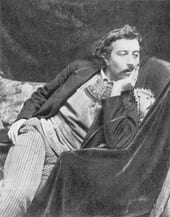
In June 1891, Gauguin finally arrived in Papeete, Tahiti, and was immediately enchanted by the landscape and local culture.
However, he soon felt disappointed by the extent of French colonization, which had already corrupted much of Tahitian authenticity.
Therefore, he tried to immerse himself in the aspects he believed to be the most genuine of the local culture.
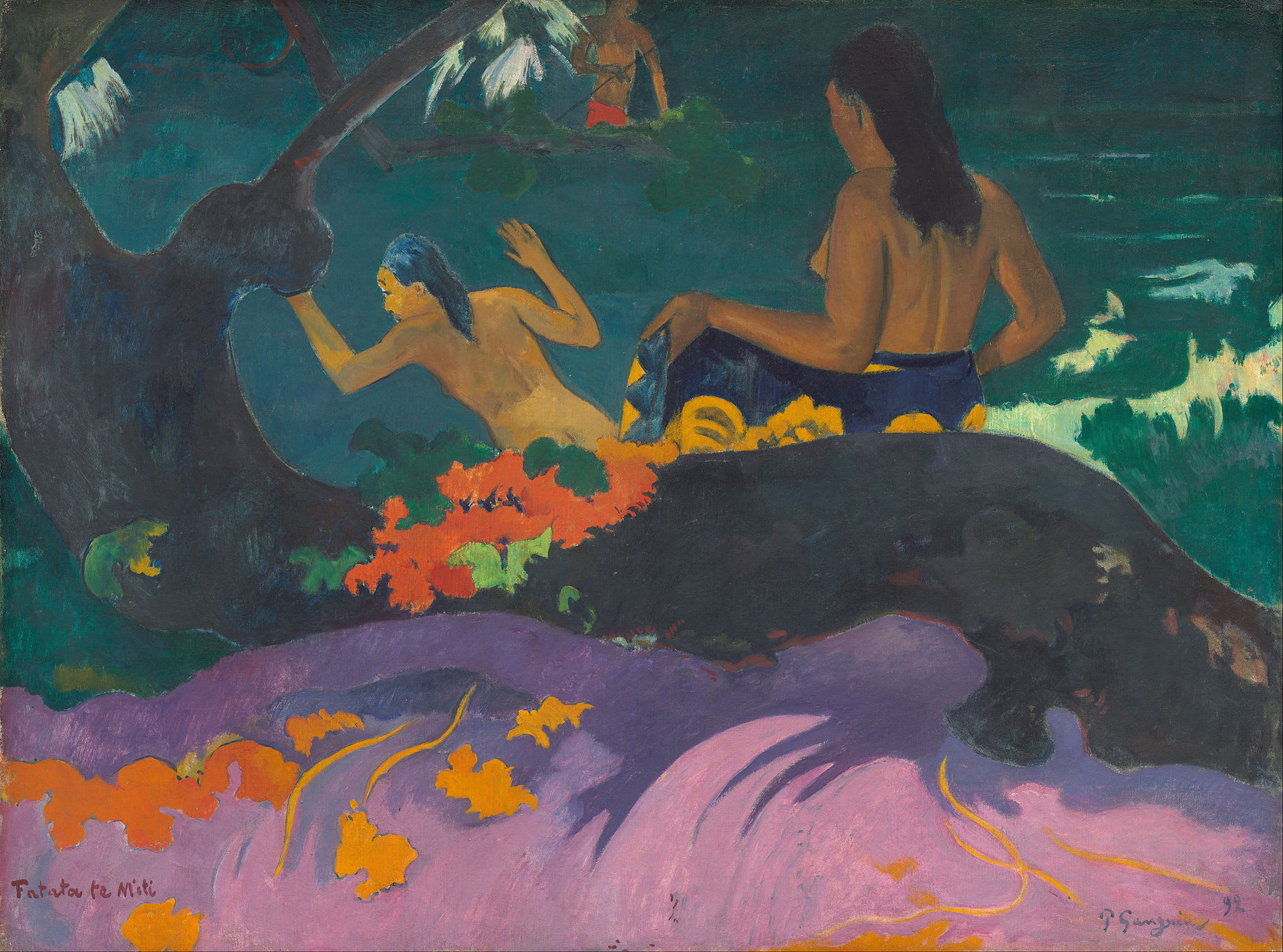
During his stay in Tahiti, Gauguin began titling his works with Tahitian terms.
Examples include Fatata te miti (or "Near the Sea") and Manao tupapau, known as "The Spirit of the Dead Watching."
He incorporated Oceanic iconography and depicted an idyllic image, full of lush landscapes and suggestive spiritual settings.
The Brief Return to France and the Final Decision
In 1893, Gauguin returned to France, carrying the conviction that his new Tahitian work would finally bring him the longed-for success.
In 1894, he conceived an ambitious plan: to publish a book about his impressions of Tahiti.
Titled Noa Noa, the book was illustrated with his own expressive woodcuts.
This project culminated in a solo exhibition of his works at Marchand Paul Durand-Ruel's gallery.
However, reality proved cruel:
To his profound disappointment, public and critical acceptance was minimal.
Completely disillusioned, Gauguin made a drastic decision: he resolved to return to Tahiti, this time leaving France permanently.
The Masterpiece and the Last Refuges
In 1897, Gauguin reached the pinnacle of his artistic expression in his main work created in Tahiti.
The painting - Where Do We Come From? What Are We? Where Are We Going? - is an enormous contemplation of life and death.
Told through a series of figures, beginning with a baby and ending with a crouching old woman, the work is enveloped by a dreamlike and extraordinarily powerful poetic aura.
About it, Gauguin declared: "I believe this canvas not only surpasses all my previous ones, but that I will never do anything better or even another similar image."
In 1901, Gauguin set off again in search of a quieter environment.
He was bothered by the increasing Western influence in the French colony of Tahiti.
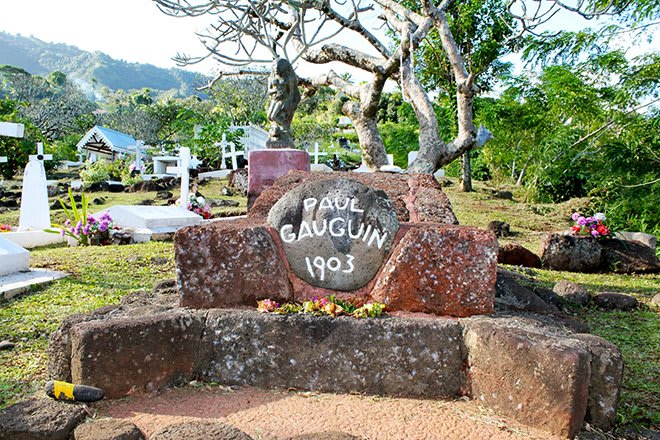
He left Tahiti and traveled to Hiva Oa, in the Marquesas Islands.
On this island, Gauguin acquired land and built a house he called "the house of pleasure."
He transformed this residence into a true work of art, decorated with elaborately carved friezes.
During this period in Tahiti and Hiva Oa, his personal life was marked by promiscuity.
He was known to have had encounters with several native women, some still teenagers, many of whom served as models in his paintings.
In 1902, an advanced case of syphilis significantly restricted his mobility.
With his health deteriorating, Gauguin focused his remaining energy on drawing and writing.
During this period, he wrote a book of intimate memoirs, titled Avant et après (Before and After).
The work, however, would only be published in 1923, posthumously to the artist.
The End of a Legend and an Eternal Legacy
With the relentless advance of the disease, the artist felt increasingly debilitated and tired.
Nevertheless, Paul Gauguin continued painting and creating with the energy he had left, until the end.
He left a vast body of work that continues to inspire and provoke.
To understand the rest of this journey and delve deeper into his life and legacy, continue with our next article:
Paul Gauguin: The Journey to Tahiti, Legacy, and Essential Works (Part 2).


