
Realism: The Pioneers Gustave Courbet, Manet and Social Criticism
Realism: The Pioneers Gustave Courbet, Manet and Social Criticism
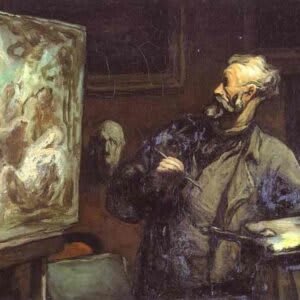
Aside from photography, another major influence on realism was the explosion of socially critical journalism and caricature at the beginning of the monarchy (1830-1848).
Although the authoritarian reign of Louis Philippe I ended in overthrow, the first five years of his government allowed for greater freedom of the press.
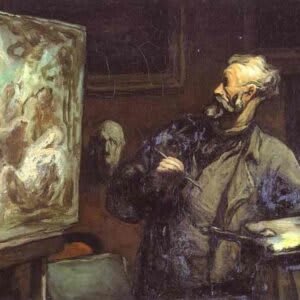
It was during this time that Honoré Daumier (1808-1879) began publishing socially critical caricatures of the monarchy, such as the lithograph Gargantua (1831), in which he mocked the king as the gluttonous giant from François Rabelais' 1534 novel.
The print, which could be reproduced and disseminated in the press, allowed Daumier to disseminate his critical compositions.
Despite being imprisoned for six months for his negative representation of the king as Gargantua, he continued to create other works and print for several decades, always focusing on social issues.
Main artists...
When the July monarchy collapsed in France in 1848, inaugurating the Second Republic (1848-51), it was part of a larger wave of European revolution that brought sweeping social changes to Germany, Italy, the Austrian Empire, the Netherlands, and Poland.
These events, combined with the publication of Pierre-Joseph Proudhon's A Philosophy of Poverty in 1846 and the Communist Manifesto by Marx and Engels in 1848, shed new light on the margins of society, and realism became the visual language of its representation.
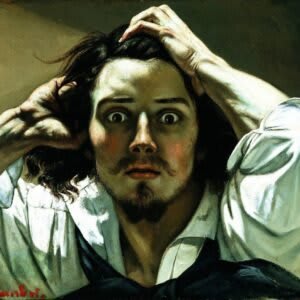
Friend of Proudhon and the main defender of realism, Gustave Courbet (1819-1877) led a multifaceted attack on French political power, bourgeois social customs, and the artistic institution.
His work The Stone Breakers (The Stone Breakers), exhibited at the salon, represented two anonymous working-class individuals participating in a poorly paid and arduous task, a scene that carried uncomfortable associations with socialism for the middle-class audience.
Unfortunately, this painting was lost in the 1945 bombing during World War II.
If in the 1850s Courbet painted large works with themes that questioned the values of French society, Édouard Manet (1832-1883) took realism even further in the 1860s.
After becoming known at the 1861 salon with the painting The Spanish, he submitted in 1863 the work Le déjeuner sur l'herbe (The Luncheon on the Grass).
Although the painting was rejected, it was exhibited at the Salon of the Rejected.
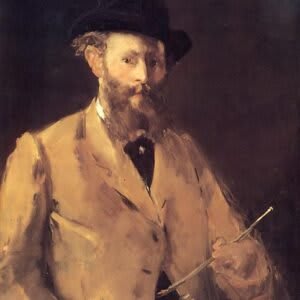
The critics, however, fell directly into the hands of Courbet and Manet: the notoriety they commanded from their works was intentional, turning them into celebrities in the art world.
Alongside blurring traditional categories and themes of academic painting, Courbet and Manet, in turn, challenged the very institution of state art.
When three of their fourteen submissions to the Exhibition of 1855 were rejected due to considerations of size, Courbet rented a space adjacent to the Exhibition to build his own Realism Pavilion, in which he housed forty of his own works for public exhibition.
When Manet was excluded from the Exhibition of 1867, he also exhibited independently.
Alongside diverting attention from government exhibitions and creating publicity for his work, Courbet and Manet's interventions encouraged future artists, particularly the Impressionists of the next generation to exhibit their art independently.
To understand the rest of this journey, continue to our next article: Realism: Other French Masters and Their Diverse Contributions.


