
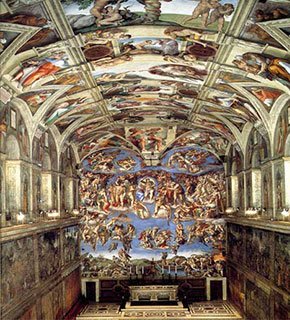
Sistine Chapel: The Triumph of Michelangelo Buonarroti in the Vatican
Sistine Chapel: The Triumph of Michelangelo Buonarroti in the Vatican
Article Index
The Sistine Chapel was built by Pope Sixtus IV in 1470, as one of the many works undertaken to restore Rome, after the papacy moved there from Avignon.
Measuring about forty meters in length by fourteen in width, it is undoubtedly one of the largest tourist attractions when visiting Rome.
Located in the Vatican, the paintings by Michelangelo Buonarroti are considered the greatest treasure that art history possesses, also one of the greatest feats in painting in the world - the paintings of the ceiling and then, almost thirty years later, that of the Last Judgment which is located on the wall of the altar of the chapel.
In addition to Michelangelo's paintings, the chapel has paintings on all its side walls made by several important artists of the end of the 15th century, such as Sandro Botticelli, Domenico Ghirlandaio, and Pietro Perugino.
The entire set of paintings illustrates various passages from the Bible.
Beyond Michelangelo: The Side Walls
Although the ceiling attracts all eyes, the Sistine Chapel was already a master gallery before Michelangelo climbed the scaffolding.
On the side walls, names like Botticelli, Perugino, and Ghirlandaio narrated the lives of Moses and Christ.
It is a fascinating dialogue between the delicacy of the early Renaissance and the monumental force that was to come, transforming the space into a true compendium of the best Italian painting of the 15th century.
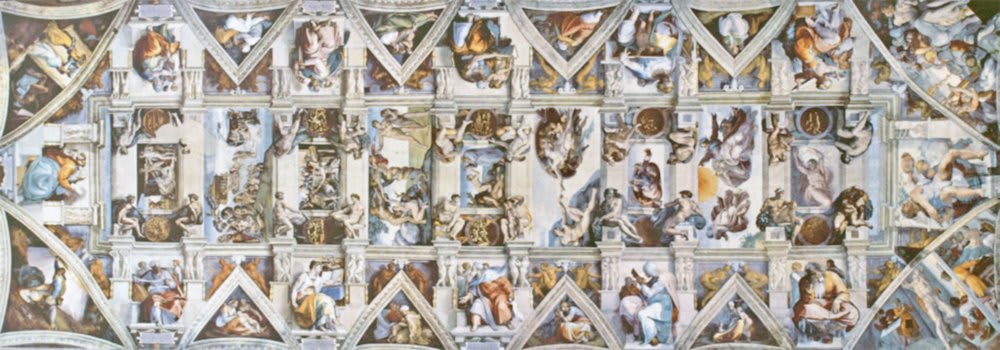
The ceiling painting of the Sistine Chapel, is undoubtedly one of the greatest works of art ever created.
Alone, it would be enough to eternize the name of Michelangelo, as a giant among all artists.
The size of the work is breathtaking.
The impact is indescribable, especially when we know that it was created by that great master of the Italian Renaissance, almost without help, over four years.
It is no surprise that he was known by his contemporaries as 'The Divine'.
The Physical Effort of the Genius
Forget the romantic image of Michelangelo painting comfortably lying down.
The artist worked for four years standing up, with his neck stretched back and his arms raised.
The paint dripped constantly onto his face, affecting his vision for months.
In one of his poems, he even joked about his own sacrifice, saying that his body had turned into an 'arch of mourning' to give life to the figures on the ceiling.
Intact Images
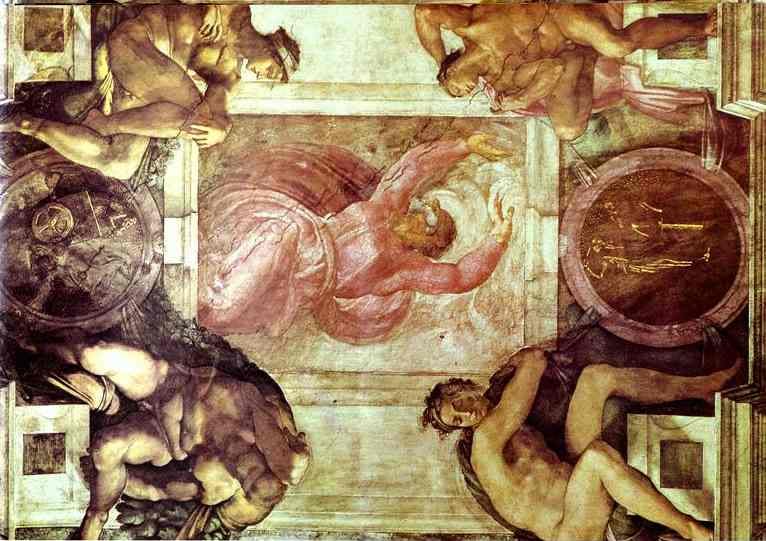
The gods gained body, feeling, and human expression through Michelangelo's brushes.
The scene where God separates light from darkness is translated with such reality that it gives the impression that the Father is closer to the spectators' eyes than reality.
Michelangelo was able to, with his perfectionist work, create a high-relief effect in his paintings that allows for this sensation.
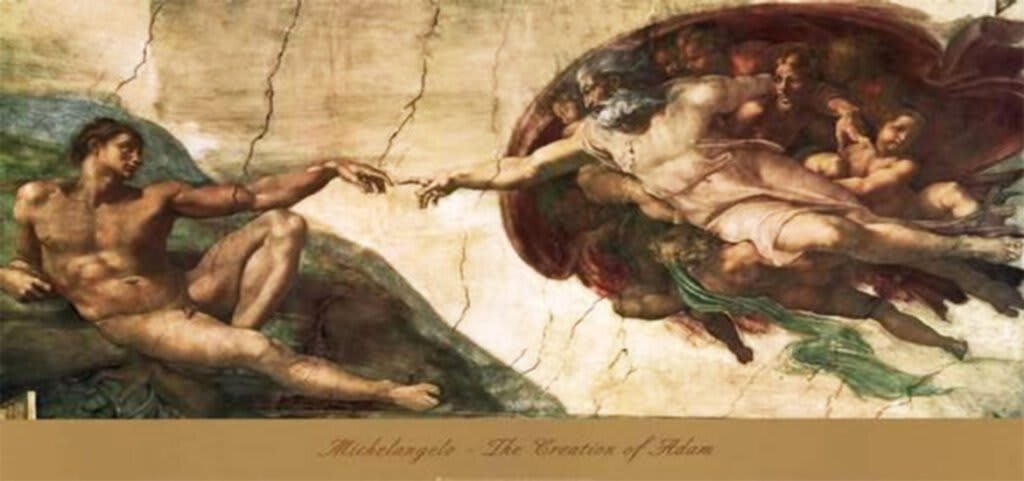
The Secret of Adam's Anatomy
The most famous scene of the Sistine Chapel hides a detail that fascinates doctors and historians: the mantle that surrounds the figure of God has a contour identical to that of a human brain in sagittal section.
Michelangelo, who dissected corpses to understand the musculature, would have left there an intellectual signature, suggesting that the 'divine touch' of God to man was, in fact, the gift of intelligence and consciousness.
THE LAST JUDGMENT
After facing many difficulties during the four long years dedicated to painting the ceiling, between 1508 and 1512, Michelangelo returns in 1536 to work on another piece on the wall of the altar, THE LAST JUDGMENT, completed only in 1541.
Michelangelo received this commission, they say he did not want to accept, and even thought he would get out of the task when Pope Clement died, soon after.
However, the new Pope, Paul III, renewed the invitation.
And when Michelangelo tried to refuse, citing another work, Paul III said:
"For thirty years I have desired to have you in my service, now that I am Pope, I will not have that desire satisfied?"
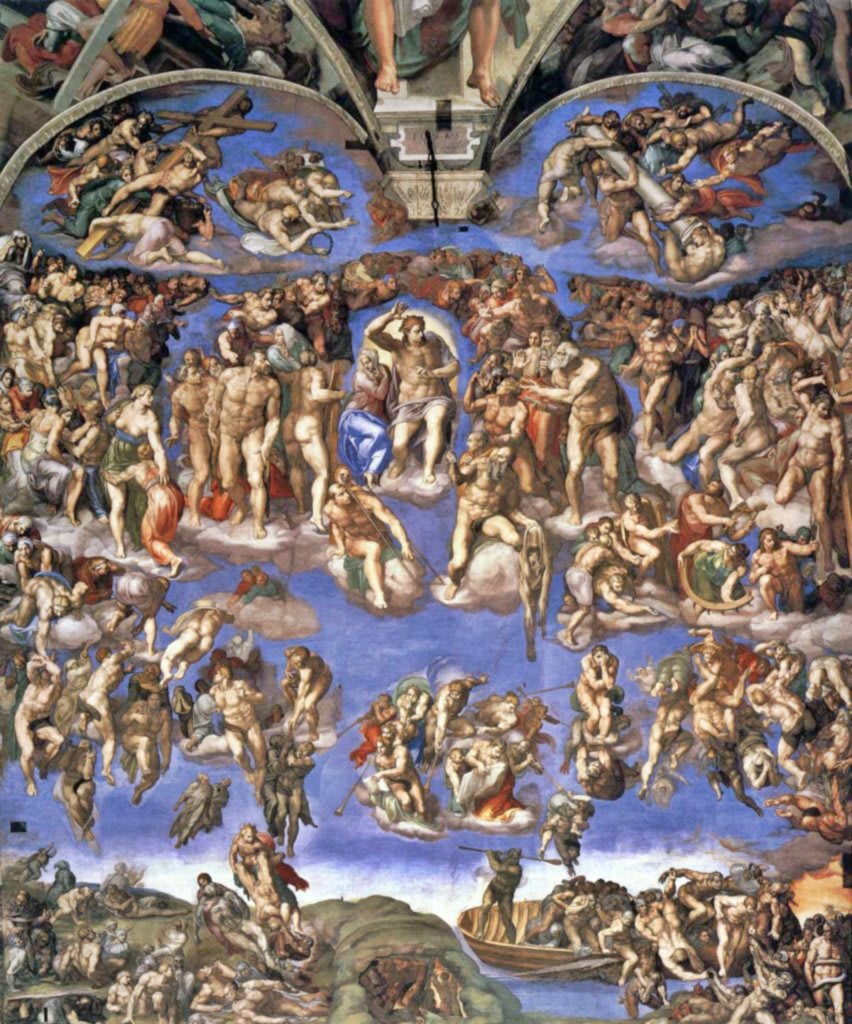
Inspired by the poem Inferno by Dante Alighieri, of whom the artist was a great admirer, and the Latin hymn Dies Irae (Day of Wrath), Michelangelo shows, through enormous human figures, mixed in a suffocating way, the reality of death and fear.
At the center of this pile of bodies, there is a young and athletic Christ - with Mary behind him who avoids looking around not to witness the execution of the punishments - holds his hand high, as if he were calling the dead to the hour of judgment.
Christ is surrounded by saints who proclaim everything they suffered and ask for their reward.
The figures rising from the tombs, to the right of Christ, summoned by the touch of the trumpets of the angels.
The condemned fall into hell, to the left.
The mythological Charon leads them in his boat through the Styx.
In a way, the Protestant ascension and the counter-reformation changed the artist's unshakeable confidence in humanist principles, which he so well demonstrated in the apocalyptic tension of THE LAST JUDGMENT.
CURIOSITIES
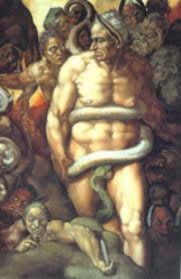
Baigio da Cesena was the master of ceremonies of Pope Paul III, who was constantly criticizing and instigating the Pope, all the time, the representations of Michelangelo's nude figures, saying that they would be more suitable for a "public tavern" than the Sistine Chapel.
Then Michelangelo, to avenge himself, painted him in a scene wrapped in a snake, a viper biting his genitals, about to be thrown into the second Circle of Hell.
When Cesena protested, Pope Paul III (God bless him) replied to Cesena: "I have no jurisdiction over Hell".
To locate him in the painting, it is the last figure on the right corner that is still burning in Hell in Michelangelo's Last Judgment.
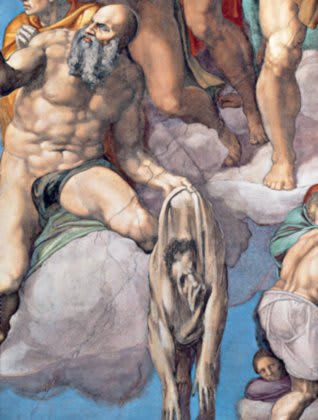
Michelangelo painted himself as Saint Bartholomew, mounted on a cloud, above and to the right of the central figure of the young Christ.
All the saints hold an object symbolizing their martyrdom.
He holds his flayed skin, perhaps as a joke, something macabre about his efforts in the name of art
The Chapel Today: The Conclave
Far beyond a museum, the Sistine Chapel maintains its sacred and political function to this day.
It is between the walls painted by Michelangelo that the cardinals meet in absolute secrecy for the Conclave.
When the white smoke rises from the chimney installed temporarily on the roof, the world knows that a new Pope has been chosen, reaffirming that the most famous work of art in the world is still a living scene of decisions that shape history.


