
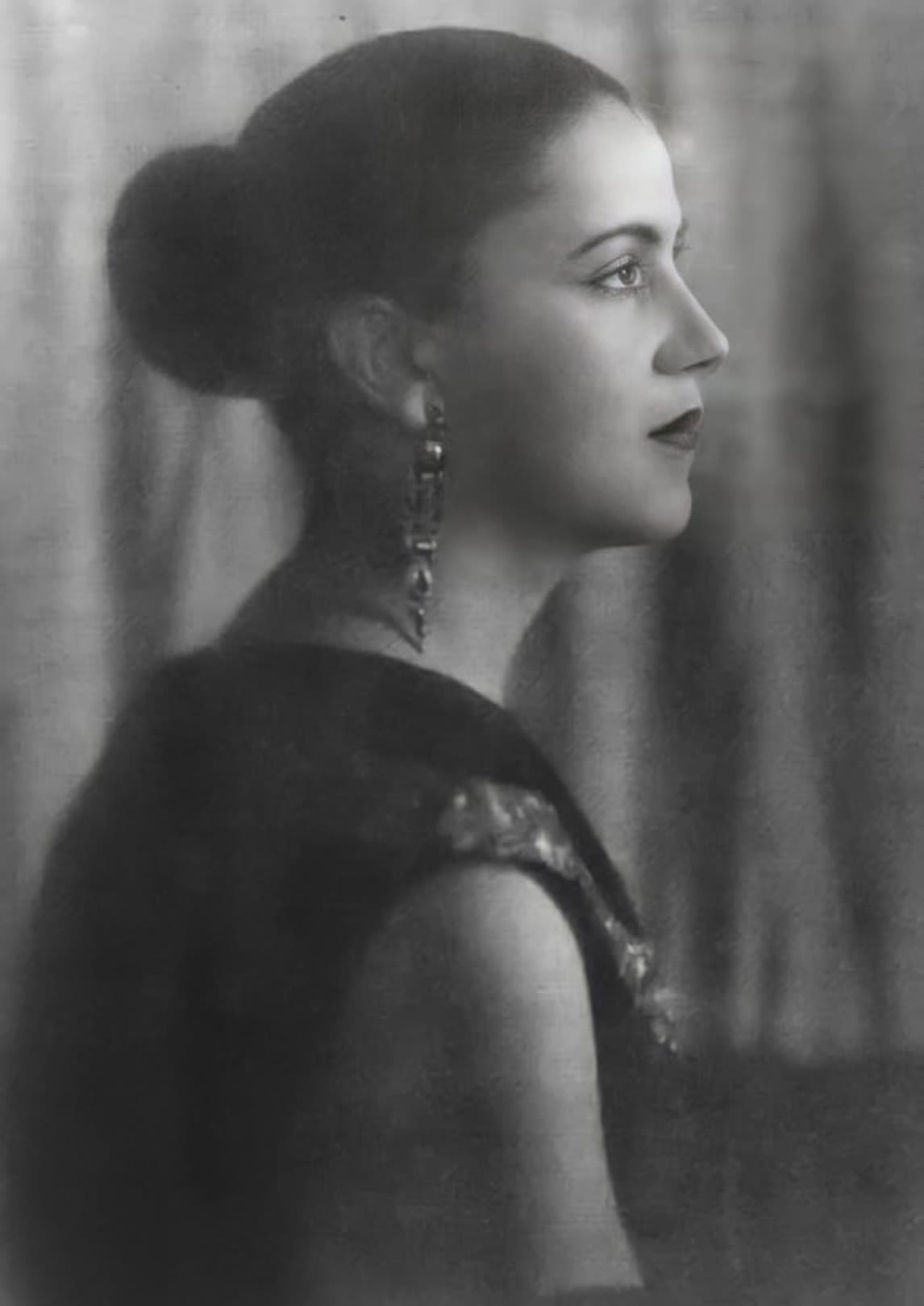
Tarsila do Amaral: Biography, Formation, and the Modernist Awakening
Tarsila do Amaral: Biography, Formation, and the Modernist Awakening
Tarsila do Amaral stands as one of the most pivotal artists in Brazilian modernism.
Born in rural São Paulo, Tarsila became a central figure in the 20th-century renewal of Brazilian art.
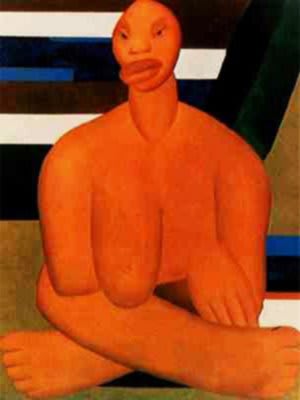
Her works, such as Abaporu and Antropofagia, are characterized by vibrant colors and forms that vividly portray Brazilian culture and identity.
Beyond being a painter, she was also a draughtswoman and translator, exerting significant influence on Brazilian art and society.
Early Years and Artistic Beginnings
Tarsila do Amaral was born in Capivari, a town in rural São Paulo, on September 1, 1886.
She was regarded by many as a woman ahead of her time.
Elegant and refined, she was the granddaughter of prominent São Paulo landowners, yet faced rejection within her own family.
As one of the foremost representatives of Brazilian Modernism, Tarsila do Amaral masterfully blended the unique aspects of Brazilian culture with the new poetic possibilities ushered in by the avant-garde movements of the early last century.
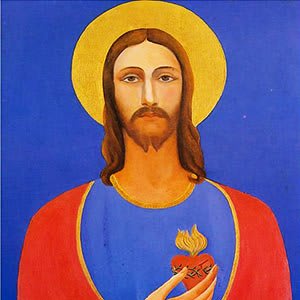
Her first painting was “Sacred Heart of Jesus”, which she completed at the age of 16.
The presence of strong colors is notably evident even in her early works.
Tarsila began her painting career influenced by the very conservatism that Modernism, which she would later master, eventually broke away from.
The Journey to Paris and Modernism
In 1917, she began studying painting with the renowned artist Pedro Alexandrino.
Her interest in modernism was ignited by a visit to painter Anita Malfatti’s solo exhibition, the “Exhibition of Modern Painting,” in December 1917.
It was at this encounter that the two artists met, forging a long-lasting friendship.
In 1920, Tarsila traveled to Paris, where she enrolled at the Académie Julian, founded by painter and professor Rodolphe Julian, studying there until 1921.
She returned to Brazil in 1922, shortly after the conclusion of the Modern Art Week.
Tarsila did not directly participate in the Week of '22, but her presence in the visual arts solidified in the 1920s, driven by the demands formulated by the leaders of the modernist group.
She had already met her friend Anita Malfatti, and they exchanged letters, with Anita keeping her informed about everything.
In Brazil, through Anita, she met some of the organizers of the Modern Art Week, notably Oswald de Andrade, Mário de Andrade, and Menotti Del Picchia.
Subsequently, she was invited to join the movement, and together they formed the Group of Five.
The group’s primary intention was to promote Brazilian culture through modern art, consciously moving away from typically European styles.
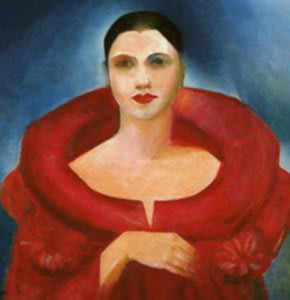
Tarsila's Red Coat
When Tarsila painted her celebrated 1923 Self-Portrait, she made a point of immortalizing not only her features but also her place in the world.
The dazzling red coat that envelops her in the painting was created by Paul Poiret, one of the most important French haute couture designers of the era.
The garment serves as a powerful symbol of the artist: a cosmopolitan woman with magnetic elegance, who moved effortlessly through the Parisian avant-garde and engaged with European masters as an equal, all while never losing her essence.
In December 1922, Tarsila returned to Paris, where she studied with André Lhote at the Académie Lhote.
Additionally, she also briefly studied with Albert Gleizes and Fernand Léger.
During this period, she engaged with European avant-garde movements such as Cubism, Futurism, and Expressionism—styles that greatly expanded her knowledge and later enriched her work.
She soon realized that, while Cubism offered benefits by helping artists break free from academic art forms, it would ultimately prove destructive.
Thus, while she hadn't abandoned Cubism entirely, she strove to develop her own style, influenced primarily by Fernand Léger, her teacher during this period.
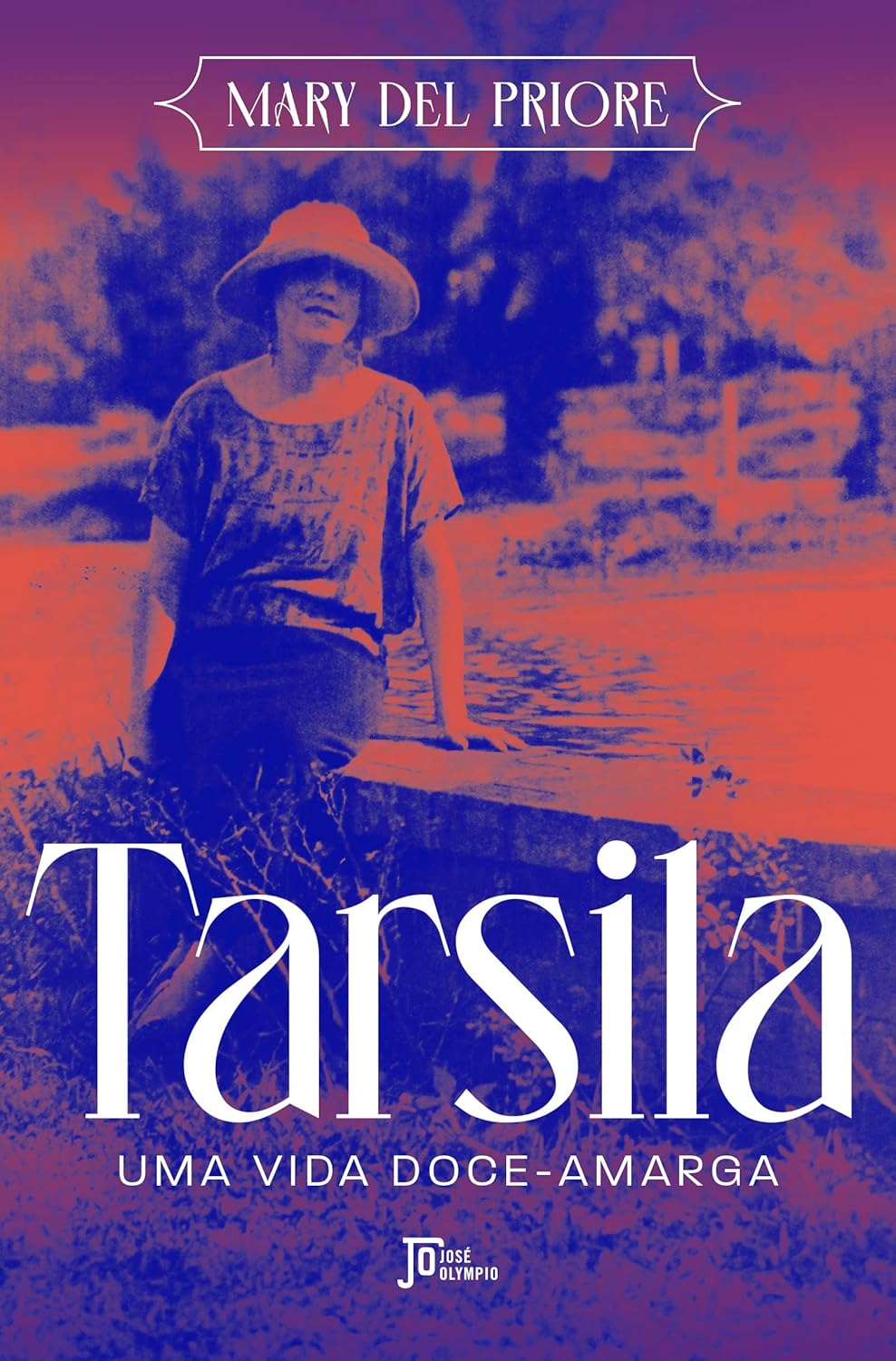
Tarsila's profound biography reveals the nuances of a woman who traversed between coffee plantation traditions and the European avant-garde to establish a genuinely Brazilian aesthetic. We recommend reading the illustrated book here.
Return to Brazil and the Awakening of Colors
In December 1923, Tarsila returned to Brazil, and with Oswald de Andrade and their French friend Blaise Cendrars, they began traveling across the country, visiting Rio de Janeiro during its famous Carnival.
This trip inspired her to paint ‘Carnival in Madureira’ and other works from the same period.
From Rio, they journeyed to Minas Gerais, where the artist had the pleasure of rediscovering the vibrant colors she cherished as a child.
Furthermore, the rustic houses and ancient churches captivated her imagination, drawing her deeper into her Brazilian heritage. Slowly, she began to uncover her roots.
Minas' Palette
The 1924 caravan through Minas Gerais' historic towns — accompanied by Oswald, Mário de Andrade, and the Franco-Swiss poet Blaise Cendrars — was a visual rite of passage.
Away from the Parisian ateliers, Tarsila rediscovered the unique light of her own country.
The colonial facades, Baroque churches, and popular simplicity returned to the painter what she herself called "rustic colors".
The purest blue, purplish pink, vivid yellow, and singing green—hues once deemed "bad taste" in academic circles—now graced her canvases.
This chromatic rediscovery would become the soul of her Pau-Brasil phase, a vibrant and unashamed celebration of Brazil's unique aesthetic.
During her travels through Brazil, Tarsila created many sketches, which later became the foundation for many of her paintings.
The colors were consistently vibrant, a quality she rediscovered during this tour.
She also developed an interest in industrialization and its impact on Brazilian society, which can be observed in her paintings related to the city of São Paulo.
The Three Phases: Pau-Brasil, Anthropophagic, and Social
Tarsila's work is divided into three phases: Pau-Brasil, Anthropophagic, and Social.
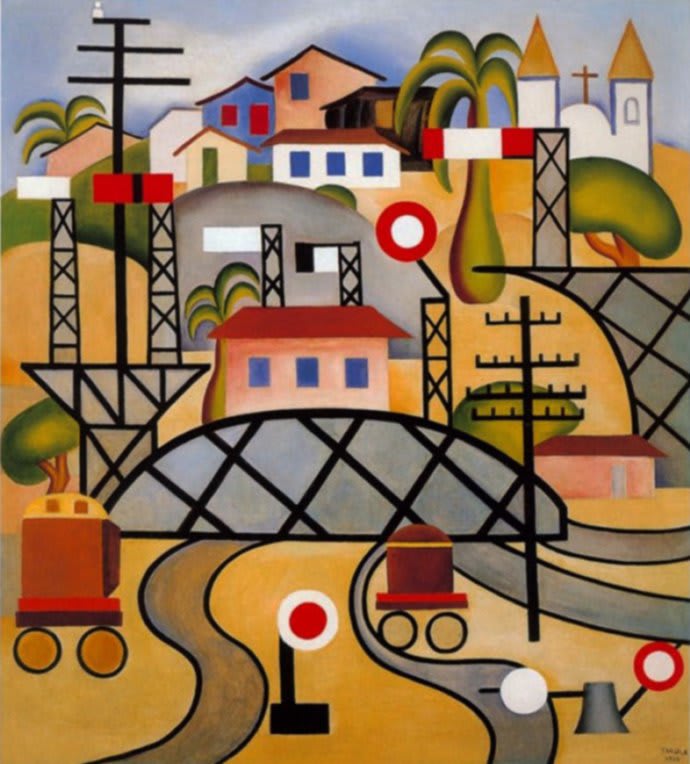
In her first phase, the Pau-Brasil period, the painter completely broke with conservatism and began to imbue her canvases with new forms.
Works from this period, starting in 1924, feature tropical themes, with the artist exalting fauna, flora, machinery, and everything connected to urban modernity, which contrasted with the richness and diversity of Brazil at the time.
The second phase, the Anthropophagic, was conceived by her then-husband, Oswald de Andrade.
At this point, they sought to "digest" foreign influences, common at the time, so that the art they created would acquire a more distinctly Brazilian character.
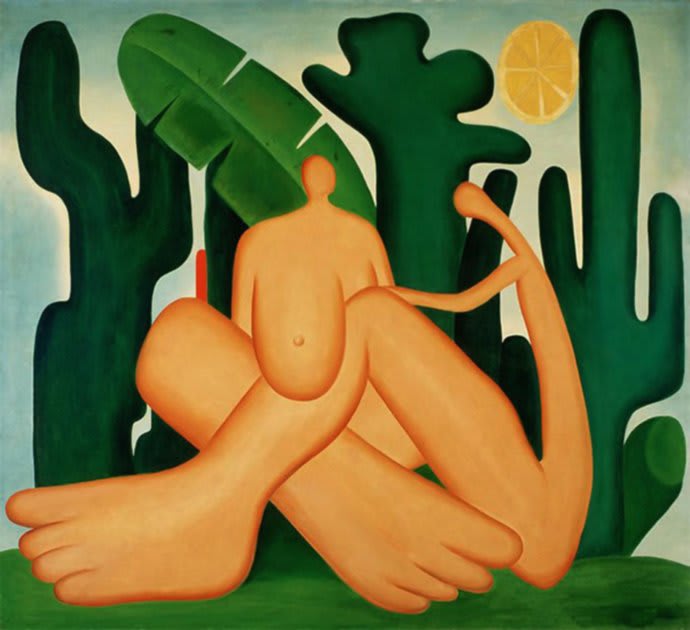
Tarsila painted a canvas and gifted it to Oswald, who named it Abaporu - an Indigenous word that translates to "man who eats human flesh." For the modernists, the meaning was to convey that they would "digest," or rather, absorb the knowledge of foreign techniques and apply them in Brazil, but without losing their own traditions, creating something distinctly Brazilian within the new.
With this 1928 painting by the artist, the significant Anthropophagic movement was inaugurated within modernism.
Tarsila's Dictionary
The word that christened Brazil's most famous canvas didn't come out of nowhere.
To name the solitary, immense-footed figure, conceived as a birthday gift for Oswald de Andrade, Tarsila turned to an old Tupi-Guarani dictionary.
By combining the terms "aba" (man) and "poru" (who eats), she brought to life the "man who eats people."
Not in a literal sense, but in the brilliant metaphor that would inspire the Anthropophagic Movement: the idea of devouring European culture to digest and transform it into a purely national art.
The third and final major phase is the Social, which culminates with her trip to Paris, where she worked as a laborer on a construction site after visiting the Soviet Union.
The artist was no longer married to Oswald de Andrade; their relationship ended in divorce in 1930.
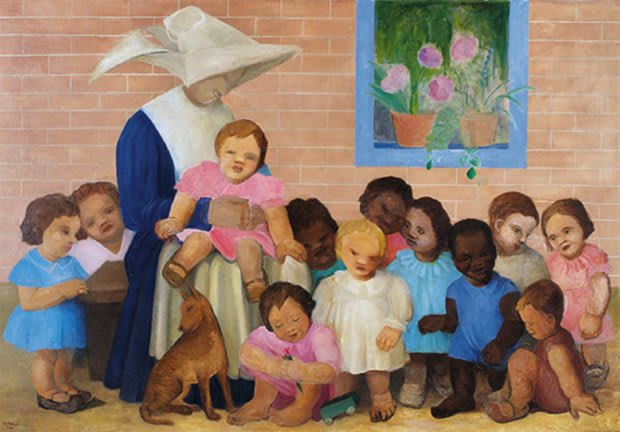
In 1933, starting with the painting Workers, the artist inaugurated a phase of creations focused on the social themes of the time and the plight of laborers.
In Second Class, Tarsila explores societal disparities with an expression that deeply moves the observer.
Panels and Later Years
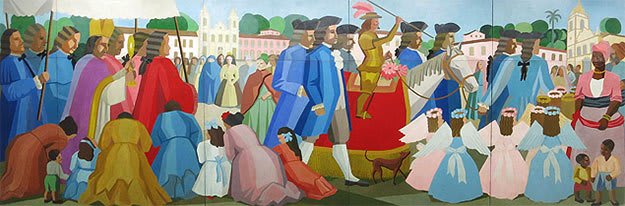
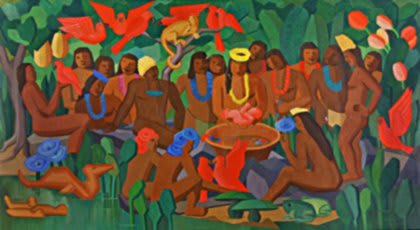
Tarsila painted two large panels during her career, both in the 1950s.
In 1954, she completed Procession of the Blessed Sacrament (Procissão do Santíssimo), created for the commemorations of the 4th Centenary of the City of São Paulo.
In 1956, for Editora Martins, she created another panel titled Macunaíma's Baptism (Batizado de Macunaíma).
Although the theme encompasses several issues of interest to the artist, this painting is considered somewhat detached from the rest of her oeuvre, due to its contrasting and somber tones, as well as the stylization of figures, details, and composition.
To understand the remainder of this journey, continue with our next article: Tarsila do Amaral: Iconic Works, Legacy, and the Post-Anthropophagic Phase.


