
Theodore Gericault: Youth, Formation and the Beginning of Romanticism
Theodore Gericault: Youth, Formation and the Beginning of Romanticism
Theodore Gericault was an important French artist who helped define the path for Romanticism in emotion and subjectivity. His work was based on keen observation, social awareness, as well as a politically engaged view of the world around him. The emphasis on human emotions and the search for exotic or contemporary themes were equivalent to the poets, writers, musicians, and artists associated with the movement that would later be called Romanticism.
BIOGRAPHY
Jean-Louis André Theodore Gericault, born in the city of Rouen (France), on September 26, 1791. He was the only son of wealthy and conservative parents. His father was a lawyer and his mother's family was a tobacco producer. When he was four years old, his family moved to Paris, which allowed him to be educated in the most prestigious schools. At fifteen, his talent for drawing was recognized, and he soon began to study art with great dedication.
In 1808, his mother died before he graduated from secondary school. The death of his grandmother, four years later, resulted in a significant annuity that allowed him to live comfortably and gave him the independence to pursue a career in the arts without financial worries. Gericault was lucky to be trained by Pierre Bouillon and Carle Vernet before entering the Paris School of Fine Arts where he studied with Pierre-Narcisse Guerin.
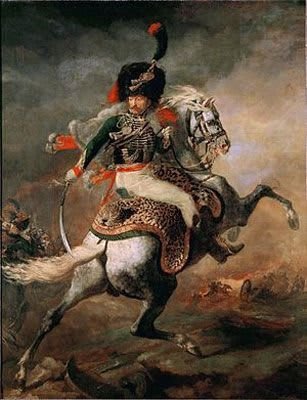
In 1812, to avoid his son being drafted into the army, Gericault's father paid a man to take his son's place. This delay in military service allowed the young artist to create the Hunter Loading painting, which earned him recognition and a prize when presented at the Paris Salon of the same year.
Like many young artists of this period, Gericault competed for the coveted Prix de Rome, which included a period of study in Italy. Although he did not win the prize, he decided to travel to Italy on his own. There, he discovered the art of Michelangelo and the Baroque style, which would have a profound influence on his own work, both in his figurative representations and in the dramatic use of light and darkness. The trip also offered him a way to avoid the complications of a romantic affair he was having with the young wife of his uncle.
In 1817, he returned to Paris when Romanticism was already in full swing. During this period, the artist created many landscape paintings that depict the hours of the day and night. These works were commissioned by his uncle, the same one whose wife Gericault was having an affair with. When she gave birth to an illegitimate child in August 1818, his uncle refused the works, and they remained in the artist's studio until his death. The fact that Gericault had a child out of wedlock would be kept secret from the family until it was discovered by scholars in 1976.
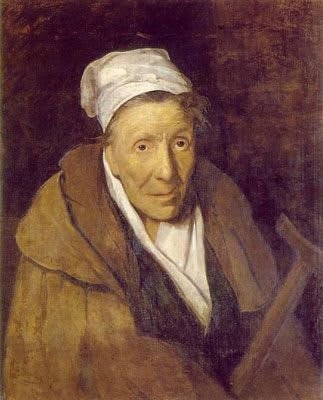
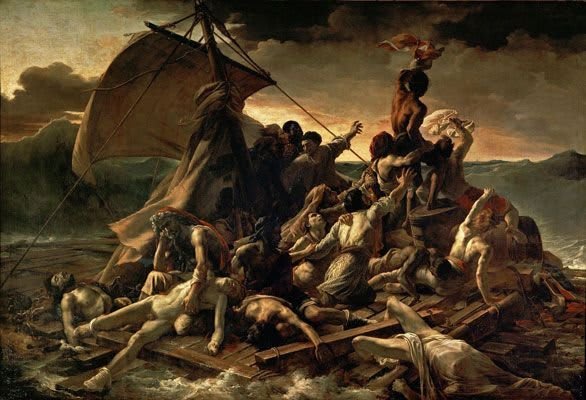
After the controversy surrounding the presentation of his work The Raft of the Medusa at the 1819 Salon, the artist traveled to England, where he stayed for over a year. He returned briefly to Paris on his way, stopping in Brussels to visit the great neoclassical painter, Jacques-Louis David, who lived there in exile.
While in England, he enjoyed strolling through the streets of London, as he described in a letter to a friend: "to relax, I walk through the streets that are so full of constant movement and variety that you never tire of them, I'm sure." He fully immersed himself in London life, socializing with English artists, attending boxing matches, riding horses, and even having an affair with a high-class British woman, about whom he wrote: "she calls me the god of painting and says she adores me as such." He, however, also empathized with the plight of the poor English and created a series of lithographs on the subject, as well as other prints on English country life and sporting events. In fact, Gericault experimented extensively during his career, the relatively new medium of lithography, and became quite skilled as a printmaker.
To understand the rest of this journey, continue to our next article: Theodore Gericault: Legacy, Last Years and Essential Works.


