
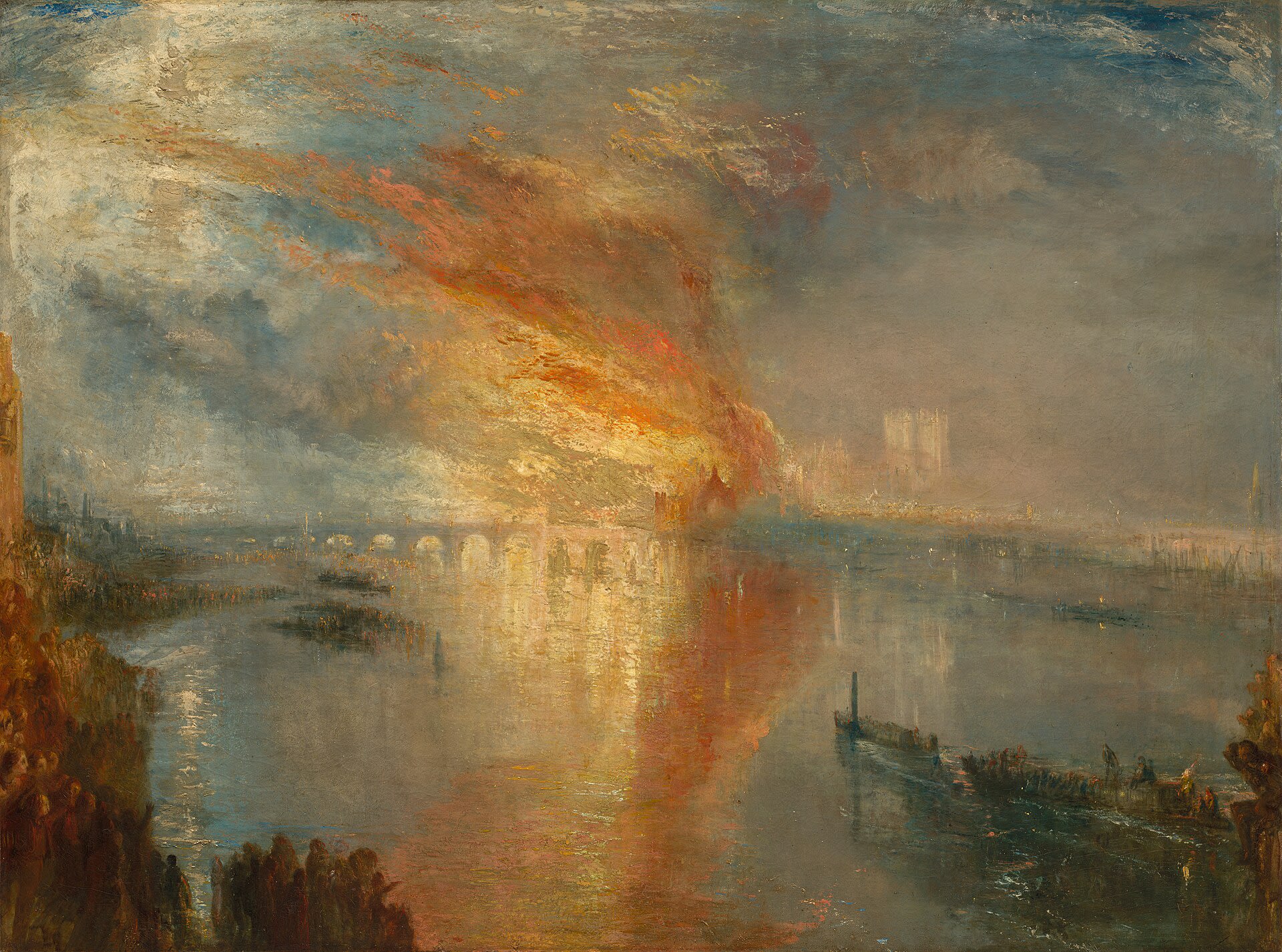
William Turner, the Pioneer of Impressionism: Life, Career and Legacy (Part 1)
William Turner, the Pioneer of Impressionism: Life, Career and Legacy (Part 1)
William Turner was an English artist best known as a landscape painter who brought luminosity and romantic images to his themes.
One of the greatest names of Romanticism, he portrayed the grandeur of nature and the struggle of man for survival.
In many of his works, the main theme is atmospheric light, which definitively influenced the impressionist movement at the end of the 19th century.
Biography
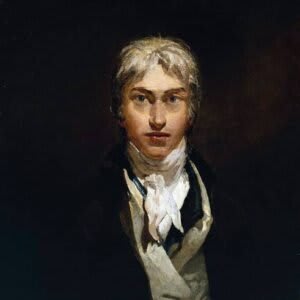
Joseph Mallord William Turner was born on April 23, 1775, in the city of London, England.
His father was a barber and a wig maker.
His mother suffered from a mental illness, which worsened after the death of his younger sister in 1786.
In 1785, Turner was sent to live with an uncle in the neighboring city of Brentford, but returned to London at the end of the decade.
Although he received little formal education, he was clearly a talented artist and, at the age of 13, was already selling drawings that were exhibited at his father's shop.
In late 1789, he was admitted to the Royal Academy of Arts and, the following year, had the opportunity to exhibit his work at the institution's exhibition.
In 1793, at the age of 17, he received a silver palette from the academy for his landscape drawing.
Turner soon gained a stable income through a variety of artistic endeavors, including selling drawings to engravers, coloring books, and private lessons.
Among the artists who influenced his work during this period were: Thomas Gainsborough, Henry Fuseli, Philippe-Jacques de Loutherbourg, Michael Rooker, and Richard Wilson.
In the early 1800s, England was going through a difficult period in its history.
There was famine, unemployment, and a bloody war against France under Napoleon Bonaparte.
This bleak reality led the artist to abandon his idealized vision of England.
This change in his work can be explained, in part, by his friendship with Walter Fawkes, an English politician who fought for social justice and the abolition of slavery.
Turner began to travel extensively throughout Europe and was particularly inspired by his visits to Venice.
His initial efforts reflected his training as a topographic draftsman and resulted in realistic representations of landscapes, but over time he developed his own style.
Known as the Painter of Light, he created scenes of luminous images using bright colors.
In 1804, his mother died, probably in a psychiatric hospital in Bethlem.
In 1807, Turner accepted a position as a professor of perspective at the Royal Academy of London, where he taught until 1828.
He became increasingly eccentric and reclusive, avoiding contact with many people, except his father, and was bitter when Queen Victoria awarded him a knighthood.
From 1808 onwards, although some of his works already showed his taste for the epic and the dramatic, this period of his career was characterized by an enchantment with the British landscape.
He mainly portrayed the interaction between water, air, and light.
His works are loved by the public, and Turner makes a fortune.
In 1810, he painted his important work The Army of Aníbal Crossing the Alps, which was exhibited at the Royal Academy of Art in 1812.
The work was placed at a height where observers could immerse themselves in it and feel the terror that the punishment of nature provides.
Its exhibition attracted crowds, and it was celebrated as a truly modern work of art.
From 1825 to 1830, Turner fell ill after his father's death in 1829, Turner suffered from depression.
Solitary and under the influence of narcotics, he creates dark and frightening paintings.
He was very secretive about his personal life and became more eccentric as he aged.
He had few close friends, but was very close to his father, who lived with him for 30 years and worked as his studio assistant, cook, and gardener.
From 1830 to 1840, he abandoned form and created volatile spaces of clouds and colors, such as in Chuva, Vapor e Velocidade.
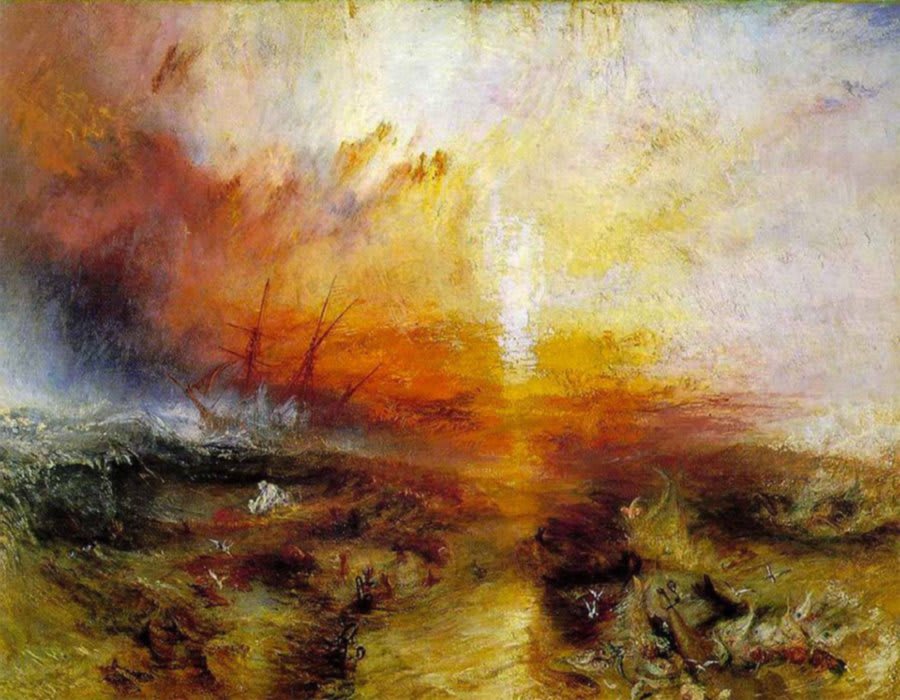
A denunciation of the horrors of slavery, it tells the story of the Slave Ship Zong. The scene is painted in a feverish way, like a nightmare, dissolving contours and forms.
The critics of the time despise the work and accuse Turner of insanity.
His gallery falls into decline.
Despite this, Turner continues to create until the end of his life.
From 1844 onwards, Turner began to create paintings that reminded us of the abstract works of the 20th century.
Specialists believe that the abstraction presented in his last paintings can be interpreted through psychology.
However, the colors and light scattered in the brushstrokes may simply indicate a visual disturbance.
Turner never married.
For him, art and marriage were incompatible.
However, there are indications that there was a woman in his life, Sarah Danby, a widow of a friend, with whom he had a romantic relationship after her husband's death.
Turner installed his lover near his house, had two daughters, Eveline and Georgianna, but his discretion was so great that their relationship only became known after his death.
Turner wrote in one of his drawing notebooks that "Woman is doubtful love" and there are some evidence that the true mother of his daughters was his niece, who was his governess for a period of time.
In 1850, he held his last exhibition.
From 1844, Turner began to create paintings that reminded us of the abstract works of the 20th century.
In 1851, Turner died on December 19, 1851, in Chelsea, London, England.
In his will, he bequeathed generous sums to Sarah Danby and to programs of support for what he called decadent artists.
Turner also left a large collection of paintings to his country and, at his request, was buried in St. Paul's Cathedral, London.
Among the painters, Turner's impact is felt for more than two centuries:
For a deeper understanding of this journey, continue to our next article: William Turner, the precursor of impressionism: Notable Works and Style Analysis (Part 2).


