
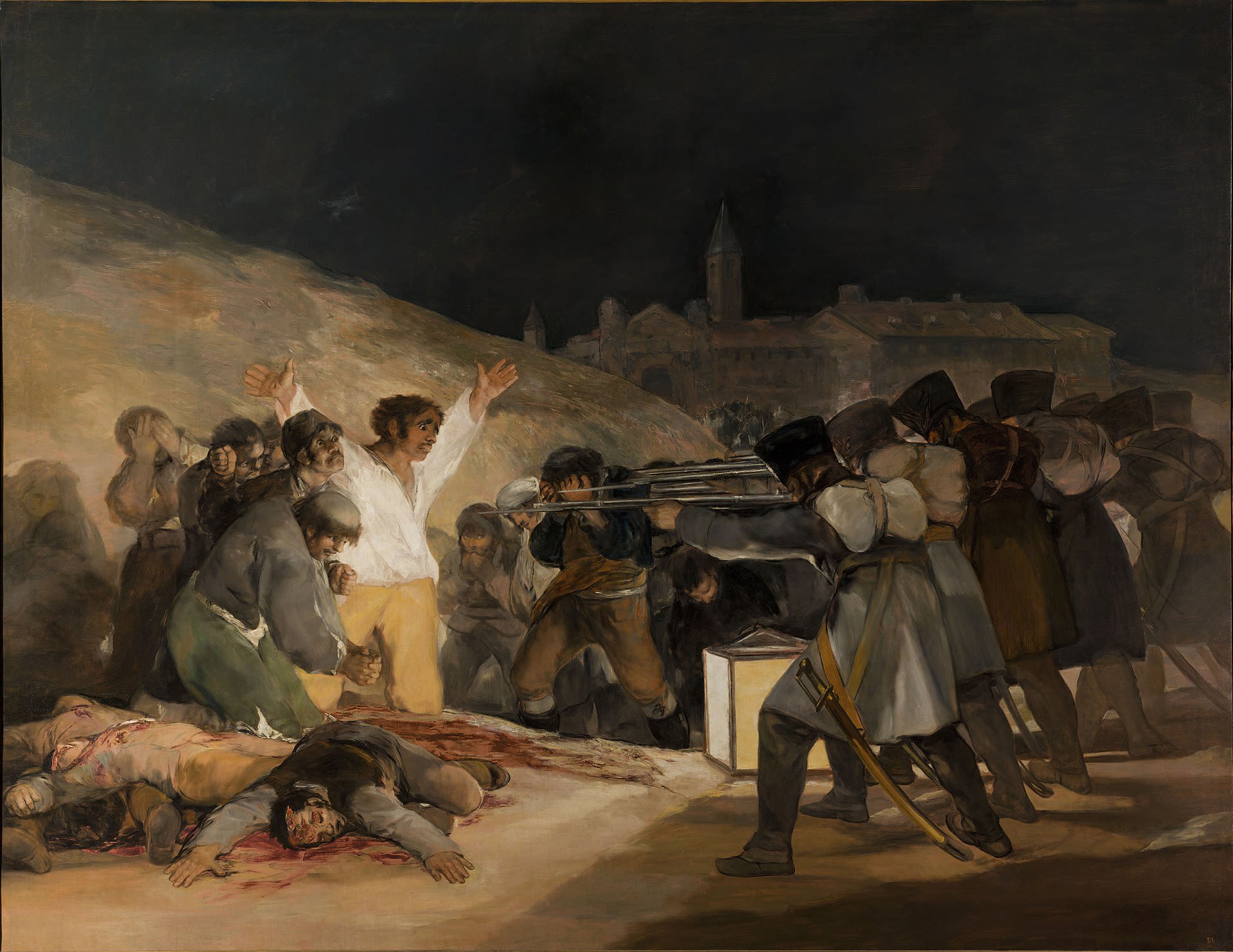
Biography of Francisco de Goya and His Major Works: Life, Rise, and Challenges of the Spanish Master
Biography of Francisco de Goya and His Major Works: Life, Rise, and Challenges of the Spanish Master
Francisco de Goya famous Spanish artist, occupies a unique position in Western art history and is often cited as a Old Master and the first truly modern artist. His art incorporates the emphasis of Romanticism on subjectivity, imagination, and emotion, characteristics reflected most notably in his etchings and paintings.
Thanks to his works, in which the drama of human existence is portrayed in a particularly realistic way, capable of affecting the spectator in a near-violent manner, he was a shrewd observer of the world around him, and his art responded directly to the tumultuous events of his time, from the liberations of the Enlightenment, to the repression of the Inquisition, to the horrors of war after the Napoleonic Invasion.
BIOGRAPHY
Francisco José de Goya y Lucientes was born on March 30, 1746, in Fuendetodos, a village in northern Spain. He was the fourth of six children. His family later moved to Zaragoza, where his father worked as a gilder.
At around 14 years old, the young Goya was an apprentice to José Luzan, a local painter.
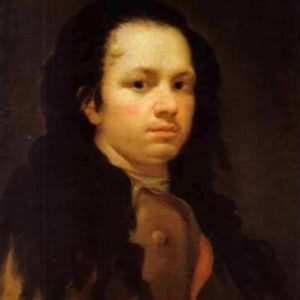
In 1770, he traveled to Italy to continue his art studies, where he won second prize in a painting competition held in Parma with the painting Sacrifice to Pan .
He returned in 1771 to Zaragoza, where he began studying with Francisco Bayeu, who became a close friend.
In 1773, Goya married the sister of his friend, Josefa Bayeu, with whom he had several children, although only one survived to adulthood, Javier.
Goya once said that his son was so handsome that people in the streets of Madrid would stop to admire him, leaving the father extremely proud.
When his son fell ill, Goya wrote that he "stopped living during that entire period".
During the 18th century, the Church was the most important source of painting commissions after the court, as it had immense wealth at its disposal. Its power, prestige, and influence were almost limitless; if it were a beggar or a king, anyone who found a priest carrying the consecrated host had to kneel in veneration.
Goya could now live very well with his income; at 27, he earned almost as much as his teacher Luzan.
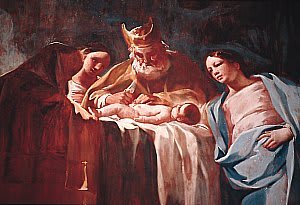
In 1774, he painted his most extensive cycle of murals in the isolated Cartuja de Aula Dei Monastery. They were painted with oil applied directly to the walls and cover a total area of almost 240 square meters.
For the most part, forgotten for many years, this cycle on the life of the Virgin Mary is, however, among the most interesting of Goya's early works, despite its precarious state.
From 1775 to 1780, Goya achieved his first popular success. He established himself as a painter of portraits of Spanish aristocracy, being elected to the Real Academia de San Fernando in 1780 and appointed in 1786 court painter, under Charles III.
From 1789 to 1792, he began creating designs for the royal tapestry factory in Madrid. This was the most important period of his artistic development.
As a tapestry designer, Goya made his first genre paintings, or scenes of everyday life.
The resulting tapestries were installed in two royal palaces.
The artist took advantage of this experience to increase his connections within the Spanish court.
The experience gained helped him become a keen observer of human behavior.
He was also influenced by Neoclassicism, which was gaining preference over the Rococo style.
Finally, his study of Velázquez's works in the royal collection resulted in a more loose and spontaneous painting technique.
At the same time, he also began working on a set of etchings, Goya would become a master of etching, which would serve as the main means by which he expressed his personal feelings about the social and political events of his time.
A serious illness in 1792 left him permanently deaf.
With the illness, he preferred to isolate himself, occupying himself more and more with the fantasies and inventions of his imagination and with the critical and satirical observations of humanity.
With this, he developed a bold and free style close to caricature.
Although he continued to work for the Spanish royal family, his disability led him to distance himself from public life, as he became increasingly bitter and melancholic.
From 1795 to 1797, he served as director of painting at the Royal Academy and was appointed first court painter in 1799, establishing himself as the favorite of Charles IV, the highest position for an artist in the royal household.
He would serve in this position until the Napoleonic invasion of 1808, although he continued to receive commissions from the new regime after swearing loyalty to the Bonapartists.
In the same year, he published Caprichos, a series of etchings satirizing madness and human weakness.
His portraits became penetrating characterizations, revealing his subjects as he saw them.
In his religious frescoes, he employed a broad and free style and a unprecedented terrestrial realism in religious art.
During the height of his affiliation with the Spanish court, Goya befriended the influential Prime Minister Manuel de Godoy, who commissioned other works by the artist for his private collection, including the notorious The Naked Maja (The Naked Maja). This painting sparked widespread speculation about the true identity of the model, generating rumors about Godoy's illicit relationships with two different women and his eventual questioning by the Spanish Inquisition.
From 1808 to 1814, during the Napoleonic invasion and the Spanish War of Independence, Goya served as court painter for the French.
He expressed his horror at the conflict in The Disasters of War (The Disasters of War), a series of etchings entirely realistic about the atrocities of war, which were only published many years after his death.
In 1812, his wife Josefa Bayeu passed away.
In 1816, he published his etchings on bullfights, called La Tauromaquia. It is an album of 33 etchings.
It had several other editions later.
After the Bourbon monarchy was restored in 1814, Goya withdrew completely from public life; little is known about his last years. He moved to a farmhouse on the outskirts of Madrid, La Quinta del Sordo (The House of the Deaf Man), where in 1821 he completed the so-called Black Paintings, which were painted directly on the walls of the house.
Free from judicial restrictions, he adopted a more personal style.
In the Black Paintings, the artist gave expression to his darkest and most haunted visions, a series of etchings also called Proverbs.
In 1824, he moved to Bordeaux to escape the oppressive and autocratic regime of Fernando VII.
The artist spent the rest of his life in exile in France with his maid and companion, Leocadia Weiss and his daughter until his death on April 16, 1828.
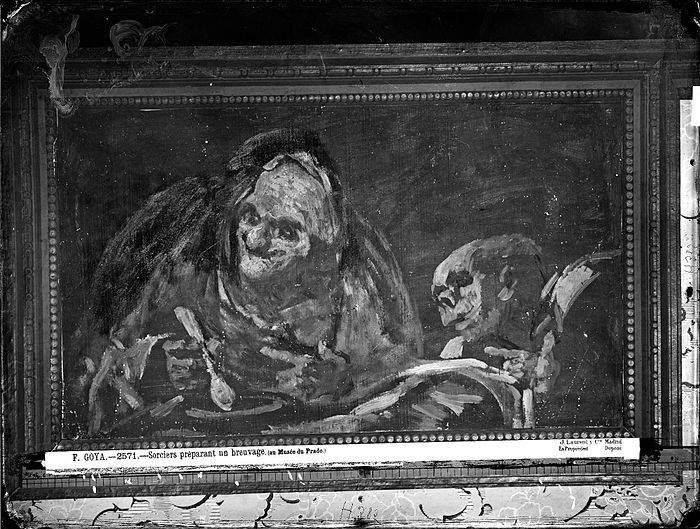
After Goya's death, La Quinta del Sordo was left in the hands of his grandson Mariano.
Some time later, his descendants kept it until its demolition in the summer of 1909.
In 1876, the part of the house where the famous Black Paintings were located was demolished, as when they were removed from the walls two years earlier, those rooms were completely ruined.
LEGACY
Goya himself was the object of scandals and rumors, especially regarding his relationships with members of the Spanish elite. For example, he was suspected of conducting an affair with the aristocratic Maria Cayetana de Silva, the 13th Duchess of Alba, one of the most famous women in Spain.
The connection between them probably began after the death of the Duke of Alba in 1796.
The artist was undoubtedly captivated by the haughty beauty of the Duchess, with her curvaceous figure, alabaster skin, and voluminous black locks, as we can observe in one of the portraits painted by him, the most famous...
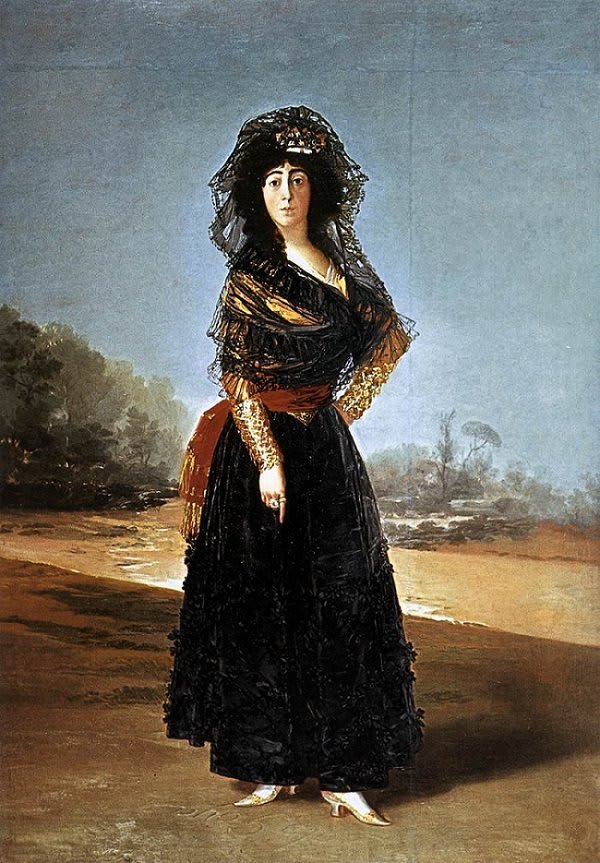
Painted a year after the death of the Duke, this portrait of the Duchess shows her in black mourning, wearing the traditional dress of a maja, a woman known for her bold behavior.
By dressing as a maja, the Duchess was attempting to connect with the masses, despite her high social status.
Standing with one hand on her hip, she points to the ground with the other hand, where Goya lightly drew her name in the dark sand, suggesting "Goya is at my feet".
When the painting was restored, the word "solo" was discovered next to Goya's name, implying that the artist was her only love (although she wears two rings on her hand, one with the inscription "Alba" and the other "Goya").
Although the painting was commissioned by the Duchess, Goya kept it in his possession for 15 years, indicating his strong attachment to the work and its theme, or, possibly, the Duchess's inability to accept a painting that openly displayed their romance.
Many of the images that would populate Goya's etchings and drawings after the end of his relationship - women as unfaithful temptresses, men as foolishly betrayed, lovers tortured by uncontrolled passions - led art historians to suspect that his heart was broken by the Duchess.
To understand the rest of this journey, continue to our next article: Biography of Francisco de Goya and His Major Works: Legacy and Commented Gallery.


