
Romanticism in the Visual Arts: National Expressions in Germany, Spain, and England
Explore the manifestations of Romanticism in different nations, examining the unique characteristics and key artists in Germany, Spain, France, and England, including Goya and Constable.
Romanticism in Germany was an artistic movement that emerged during the Enlightenment, focusing on inner emotions rather than rational observations.
The German Romantic painters turned their attention to earlier periods, including the Middle Ages, for examples of men living in harmony with nature and each other.
They favored medieval and early Renaissance Italian painting, rejecting the neoclassical style popular at the time.
The principal German Romantic, Caspar David Friedrich, primarily worked in landscape painting and explored the relationship between humans and the earth.
His famous work, The Wanderer above the Sea of Fog, is one of the most representative in this aspect.
Landscape painting became an allegory for the human soul, as well as a symbol of freedom and limitless possibilities that subtly criticized the political restrictions of the time.
Romanticism in Spain
During the Peninsular War sparked by Napoleon and the Spanish War of Independence, Spanish Romantic painters began to explore more subjective views of landscapes and portraits, emphasizing the individual.
Francisco de Goya was far and away the most prominent of the Spanish Romantics.
While he was the official court painter, towards the end of the 18th century, he began to explore the imagination, the irrational, and the horrors of human behavior and war.
His works, including the painting The Third of May 1808 and the series of etchings titled The Disasters of War, represent a powerful condemnation of war during the Enlightenment era.
Increasingly reclusive, Goya created a series of black paintings that explored the terrors kept in the deepest recesses of the human psyche.
Romanticism in France
Artists like Eugène Delacroix created many genre scenes from North Africa, initiating the trend of orientalism, and their dramatically staged compositions of light and color highlighted the horrors of contemporary events and tragedies.
Considered a masterpiece, his painting Liberty Leading the People is one of the most important and representative works of Romanticism.
The French also developed a strong sculptural interpretation of Romanticism.
Géricault created a sculpture titled The Nymph and the Satyr, a piece depicting a suggestive and violent encounter between the two mythological figures.
Romanticism in England
With the exception of William Blake, who practiced a more visionary art, English Romantic painters preferred landscapes.
John Crome was a founding member of the group and the first president of the Norwich Society of Artists, which held annual exhibitions from 1805-1833.
Working with watercolor and oil paint, Crome, like other group members, emphasized outdoor painting and scientific observation of the landscape.
However, their work and that of other group members reflected a Romantic sensibility, as seen in his work Boys Bathing in the River Wensum in Norwich, from 1817.
John Constable was the most influential of the English landscape painters, combining attentive observation of nature with a deep sensitivity.
Rebeling against the standard practices of the academy, the use of colors influenced the young Eugène Delacroix, who was enchanted by the way Constable used local color and white brushstrokes to create a sparkling light.
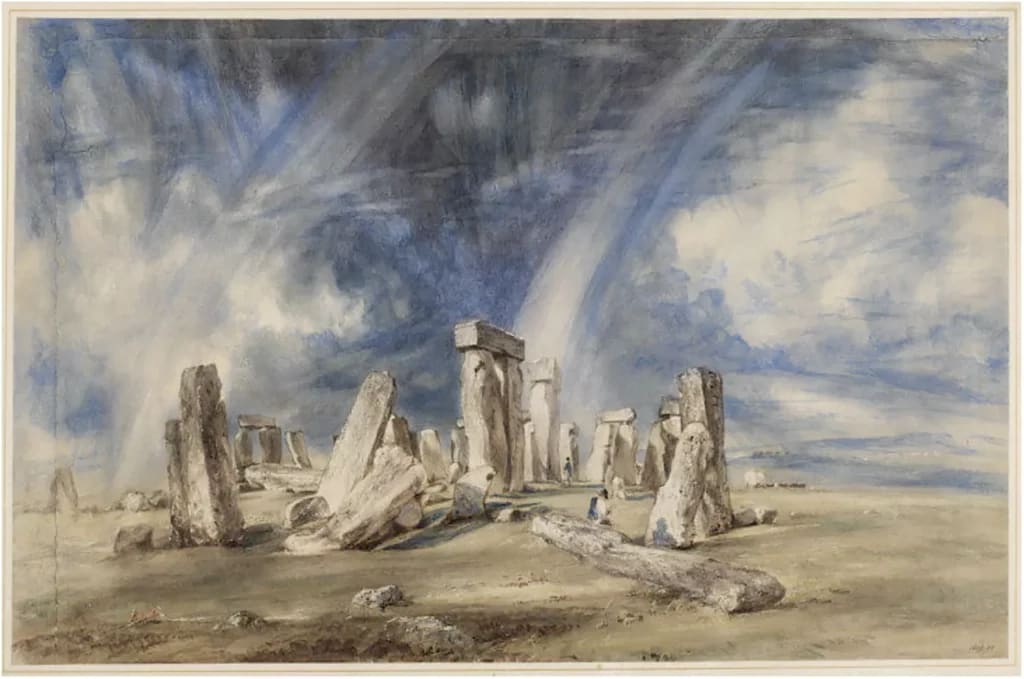
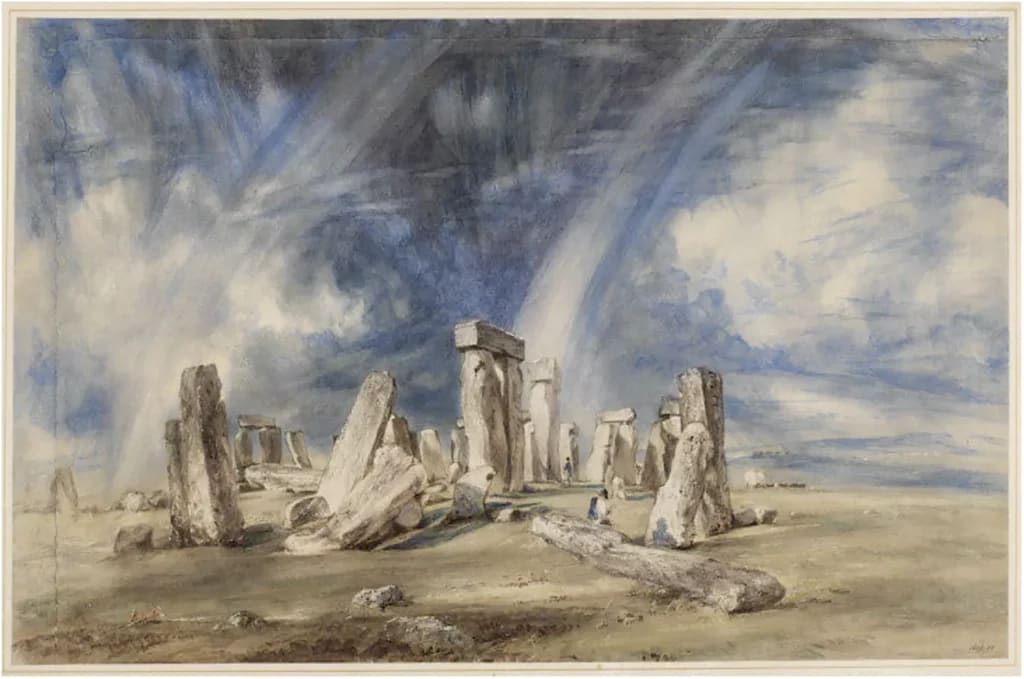
In Stonehenge, Constable transports us to a mythical time, creating a sample of nature modified by feelings that aim to individualize oneself in a world where beauty, pleasure, and harmony are isolated from the tangible.
Color was more radically explored by William Turner, a prolific and eccentric artist who worked with oils, watercolors, and etchings.
The application of Turner's color in quick brushstrokes created a textured and dynamic surface known as 'the painter of light'.
He was highly influential to the impressionist artists and even to the expressionist abstract Mark Rothko.
Works cited
To continue this journey, please read our next article: Romanticism in the Visual Arts: The Masterpieces that Defined an Era.


